









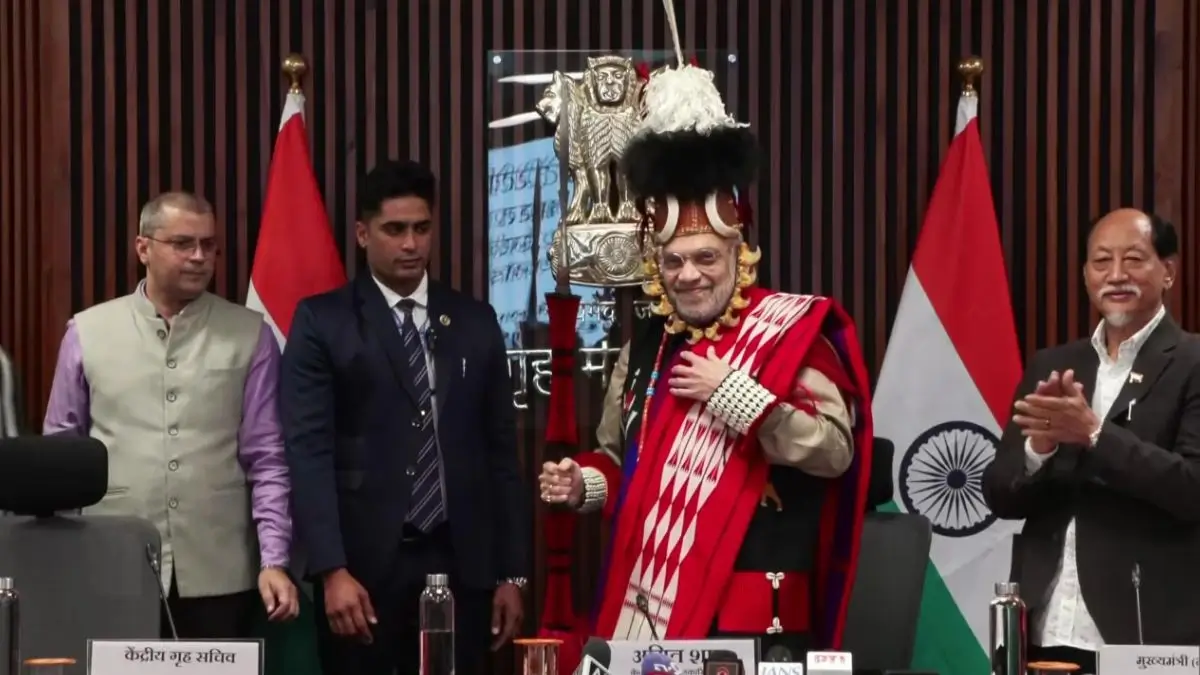
Frontier Nagaland Territorial Authority FNTA agreement 2026 signed by India, Nagaland Government, and ENPO to empower eastern districts with autonomy, preserve Article 371(A), and promote development.
Historic Tripartite Agreement on Frontier Nagaland Territorial Authority (FNTA): A Game‑Changer for Eastern Nagaland
Introduction: A Landmark Step in Northeast Politics
On 5th February 2026, the Government of India, Nagaland Government, and the Eastern Nagaland Peoples’ Organisation (ENPO) signed a historic tripartite agreement in New Delhi to establish the Frontier Nagaland Territorial Authority (FNTA)—a significant development in northeastern politics. The agreement was concluded in the presence of Union Home Minister Amit Shah and Nagaland Chief Minister Neiphiu Rio, marking a major breakthrough in addressing long‑standing regional demands.
The pact seeks to create an autonomous administrative body within Nagaland without altering the state’s territorial integrity. It aims at giving greater administrative, financial, and development powers to historically marginalised eastern districts, thereby addressing socio‑economic grievances and promoting peace and progress in the region.
What Is the Frontier Nagaland Territorial Authority (FNTA)?
The FNTA is a specially designed administrative authority that will function within Nagaland to provide enhanced autonomy to parts of the state. It is not a separate state but a territorial governance body focused on empowering local administration and expediting regional development.
Under the agreement:
- The FNTA will cover six eastern districts: Tuensang, Mon, Kiphire, Longleng, Noklak and Shamator.
- Around 46 subjects will be devolved to the authority, giving it decision‑making powers over key governance areas.
- A mini‑Secretariat will be established to ensure efficient administration and coordination.
Why Was the FNTA Demanded?
Eastern Nagaland has historically faced developmental lag, lack of infrastructure, and socio‑political neglect. The Eastern Nagaland Peoples’ Organisation (ENPO), representing eight tribal groups from the region, had been demanding separate statehood or autonomy since 2010 due to persistent feelings of marginalisation.
Over time, instead of separate statehood, ENPO shifted towards a negotiated model that balances regional aspirations with constitutional frameworks. The FNTA is this middle path—offering enhanced autonomy without disturbing Nagaland’s territorial unity.
Financial and Administrative Framework
The agreement ensures that the Ministry of Home Affairs (MHA) will provide initial funding for the FNTA’s setup, and development budgets will be allocated proportionately based on population and geographical area.
The authority is also expected to expedite infrastructure growth, generate employment, and promote people‑centric governance in the eastern region.
Relation With Article 371(A) of the Constitution
A major concern in such regional autonomy negotiations is the impact on constitutional protections. However, under this pact, Article 371(A)—which safeguards land rights, customary laws, and social practices of Nagaland—is fully preserved. The FNTA will only function as an administrative authority and will not dilute constitutional safeguards.
National and Regional Reactions
Prime Minister Narendra Modi described the FNTA pact as historic and vital for enhanced development and stability in the Northeast. Union Home Minister Amit Shah highlighted it as part of a broader strategy to resolve conflicts in the region through dialogue and implementation of agreements.
Leaders across the region, including the Arunachal Pradesh Chief Minister, welcomed the agreement as a positive step towards addressing long‑standing political demands and fostering peace.
Conclusion: A Balanced Path Forward
The FNTA agreement symbolizes a balanced governance model—one that respects constitutional unity, addresses regional aspirations, and paves the way for inclusive development in eastern Nagaland. Its success will be closely watched as a case study in conflict‑resolution, federal flexibility, and integrative governance in India’s diverse socio‑political landscape.

Why This News Is Important for Government Exam Aspirants
Significance in Political Science and Governance
This news holds immense relevance for aspirants preparing for competitive exams like UPSC Civil Services, State PSCs, Banking, Railways, and Police exams. It highlights how the Indian federal system accommodates regional demands through constitutional mechanisms and negotiated governance structures, a key topic in Polity and Governance.
Understanding the FNTA is crucial for topics including asymmetric federalism, Article 371, and conflict resolution strategies. It exemplifies how historic grievances are addressed through democratic negotiations rather than force—an evergreen theme in examination syllabi.
Relevance to Current Affairs and National Integration
The FNTA pact is a significant development in North East India, a region often featured in current affairs sections of competitive exams. This agreement highlights the Government of India’s efforts in fostering peace, inclusive growth, and administrative decentralisation, which are frequent themes in both preliminary and mains level exams.
Additionally, the preservation of Article 371(A) while granting administrative autonomy provides a critical case study of constitutional safeguards functioning in tandem with regional aspirations—an important concept for both GS Paper II and III.
Impact on Socio‑Economic Development Topics
The focus on development, administrative powers, and resource allocation featured in this agreement also ties into Economic Development and Planning topics, which appear in exams like Banking and SSC. This demonstrates how governance reforms can directly influence regional development indices and socio‑economic upliftment.
Historical Context: Background of Frontier Nagaland Territorial Authority Demand
Roots of the Movement
Eastern Nagaland’s demand for greater autonomy stems from historical feelings of neglect, persistent underdevelopment, and socio‑economic disparities compared to other parts of Nagaland. Since the early 2010s, the Eastern Nagaland Peoples’ Organisation (ENPO) has been at the forefront of advocating for greater administrative powers or separate statehood to address these issues.
Earlier Negotiations and Proposals
Earlier, the Centre proposed the idea of a Frontier Nagaland Territory (FNT) with executive, legislative, and financial autonomy, which ENPO initially accepted as a “unique arrangement.”
Over several years of negotiations, including talks in 2024 and beyond, the dialogues evolved with the inclusion of the Nagaland Government as a key stakeholder. The process reflects a slow but sustained effort to reach a consensus within constitutional frameworks.
From Demand to Agreement
The transition from a demand for separate statehood to acceptance of an autonomous territorial authority shows the maturity of political negotiations. This reflects India’s federal flexibility in accommodating diverse regional aspirations while preserving national integrity.
Constitutional Safeguards
The inclusion of Article 371(A) protections in the final agreement ensured that customary laws, land rights, and social practices unique to Nagaland remain untouched—this historical consideration was essential to build trust among all stakeholders.
Overall, the FNTA pact is not just a political milestone—it is a historical achievement demonstrating reconciliation and shared development in one of India’s most diverse and complex regions.
Key Takeaways from “Historic FNTA Agreement in Nagaland”
| S. No. | Key Takeaway |
|---|---|
| 1. | The Frontier Nagaland Territorial Authority (FNTA) was created through a tripartite agreement between the Government of India, Nagaland Government, and ENPO on 5th February 2026. |
| 2. | FNTA covers six eastern districts: Tuensang, Mon, Kiphire, Longleng, Noklak, and Shamator. |
| 3. | The authority will be granted powers over 46 subjects with administrative and financial autonomy. |
| 4. | The agreement preserves Article 371(A) safeguarding Nagaland’s customary laws and land rights. |
| 5. | The pact is a significant step towards peace, inclusive development, and conflict resolution in Northeast India. |
FAQs: Frequently Asked Questions on FNTA and Related Topics
Q1: What is the Frontier Nagaland Territorial Authority (FNTA)?
A: The FNTA is an autonomous administrative body created within Nagaland to provide enhanced governance, financial, and development powers to six eastern districts without altering the state’s territorial integrity.
Q2: When was the FNTA agreement signed?
A: The tripartite agreement was signed on 5th February 2026 between the Government of India, Nagaland Government, and the Eastern Nagaland Peoples’ Organisation (ENPO).
Q3: Which districts fall under the FNTA?
A: The FNTA covers Tuensang, Mon, Kiphire, Longleng, Noklak, and Shamator districts in eastern Nagaland.
Q4: Does the FNTA affect Article 371(A) of the Indian Constitution?
A: No. The FNTA fully preserves Article 371(A), which safeguards Nagaland’s land rights, customary laws, and social practices.
Q5: Why was FNTA demanded by ENPO?
A: ENPO demanded greater autonomy due to historic marginalization, underdevelopment, and socio-economic neglect in eastern Nagaland. Initially, separate statehood was sought, but negotiations led to this autonomous territorial model.
Q6: How will the FNTA promote regional development?
A: The authority will have powers over 46 subjects, a dedicated mini-secretariat, and allocated budgets to ensure infrastructure, employment, and people-centric governance in eastern Nagaland.
Q7: How is FNTA significant for competitive exams?
A: It is relevant for topics in Polity, Governance, Conflict Resolution, Article 371, and Northeast India affairs, frequently appearing in UPSC, State PSC, SSC, Banking, and Railways exams.
Some Important Current Affairs Links