





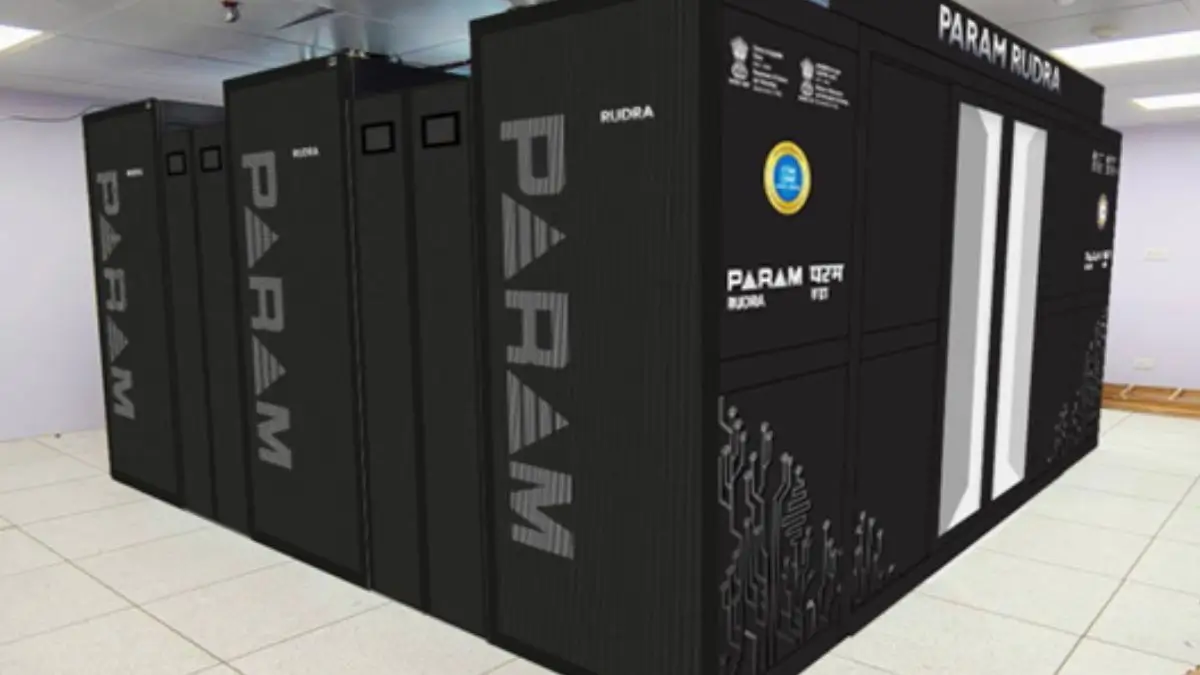
PARAM Rudra supercomputer launch at IIT Patna under National Supercomputing Mission enhances research in AI, HPC, and materials science, promoting indigenous computing in India.
IIT Patna Launches PARAM Rudra Supercomputer to Boost Research Capabilities
Introduction to the Supercomputer Launch at IIT Patna
The Indian Institute of Technology Patna (IIT Patna) has inaugurated Bihar’s first PARAM Rudra supercomputer, marking a significant milestone in the state’s scientific and technological landscape. The launch took place under the aegis of the National Supercomputing Mission (NSM), a flagship initiative of the Government of India aimed at enhancing the country’s high-performance computing (HPC) ecosystem. This project strengthens research infrastructure in eastern India while empowering students, faculty, and researchers to carry out advanced computations and simulations previously not possible due to limited local resources.
Key Features of PARAM Rudra Supercomputer
PARAM Rudra, installed at IIT Patna, boasts 838 teraflops of computing performance and is built using indigenously developed Rudra servers and software. This advanced computing system enables complex simulations, data analysis, artificial intelligence (AI), machine learning (ML), quantum computing, and other high-end research workflows. The use of Indian-made technology also aligns with the government’s Atmanirbhar Bharat (self-reliant India) vision by promoting domestic hardware and software development in the HPC sector.
National Supercomputing Mission (NSM): A Transformative Programme
The National Supercomputing Mission (NSM) is jointly led by the Ministry of Electronics and Information Technology (MeitY) and the Department of Science and Technology (DST). It aims to expand supercomputing infrastructure in premier educational and research institutions across India. The mission focuses on enabling researchers to tackle large-scale computational problems in diverse domain areas, from climate modelling to biotechnology and advanced materials science. Under NSM, multiple supercomputers are being installed nationwide to extend India’s computing capabilities beyond 100 petaflops in the near future.
Impact on Research and Academic Community
The PARAM Rudra facility at IIT Patna is projected to benefit around 60 faculty members and 400 students across 10 academic departments. Researchers can now conduct high-complexity studies locally without dependence on remote HPC resources. Areas such as computational fluid dynamics, materials science, astrochemistry, molecular electronics, AI and data science are among the fields expected to see major advancements. By significantly reducing computational times for simulations and modelling, the supercomputer is set to accelerate regional research output and innovation.
Strengthening India’s Technological Ecosystem
The deployment of PARAM Rudra contributes to building a robust indigenous supercomputing ecosystem, enhancing India’s global competitiveness in HPC technology. With more computational capacity and distributed HPC infrastructure, Indian researchers can address complex scientific challenges with improved efficiency. The facility also fosters academic collaborations, industry partnerships, and practical exposure for students in cutting-edge domains of technology and science.

Why This News Is Important for Exam Aspirants
Relevance to Government Exam Syllabi
This news holds high relevance for students preparing for competitive exams such as UPSC, State PSCs, SSC, Banking, Railways, and Defence because it touches upon key themes in the Science & Technology syllabus, especially government initiatives in research and innovation, technology infrastructure, and Atmanirbhar Bharat policies.
Understanding National Supercomputing Mission
The National Supercomputing Mission (NSM) is a critical government programme that often features in current affairs sections of competitive exams. It reflects India’s drive to strengthen its technological backbone, making advanced computing accessible to academia and research institutions nationwide. As India moves toward self-reliance in supercomputing, such developments are important to grasp for questions related to national programs, science policy, and technology growth strategies.
Strategic and Regional Importance
The launch of PARAM Rudra at IIT Patna is especially significant as it marks the first supercomputer in Bihar, thus decentralizing high-performance computing beyond traditional tech hubs. This advancement supports regional growth, promotes research capacity in eastern India, and exemplifies how government initiatives bridge infrastructure gaps — a frequent theme in social and economic sections of competitive exams.
Understanding the details of this launch equips aspirants with insights into the government’s focus on research empowerment, technological development, and policies promoting indigenous innovation — all of which are key areas for reasoning, analytical writing, and objective GK questions.
Historical Context: National Supercomputing in India
Early Developments in Indian Supercomputing
India’s journey in supercomputing began with the launch of the PARAM series in the late 1980s, when indigenous efforts were initiated to reduce dependency on foreign technology. Over the decades, these developments have evolved into complex high-performance systems designed to address research and industry needs.
Launch of National Supercomputing Mission
To further reinforce this trajectory, the Government of India launched the National Supercomputing Mission (NSM), jointly managed by MeitY and DST and implemented by C-DAC Pune and IISc Bengaluru. NSM aimed to establish a network of supercomputers across scientific and academic institutions, thereby fostering advanced research in fields like climate science, space technology, drug discovery, and artificial intelligence.
Expansion of HPC Infrastructure
Under NSM, several indigenous supercomputers such as PARAM Shivay, PARAM Siddhi, and others have been installed at premier institutions across India. These systems have contributed to increasing India’s collective computing capacity and enabling sophisticated simulations that support research breakthroughs across disciplines.
Role of PARAM Rudra
Within this historical continuum, the PARAM Rudra supercomputer at IIT Patna represents a transformative step — not only technologically but also geographically — by bringing HPC to eastern India and integrating regional institutions into the national research framework.
Key Takeaways from PARAM Rudra Supercomputer Launch
| S. No. | Key Takeaway |
|---|---|
| 1 | IIT Patna inaugurated Bihar’s first PARAM Rudra supercomputer. |
| 2 | The supercomputer was launched under the National Supercomputing Mission (NSM). |
| 3 | PARAM Rudra delivers 838 teraflops of computing performance. |
| 4 | It will support advanced research in AI, materials science, quantum computing, and more. |
| 5 | This development strengthens India’s indigenous HPC ecosystem and research capabilities. |
FAQs on PARAM Rudra Supercomputer Launch at IIT Patna
1. What is the PARAM Rudra supercomputer?
PARAM Rudra is a high-performance supercomputer installed at IIT Patna under the National Supercomputing Mission (NSM). It delivers 838 teraflops of computing performance and supports advanced research in AI, machine learning, materials science, quantum computing, and more.
2. Under which government initiative was PARAM Rudra installed?
The supercomputer was installed under the National Supercomputing Mission (NSM), a joint initiative of the Ministry of Electronics and Information Technology (MeitY) and the Department of Science and Technology (DST) to strengthen India’s high-performance computing ecosystem.
3. Why is PARAM Rudra important for Bihar?
It is Bihar’s first supercomputer, enabling regional students, researchers, and faculty to perform complex simulations locally, reducing dependency on remote HPC resources, and fostering scientific and technological research in eastern India.
4. Which research areas will benefit from PARAM Rudra?
Research areas benefiting include artificial intelligence (AI), machine learning (ML), computational fluid dynamics, materials science, astrochemistry, molecular electronics, and data science. It accelerates computation-intensive research projects and simulations.
5. How does PARAM Rudra align with Atmanirbhar Bharat?
PARAM Rudra uses indigenously developed hardware and software, supporting the government’s self-reliance vision (Atmanirbhar Bharat) by promoting domestic innovation in high-performance computing.
6. Who will primarily use PARAM Rudra at IIT Patna?
Approximately 60 faculty members and 400 students from 10 academic departments will benefit, conducting advanced research and simulations that were previously limited by computational constraints.
7. What is the significance of the National Supercomputing Mission (NSM)?
NSM aims to develop indigenous supercomputing infrastructure across India, enabling research in science, engineering, and technology fields, and increasing India’s computational capacity and global competitiveness.
Some Important Current Affairs Links