





Post Payments Bank EPFO free doorstep service allows EPS-95 pensioners to submit their Digital Life Certificate from home using Aadhaar-based biometric verification, supporting Digital India and Ease of Living initiatives.
Post Payments Bank EPFO Free Doorstep Service: A Major Step for Pensioners’ Digital Access
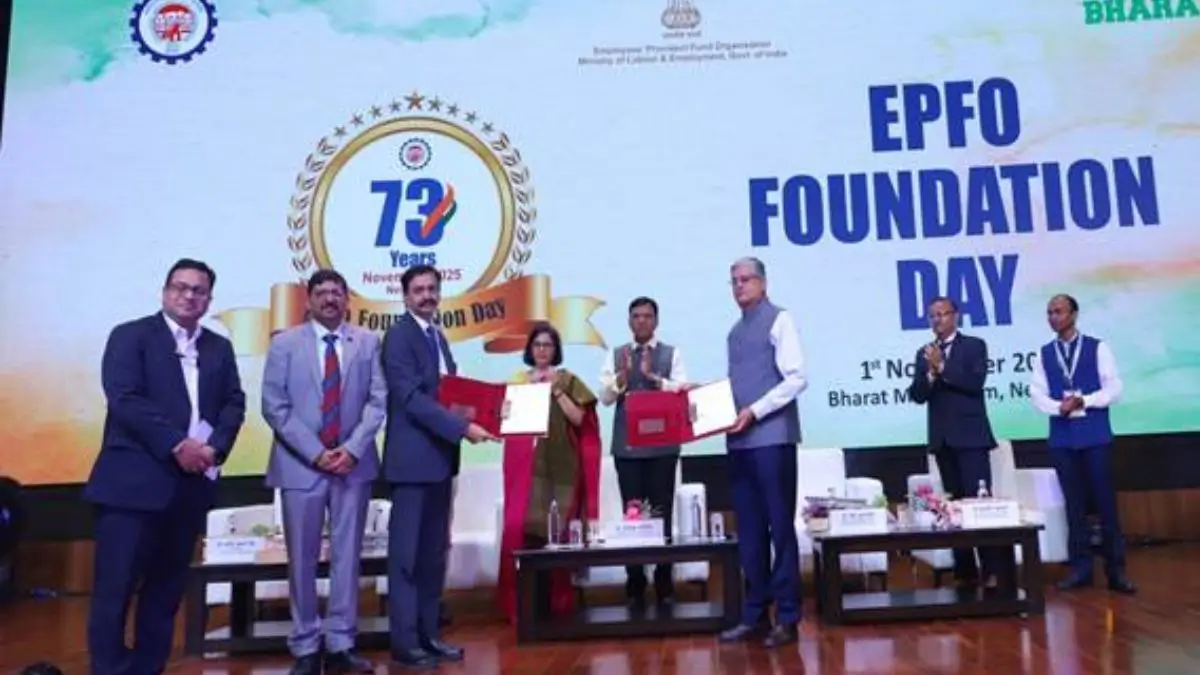
In a landmark initiative aimed at simplifying pension‐related formalities, India Post Payments Bank (IPPB) and Employees’ Provident Fund Organisation (EPFO) signed a memorandum of understanding (MoU) on 3 November 2025 to provide a free doorstep service for submission of the Digital Life Certificate (DLC) for pensioners under the Employee Pension Scheme 1995 (EPS-95).
Under this scheme, eligible pensioners will no longer need to visit a bank branch or EPFO office to submit their annual life certificate; instead, the postal network facilitated by IPPB will come to their doorstep, using biometric or face‐authentication technology linked to Aadhaar to generate the DLC.
The service will be provided free of cost to pensioners, with EPFO bearing the expenses. The initiative leverages IPPB’s vast infrastructure of over 1.65 lakh post offices and more than 3 lakh postal employees to reach even rural and remote pensioners.
How the Free Doorstep Service Works
The process begins when a pensioner contacts their local postman, postal worker (Gramin Dak Sevak) or visits the nearest post office. They provide their Aadhaar number and pensioner details. Biometric verification or face authentication via Aadhaar is used, on successful verification the DLC (also known as Jeevan Pramaan) is generated and submitted digitally to EPFO. The pensioner receives an SMS confirmation and the certificate becomes available online the next day.
By eliminating the requirement for physical visits, reducing paperwork, and bringing the service directly to the home of the pensioner, this model significantly eases the process, especially for elderly citizens and those living in remote areas.
Strategic Significance of the Initiative
This MoU aligns with several of India’s broader governance and social-security objectives:
- It supports the Digital India vision of paperless, presence-less and cashless services.
- It enhances the “Ease of Living” agenda by reducing the physical burden on senior citizens.
- It promotes rural financial inclusion by leveraging the vast postal network to deliver pension services in underserved geographies.
- It modernises the social security framework, making pension management more efficient and citizen-friendly.
Implications for Pensioners and the System
For pensioners under EPS-95, this means a hassle-free annual life certificate process, minimal travel and paperwork, and reduced dependence on physical visitation to banks or EPFO offices. For the pension management ecosystem, it reduces verification overheads, streamlines certificate receipt and increases compliance with minimal friction.
With the cost borne by EPFO, pensioners benefit directly from a cost-free service. Moreover, the move could serve as a template for other government services to adopt doorstep, biometric-enabled digital delivery.
Challenges and Considerations
While the initiative holds promise, its success will depend on training and preparedness of the postal workforce for biometric/face authentication, ensuring Aadhaar-linkage and correctness of pensioner data, robust data security and privacy safeguards, and outreach to pensioners in extremely remote locations. Monitoring will be needed to ensure timely verification and resolution of exceptions.

Why This News Is Important
Importance for Exam Aspirants
For candidates preparing for banking, railways, defence, teaching or civil service exams (for instance, Staff Selection Commission, Union Public Service Commission, or state PSCs), this news is highly relevant for several reasons. It touches upon themes of digital governance, financial inclusion, social security reform and the role of postal infrastructure in India’s service delivery—all of which are frequently tested in general‐awareness and current‐affairs sections.
Broader Significance
From a policy perspective, the partnership between IPPB and EPFO is a tangible example of how traditional infrastructure (post offices) is being repurposed for digital service delivery in India. Understanding such initiatives helps candidates grasp how government schemes aim to reduce friction in citizen-government interactions, especially for vulnerable groups such as pensioners.
Link to Syllabus Topics
This story links to topics like public sector banking (IPPB), social security and pension schemes (EPFO, EPS-95), Digital India and e-governance initiatives, and logistic outreach in rural India. Being able to cite such initiatives adds depth in descriptive answers and interview scenarios for teaching, banking, railways or civil services roles.
Historical Context
The concept of digital life certificates for pensioners emerged as part of the larger push for digitising government services and reducing physical verification burdens. The Jeevan Pramaan digital life certificate scheme was launched in 2014 to authenticate pensioner identity and ensure continuity of pension benefits without manually visiting offices. Over time, EPFO has sought to widen its reach and improve convenience for EPS-95 pensioners.
The establishment of IPPB in 2018 as a specialised payments bank under the aegis of the India Post network expanded financial inclusion by utilising post offices and postal employees across India. By bringing together the postal bank’s outreach and EPFO’s pension administration, the 2025 MoU reinforces a collaborative model between financial services infrastructure and social security mechanisms.
India’s push for doorstep service delivery is also part of a broader evolution in public service: recognising that physical visits and paperwork are barriers for senior citizens and rural users, the government has in recent years emphasised presence-less and paperless service delivery as part of the Digital India and Ease of Living agendas.
Key Takeaways from “Post Payments Bank & EPFO Free Doorstep Service”
| S. No. | Key Takeaway |
|---|---|
| 1 | A MoU was signed on 3 November 2025 between IPPB and EPFO to offer free doorstep Digital Life Certificate submission for EPS-95 pensioners. |
| 2 | Over 1.65 lakh post offices and more than 3 lakh postal employees under IPPB’s network will facilitate the service. |
| 3 | The service uses Aadhaar-linked biometric or face authentication to verify the pensioner and generate the DLC. |
| 4 | The entire cost of issuing the Digital Life Certificate will be borne by EPFO, making it free for pensioners. |
| 5 | The initiative aligns with Digital India, Ease of Living, rural financial inclusion and improved social security service delivery goals. |
Frequently Asked Questions (FAQs)
1. What is the main purpose of the Post Payments Bank–EPFO free doorstep service?
The primary purpose of this service is to allow pensioners under the Employee Pension Scheme (EPS-95) to submit their Digital Life Certificate (DLC) from home, without needing to visit any bank, EPFO office, or public service centre.
2. Who will benefit the most from this initiative?
Senior citizens, retired employees, and pensioners living in rural and remote areas will benefit the most since the service eliminates the need for travel and reduces physical inconvenience.
3. Is the doorstep Digital Life Certificate service completely free?
Yes. The service is completely free for pensioners. All expenses are covered by the Employees’ Provident Fund Organisation (EPFO).
4. Which organisation will provide the doorstep service to pensioners?
The doorstep service will be provided by the India Post Payments Bank (IPPB) through its widespread post office and postal employee network.
5. How is the Digital Life Certificate generated during the doorstep service?
The certificate is generated using Aadhaar-based biometric or face authentication. Once identity is verified, the DLC is created digitally and sent directly to the EPFO system.
6. Do pensioners need to have their Aadhaar linked to their EPF account?
Yes. Aadhaar linkage with the pension records is essential for biometric or facial verification during the DLC submission process.
7. What confirmation does a pensioner receive after submitting the DLC?
After the DLC is successfully generated, pensioners receive an SMS confirmation, and the certificate becomes viewable online within a day.
8. Does this initiative align with any national programme?
Yes. It supports Digital India, Ease of Living, and financial inclusion initiatives of the Government of India.
Some Important Current Affairs Links