








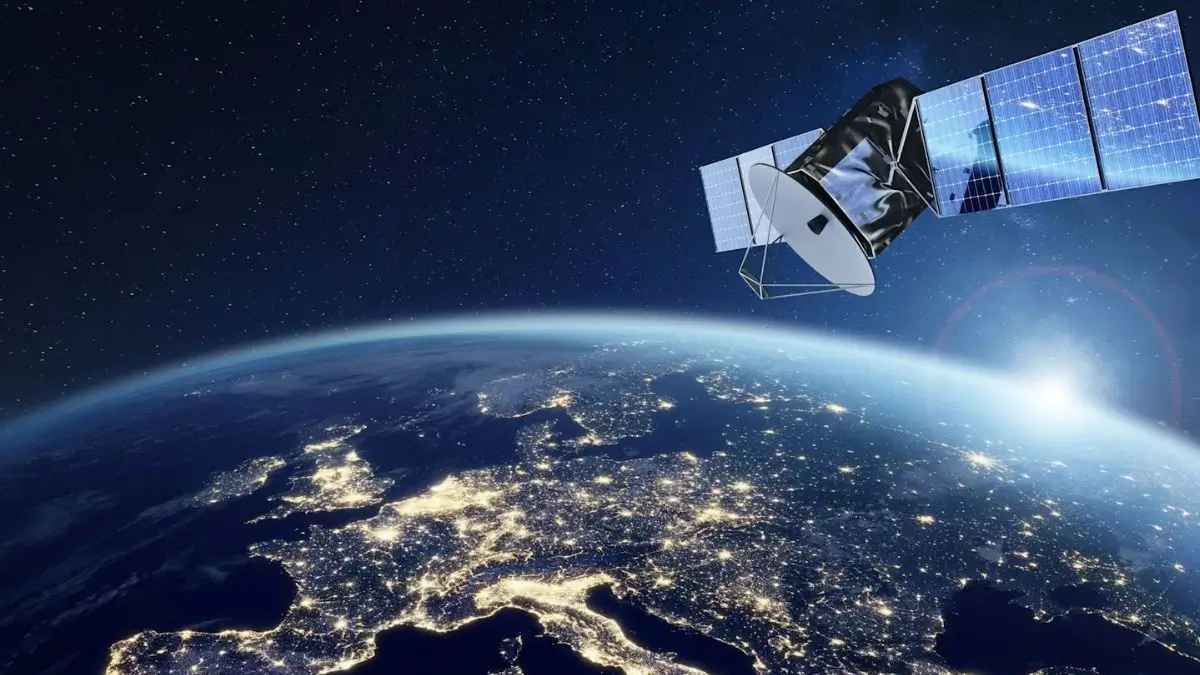
Stellerus 3D wind data satellite network aims to revolutionize global weather forecasting with 3D atmospheric data, boosting renewable energy and aviation safety.
Stellerus to Launch First 3D Wind Data Satellite Network
An Innovative Leap in Atmospheric Observation
The Hong Kong-based start-up Stellerus Technology is gearing up to deploy the world’s first dedicated satellite constellation capable of generating three-dimensional (3D) wind data on a global scale. The initiative, dubbed the “Feilian Constellation” (named after the ancient Chinese wind-god Feilian), aims to fill a longstanding gap in meteorological and atmospheric monitoring by capturing wind speed, direction and vertical movement with unprecedented resolution.
The Data Gap — Why 3D Wind Matters
Current technologies for measuring wind fields rely heavily on weather balloons, aircraft-borne sensors and surface stations, which provide point-based or intermittent observations. Satellite systems, while effective for many meteorological parameters, have limited capability when it comes to measuring the full three-dimensional structure of wind fields—especially over oceans and in clear skies. Stellerus’ plan addresses this by deploying six satellites (initial plan) to generate hourly, kilometre-scale 3D wind maps worldwide.
Launch Timeline and Constellation Strategy
The company plans to launch the first pair of satellites within the next 18 months. Subsequently, the full constellation of six (or more) satellites will be deployed to ensure global coverage and temporal consistency. The cost-efficiency is enabled by leveraging China’s advanced and lower-cost satellite manufacturing capabilities; for instance, what could cost around US$100 million per satellite in the U.S. may cost significantly less when built in mainland China.
Applications Across Sectors
The 3D wind data generated by the constellation will have far-reaching applications. In the renewable energy sector (especially wind power), more precise wind mapping can optimise turbine placement, improve forecasting and thereby increase output and reduce downtime. In aviation and transport, knowledge of vertical wind shear and complex wind structures can improve safety and efficiency. For disaster management and insurance, capturing wind behaviour in three dimensions enriches risk models for storms, hurricanes and other extreme weather events.
The Competitive Edge and Market Implications
Stellerus is aiming to be the first commercial provider of satellite‐derived 3D wind data, opening a new market niche. According to co-founder and chairwoman Su Hui, the start-up is building on academic and meteorological expertise from the Hong Kong University of Science and Technology (HKUST) and leveraging cost-efficient manufacturing in China. Given rising interest in climate risk assessment, renewable energy optimisation and improved weather forecasting, the business proposition is strong.
Looking Ahead: Challenges and Potential
Even though the technology concept is compelling, key challenges remain. Building the satellites, ensuring calibration and validation of the wind data, integrating with existing meteorological systems and making the business model commercially viable are all non-trivial tasks. Yet, if successful, the Feilian Constellation by Stellerus could mark a paradigm shift in how we observe and model wind globally.
Why This News Is Important
Significance for Governance and Exam Relevance
For students preparing for government exams like teaching, banking, civil services (UPSC/State PSCs), railway, defence and police recruitments, this news is directly relevant in multiple ways. It intersects science and technology, environment and climate change, and industry and business dynamics — all common topics in General Studies, Current Affairs and specialised technical papers.
Linking to Syllabus Themes
Many exam syllabi emphasise developments in space technology, satellite applications, weather forecasting and climate resilience. For example, sections on “Science & Technology – recent developments”, “Environment & Disaster Management”, or “Economy – infrastructure & industry” can use this story as a case-study. The ability of Stellerus to provide 3D wind data has implications for renewable energy (wind sector), aviation safety, insurance, climate risk, and global weather monitoring.
Strategic Importance for India and the World
India, with its large coastline, reliance on monsoon dynamics, growing renewable energy sector and vulnerability to extreme weather, stands to benefit from better wind data. Though the company is Hong Kong-based, the global nature of wind systems and atmospheric dynamics means India could integrate or draw insights from such data. Understanding this link underscores the growing interconnectedness of global space, environment and industry technology.
Exam-oriented Takeaway
From an exam perspective, this is not just a news item — it is a technology development with broad socio-economic, environmental and strategic implications. It illustrates how emerging space/satellite capabilities can create new data services, enhance government policy-making (disaster management, renewable energy), and open new markets. Hence, this story provides rich material for short answers, essays and interview discussions.
Historical Context: Development of Wind Data and Satellite Meteorology
Early Methods of Wind Measurement
Historically, wind measurements were done at ground level via anemometers, in the air using weather balloons (radiosondes) and from aircraft platforms. These methods provided only point or vertical profile data and lacked full global coverage—especially over oceans and remote regions.
Evolution of Satellite Meteorology
Since the launch of the first weather satellites (e.g., TIROS series in the 1960s), satellite meteorology has evolved to monitor cloud cover, precipitation, sea-surface temperature, and atmospheric constituents. However, retrieving three-dimensional wind fields has remained a technical challenge. Satellite systems such as scatterometers, Doppler wind lidar and GPS radio-occultation have made strides, but global high-resolution hourly 3D wind data has remained out of reach.
Need for 3D Wind Data
Why is 3D wind data so critical? Because wind patterns vary not just horizontally but also vertically: updrafts, downdrafts, wind shear (change of wind speed/direction with height) and turbulence influence weather systems, aviation safety, wind energy yield, and atmospheric dispersion of pollutants. Improved knowledge of vertical wind structure helps in forecasting severe weather phenomena such as tropical cyclones, thunderstorms, and jet‐stream dynamics.
Commercialisation Era
In recent years, the convergence of cheaper satellite manufacturing (especially from China), small-satellite/constellation models, and demand from sectors such as renewable energy, insurance and transport has opened a commercial market for meteorological and environmental data services. The Stellerus initiative is a direct product of this trend—combining academic meteorology expertise, low-cost satellite manufacture and commercial data services.
Key Takeaways from “Stellerus to Launch First 3D Wind Data Satellite Network”
| S.No | Key Takeaway |
|---|---|
| 1 | Stellerus Technology plans to deploy the “Feilian Constellation” of satellites to generate global 3D wind data (speed, direction, vertical component). |
| 2 | The first two satellites are expected to launch within 18 months, followed by additional satellites to complete the constellation. |
| 3 | Traditional wind measurement methods (balloons, aircraft, sparse sensors) cannot provide high-resolution global 3D coverage; Stellerus aims to bridge that gap. |
| 4 | Applications span multiple sectors — wind power optimisation, aviation safety (wind shear, turbulence), disaster risk modelling and insurance. |
| 5 | Cost-efficient manufacturing in China gives the project a competitive advantage, enabling a commercial data service model and potentially transforming the meteorological data market. |
Frequently Asked Questions (FAQs)
1. What is the Stellerus Feilian Constellation project?
The Feilian Constellation is an upcoming satellite network by Hong Kong-based Stellerus Technology designed to capture global 3D wind data — including speed, direction, and vertical movement — with high precision.
2. Why is 3D wind data important for weather forecasting?
Three-dimensional wind data improves accuracy in predicting weather patterns, storms, and cyclones by providing detailed insights into vertical air movements and turbulence.
3. How many satellites will Stellerus launch initially?
Stellerus plans to launch six satellites initially, with the first two expected to be deployed within the next 18 months.
4. What are the key applications of this satellite network?
The data will benefit renewable energy forecasting (especially for wind farms), aviation safety, insurance risk models, and climate change monitoring.
5. Which country’s technology is being used for manufacturing the satellites?
Stellerus is leveraging cost-efficient manufacturing technologies available in mainland China to build its satellites economically.
6. What is the meaning behind the name “Feilian”?
The constellation is named after Feilian, the Chinese wind god, symbolizing mastery over wind and atmospheric elements.
7. How does this initiative differ from traditional meteorological tools?
Unlike traditional weather balloons or surface sensors that collect localized data, this satellite network offers continuous, global 3D coverage of wind systems.
8. Why is this project significant for civil service and government exam aspirants?
It represents advancements in space technology and environmental monitoring — key topics under “Science and Technology,” “Environment,” and “Disaster Management” sections of exams like UPSC, PSC, and Defence.
9. What impact could 3D wind mapping have on the renewable energy sector?
It could drastically improve turbine placement and wind farm design, increasing efficiency and energy output while reducing maintenance costs.
10. Which organizations could potentially benefit from such global wind data?
Meteorological departments, renewable energy companies, aviation authorities, insurers, and research institutions can all use this data for forecasting and risk assessment.
Some Important Current Affairs Links