







Vyommitra ISRO Gaganyaan 2025 is India’s first AI-enabled half-humanoid robot designed to monitor spacecraft systems, assist astronauts, and ensure safety in uncrewed space missions.
Vyommitra: India’s AI-Powered Half-Humanoid for Gaganyaan Mission
Introduction to Vyommitra
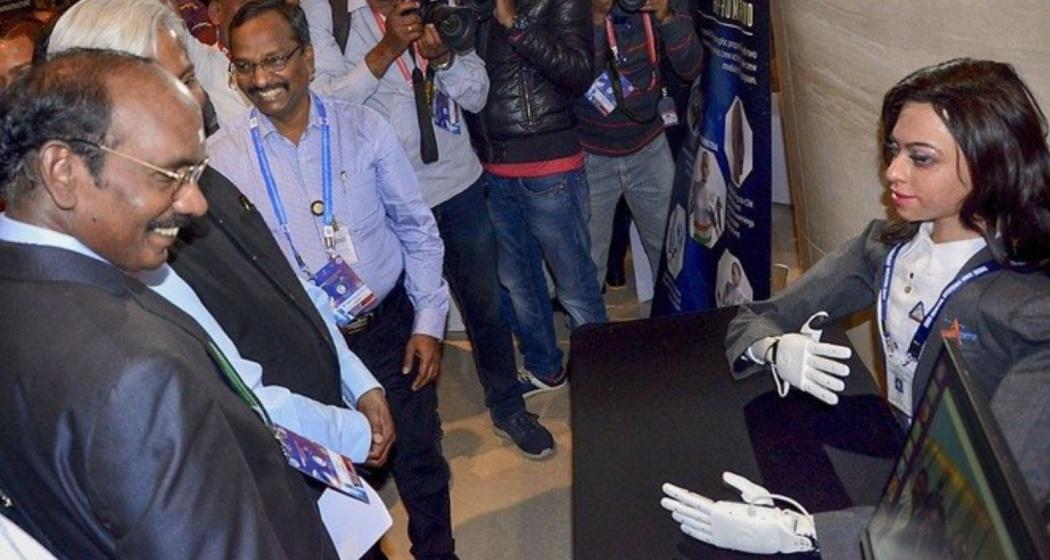
Vyommitra, derived from Sanskrit words ‘Vyoma’ meaning ‘space’ and ‘Mitra’ meaning ‘friend’, is India’s first AI-enabled half-humanoid robot developed by the Indian Space Research Organisation (ISRO). Designed to simulate human responses in space, Vyommitra will be part of the uncrewed Gaganyaan mission scheduled for launch in December 2025.
Purpose and Capabilities
Vyommitra is engineered to perform tasks that mimic human activities in a spacecraft environment. Equipped with advanced AI, it can recognize astronauts, converse in Hindi and English, and monitor spacecraft systems. Its functionalities include operating environment control systems, reporting on life support systems, and providing alerts on air pressure changes. The robot’s design aims to ensure that all systems are functioning optimally before human astronauts embark on the mission.
Structural Design
Unlike full humanoid robots, Vyommitra is a ‘half-humanoid’, possessing only a head, torso, and arms. This design choice allows for efficient use of space and resources within the spacecraft. Constructed primarily from aluminum alloys, Vyommitra is built to withstand the high-pressure and vibration conditions experienced during space travel.
Testing and Mission Timeline
The first uncrewed Gaganyaan mission, G1, featuring Vyommitra, is slated for launch by the end of December 2025. This mission will serve as a critical step in validating the spacecraft’s systems and ensuring the safety of future crewed missions. Following the success of G1, two additional uncrewed missions are planned for the subsequent year to further test and refine the systems before human astronauts are sent into space.
Why This News Is Important
Advancement in Space Technology
Vyommitra represents a significant leap in India’s space exploration capabilities. By integrating AI and robotics into space missions, ISRO is enhancing its ability to conduct complex tasks autonomously, reducing the risks associated with human space travel.
Preparation for Crewed Missions
The inclusion of Vyommitra in the Gaganyaan mission is a preparatory step for sending Indian astronauts into space. By testing spacecraft systems with a humanoid robot, ISRO can identify and address potential issues, ensuring a higher success rate for future crewed missions.
International Recognition
This initiative places India at the forefront of space innovation, showcasing its commitment to advancing space technology and contributing to the global space community. The successful deployment of Vyommitra could pave the way for international collaborations and partnerships in space exploration.
Historical Context
The concept of using humanoid robots in space missions is not new. International space agencies have explored similar technologies to enhance mission success and astronaut safety. India’s development of Vyommitra aligns with global trends in integrating AI and robotics into space exploration. ISRO’s previous achievements, such as the Chandrayaan and Mangalyaan missions, have established a strong foundation for this ambitious project.
Key Takeaways from “Vyommitra: India’s AI-Powered Half-Humanoid for Gaganyaan Mission”
| S.No | Key Takeaway |
|---|---|
| 1 | Vyommitra is India’s first AI-enabled half-humanoid robot developed by ISRO. |
| 2 | The robot will be part of the uncrewed Gaganyaan mission scheduled for December 2025. |
| 3 | Vyommitra is designed to simulate human responses and monitor spacecraft systems. |
| 4 | The first uncrewed mission, G1, will serve as a critical step in validating spacecraft systems. |
| 5 | Vyommitra’s development showcases India’s advancements in space technology and robotics. |
FAQs: Frequently Asked Questions
1. What is Vyommitra?
Vyommitra is India’s first AI-enabled half-humanoid robot developed by ISRO to simulate human responses in space and assist in uncrewed Gaganyaan missions.
2. When is Vyommitra scheduled to be launched?
Vyommitra is scheduled to be part of the uncrewed Gaganyaan mission in December 2025.
3. What are the main functions of Vyommitra?
Vyommitra can monitor spacecraft systems, operate environmental controls, report life support status, and alert astronauts of changes in air pressure.
4. Why is Vyommitra considered a half-humanoid robot?
Vyommitra is called a half-humanoid because it has a head, torso, and arms but no legs, making it space-efficient for spacecraft design.
5. Which languages can Vyommitra communicate in?
Vyommitra is designed to converse in both Hindi and English.
6. How does Vyommitra contribute to crewed space missions?
By testing spacecraft systems and simulating human responses, Vyommitra ensures all systems are functioning optimally before human astronauts embark on the mission.
7. What materials are used to construct Vyommitra?
Vyommitra is primarily constructed from lightweight aluminum alloys to withstand pressure and vibrations during space travel.
8. What is the significance of the G1 mission?
The G1 mission, featuring Vyommitra, is an uncrewed test flight critical for validating the spacecraft’s systems and safety measures for future crewed missions.
9. Has India used humanoid robots in space before Vyommitra?
No, Vyommitra is India’s first humanoid robot designed for space missions, although other countries have used similar AI-enabled robots in space research.
10. How does Vyommitra enhance India’s space technology image?
Vyommitra demonstrates India’s advancements in AI, robotics, and space exploration, potentially opening avenues for international collaborations.
Some Important Current Affairs Links