








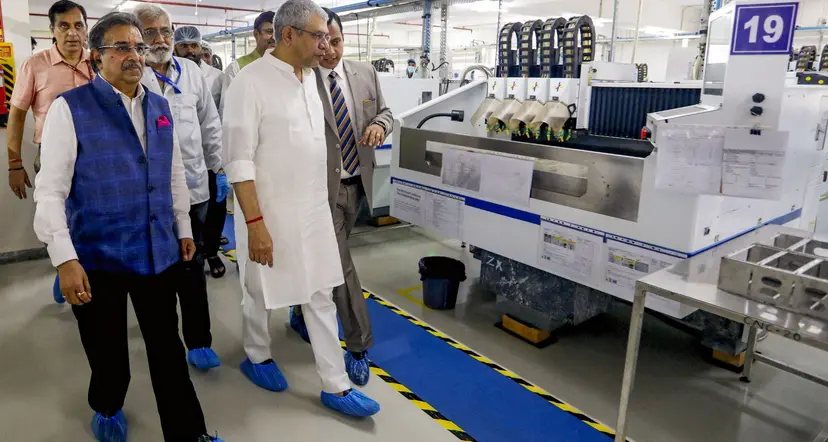
India first tempered glass factory in Noida inaugurated by Ashwini Vaishnaw. Optiemus and Corning to boost Make in India with ₹800 crore investment, 200 million capacity, and 5,000 jobs.
India Opens Its First Ever Mobile Tempered Glass Factory in Noida
Inauguration Sparks New Era of Electronics Manufacturing
On August 30, 2025, Union Electronics and IT Minister Ashwini Vaishnaw inaugurated India’s first-ever tempered glass manufacturing facility for mobile devices in Noida. The project, a collaboration between Optiemus Infracom Limited and U.S. material technology giant Corning Incorporated, marks a significant stride in India’s efforts to reduce dependencies on imports and strengthen its electronics manufacturing ecosystem.
Backed by Global Expertise, Driven by Domestic Vision
The facility is set to produce high-quality tempered glass under the “Engineered by Corning” brand. This domestic production not only caters to Indian demand but also targets international markets, signaling India’s growing role in global electronics supply chains.
Phased Investment: From Hundreds of Crores to Massive Scale
- Phase 1 involves an initial investment of ₹70 crore, with a manufacturing capacity of 25 million units per annum and creation of 600 direct jobs.
- Phase 2 plans call for an additional ₹800 crore investment, scaling up production to 200 million units per annum, generating over 4,500 additional jobs, and expanding its footprint.
A Milestone Fueled by the ‘Make in India’ Vision
Minister Vaishnaw emphasized that over the past 11 years, India’s electronics manufacturing has grown sixfold to reach ₹11.5 lakh crore in production, driven heavily by the Make in India initiative. Exports have risen to over ₹3 lakh crore, and the sector now employs 2.5 million people.
Market Potential and Strategic Importance
The domestic tempered glass market is estimated to demand over 500 million pieces, valued at approximately ₹20,000 crore, while the global market exceeds USD 60 billion. This underscores the vast scale and opportunity this facility addresses.
Building Towards Full Mobile Self-Reliance
Minister Vaishnaw reiterated India’s ongoing journey toward manufacturing every component of mobile devices—including chips, cover glass, server and laptop components—thereby positioning India as a global electronics manufacturing powerhouse.
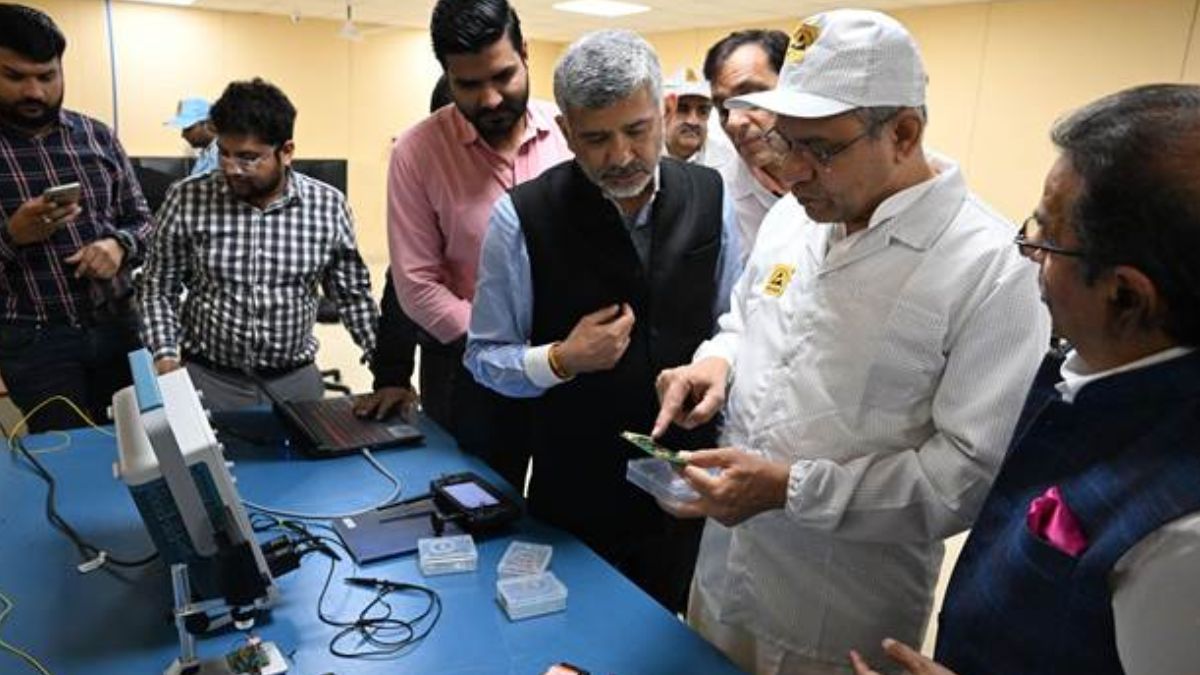
Why This News Is Important
Strategic Boost to Electronics Self-Reliance
India’s first tempered-glass facility fills a critical gap in the mobile device supply chain, replacing imports with homegrown manufacturing—a step aligned with Atmanirbhar Bharat and Make in India goals.
Employment and Economic Growth
This project is not only about technology—it promises thousands of jobs, support for local industries, and increased economic activity through both production and downstream services (e.g., packaging, logistics).
Subscriber Relevance for Competitive Exam Aspirants
For aspirants of SSC, Banking, Defence, Railways, and Civil Services, this development highlights:
- The government’s approach to import substitution and domestic industrial capacity,
- Key data (investment, capacity, job creation)—useful for static GK and current affairs segments,
- Broader implications for national self-reliance and policy successes that often appear in exam questions or interview discussions.
Historical Context
The imperative for electronics self-reliance stems from India’s long-standing reliance on imported components. Despite being one of the world’s largest mobile markets, India lacked domestic capacity for even basic accessories like tempered glass. Under the Make in India program launched in 2014, the electronics manufacturing ecosystem started to strengthen—from handsets to chips to peripherals.
Recent years have seen the establishment of semiconductor (OSAT) facilities, increased production of mobile components, and now, the addition of a tempered glass factory completes another layer in the electronics value chain—paving the way for fully indigenous smartphone assembly and exports.
Key Takeaways from This News
| Sr. No. | Key Takeaway |
|---|---|
| 1 | India’s first mobile-tempered glass manufacturing facility inaugurated in Noida on 30 August 2025. |
| 2 | Set up by Optiemus Infracom in partnership with Corning; phase-1 investment: ₹70 crore, capacity: 25 million units/year, 600 jobs. |
| 3 | Phase-2 to invest ₹800 crore, expand capacity to 200 million units/year, add over 4,500 jobs. |
| 4 | The domestic tempered glass market: demand over 500 million pieces (₹20,000 crore); global market exceeds USD 60 billion. |
| 5 | Strengthens Make in India initiative; electronics manufacturing output has grown sixfold (₹11.5 lakh crore), exports ₹3 lakh crore, employment 2.5 million. |
FAQs: Frequently Asked Questions
Q1. Where was India’s first tempered glass manufacturing facility inaugurated?
It was inaugurated in Noida, Uttar Pradesh, on 30 August 2025.
Q2. Which companies collaborated to set up this factory?
The facility is a collaboration between Optiemus Infracom Limited and Corning Incorporated (USA).
Q3. What is the production capacity of the tempered glass factory in Phase 1?
The Phase 1 unit can produce 25 million units annually.
Q4. How many jobs are expected to be generated in Phase 1 and Phase 2?
Phase 1 will generate 600 jobs, while Phase 2 aims to create over 4,500 jobs.
Q5. What is the estimated value of the domestic tempered glass market in India?
The domestic market demand is over ₹20,000 crore, with more than 500 million pieces required annually.
Q6. What is the global market size of tempered glass?
The global tempered glass market exceeds USD 60 billion.
Q7. How much investment is planned in Phase 2 of the project?
Phase 2 involves an additional ₹800 crore investment.
Q8. Which government initiative is closely linked to this development?
The Make in India and Atmanirbhar Bharat initiatives are directly associated with this project.
Q9. How much has India’s electronics manufacturing output grown in the last 11 years?
It has increased sixfold to ₹11.5 lakh crore, with exports crossing ₹3 lakh crore.
Q10. Why is this tempered glass factory important for India’s electronics ecosystem?
It reduces import dependency, strengthens domestic manufacturing, and moves India closer to self-reliance in mobile device components.
Some Important Current Affairs Links