









China Launched Its Youngest-Ever Space Crew
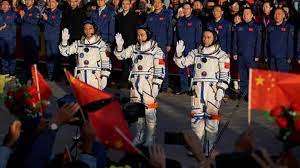
China has yet again made a significant leap in its space exploration endeavors, this time by launching its youngest-ever space crew. This development carries several implications, not only for China’s ambitious space program but also for the global space community. In this article, we will explore why this news is important, provide some historical context, and offer five key takeaways that students preparing for government exams should know.
Why this News is Important:
1. Advancing China’s Space Ambitions: China’s launch of its youngest-ever space crew is a testament to the country’s commitment to advancing its space exploration efforts. The inclusion of younger astronauts showcases the country’s dedication to grooming the next generation of space scientists and pioneers. This move underscores China’s long-term vision for space exploration.
2. Human Spaceflight Milestone: This mission represents a significant milestone in China’s human spaceflight program. It demonstrates the nation’s growing expertise in conducting crewed missions, which are crucial for long-duration space travel and potential future lunar missions.
Historical Context:
China’s space program, initiated in the 1950s, has seen remarkable progress in recent years. Notable achievements include launching the Tiangong-2 space laboratory, landing the Chang’e-4 rover on the far side of the moon, and building the Tiangong space station, expected to be fully operational in the near future. The inclusion of younger astronauts in this mission is a part of China’s continuous efforts to expand and diversify its space endeavors.
Key Takeaways from “China Launched Its Youngest-Ever Space Crew”:
| Serial Number | Key Takeaway |
|---|---|
| 1 | China’s commitment to grooming young astronauts demonstrates its long-term vision for space exploration. |
| 2 | This mission is a significant milestone in China’s human spaceflight program, highlighting its expertise and ambitions. |
| 3 | China’s achievements intensify the competition in the global space race, challenging other spacefaring nations. |
| 4 | Scientific and technological gains from these missions have far-reaching benefits, including advancements in materials science and biology. |
| 5 | The accomplishments of China’s young space crew inspire future generations, emphasizing the importance of STEM education and dedication to ambitious goals. |
Important FAQs for Students from this News
Q: How does China’s launch of its youngest-ever space crew impact its space program?
A: China’s launch demonstrates its commitment to grooming the next generation of astronauts and advancing its long-term vision for space exploration.
Q: What are the global implications of China’s accomplishments in space exploration?
A: China’s achievements intensify the competition in the global space race, challenging other spacefaring nations.
Q: How do scientific and technological gains from such missions benefit various fields?
A: These gains have far-reaching benefits, including advancements in materials science, biology, and Earth observation.
Q: What’s the historical context of China’s space program?
A: China’s space program, initiated in the 1950s, has seen remarkable progress in recent years, with notable achievements such as landing the Chang’e-4 rover on the far side of the moon.
Q: How can China’s young space crew inspire future generations?
A: Their accomplishments serve as an inspiration for aspiring astronauts worldwide, emphasizing the importance of STEM education and dedication to pursuing ambitious goals.
Some Important Current Affairs Links




