


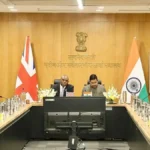




Supreme Court India signs MoU with Bhutan for law clerk exchange, promoting judicial cooperation, legal capacity building, and international collaboration under Neighbourhood First policy.
Supreme Court of India Signs MoU with Bhutan for Law Clerk Exchange
In a significant move to deepen judicial cooperation and strengthen regional ties, the Supreme Court of India has signed a Memorandum of Understanding (MoU) with the Supreme Court of Bhutan to enable the exchange of young legal professionals. This initiative highlights India’s commitment to collaborative legal education and institutional diplomacy with its neighbouring country.
The agreement, announced by Chief Justice of India Surya Kant, was formalised during Supreme Court proceedings where he also welcomed two law clerks from Bhutan into the Indian apex court’s fold. These clerks will work with judges and legal teams at the Supreme Court of India for a period of three months, receiving the same honorarium as their Indian counterparts, with travel expenses fully borne by the Supreme Court of India.
This exchange programme fosters exposure to complex legal adjudication, research, and courtroom practices — allowing young Bhutanese law professionals to gain first-hand insight into the workings of India’s legal system. It marks a noteworthy step in expanding judicial diplomacy and institutional collaboration between New Delhi and Thimphu under India’s broader “Neighbourhood First” policy framework.
The agreement also builds on previous engagements, including high-level judicial visits between the two countries. During the exchange, Bhutanese clerks will participate alongside Indian law clerks in legal research, case preparation, and court hearings, thereby strengthening mutual understanding of constitutional principles, legal frameworks, and emerging judicial trends.
Main Features of the MoU
- Exchange of Law Clerks: Two Bhutanese law clerks to work at the Supreme Court of India for three months.
- Equal Remuneration: Bhutanese clerks receive the same honorarium as Indian law clerks.
- Travel Support: Travel costs are fully funded by the Supreme Court of India.
- Capacity Building: The programme encourages judicial learning and institutional collaboration.
This MoU is part of a growing trend of international judicial cooperation, where apex courts collaborate to improve legal scholarship, share best practices, and strengthen legal systems across borders — a development that holds value for future legal practitioners and public administration aspirants alike.

Why This News is Important for Government Exam Aspirants
Understanding the Supreme Court’s MoU with Bhutan is essential for students preparing for competitive exams because it blends current affairs with legal and diplomatic knowledge:
Judicial Cooperation & Diplomacy
This development signifies how the judiciary goes beyond domestic adjudication to foster international cooperation — especially between neighbouring nations like India and Bhutan. For civil service and legal exam aspirants, recognizing the role of judicial diplomacy enhances comprehension of India’s foreign policy tools beyond traditional government channels.
Policy Application
The MoU reflects India’s Neighbourhood First policy which prioritises strong ties with neighbouring countries. Such policies often appear in general studies and international relations sections of UPSC, PCS, and state administrative services exams.
Legal System Insight
By facilitating clerk exchanges, the Supreme Court enables cross-learning about legal systems and procedures — insightful for aspirants aiming for judicial services, law faculty roles, or roles that require understanding of justice delivery mechanisms.
Exam Relevance
Questions related to this topic can appear in sections like Governance, Legal Framework, International Relations, and Current Affairs. Awareness of such initiatives strengthens students’ ability to answer both direct and analytical questions.
Historical Context: Judicial Collaboration and MoUs
Judicial cooperation through MoUs is not new for India. Over the years, the Supreme Court of India has entered into similar agreements with other countries’ apex courts, such as Nepal and Singapore, to promote legal exchange and collaborative learning.
These MoUs typically facilitate:
- Exchange visits of judges and legal experts
- Training programmes
- Sharing of judicial innovations and case-management practices
The law clerk exchange with Bhutan builds upon this pattern of deepening institutional ties aimed at strengthening the rule of law, enhancing legal capacities, and modernising judicial processes through knowledge sharing.
Key Takeaways from “Supreme Court Signs MoU for Law Clerks Exchange With Bhutan”
| S. No. | Key Takeaway |
|---|---|
| 1 | Supreme Court of India signed an MoU with the Supreme Court of Bhutan for law clerk exchange. |
| 2 | Two Bhutanese law clerks will work at the Supreme Court of India for three months. |
| 3 | They will receive the same honorarium as Indian law clerks, with travel expenses covered. |
| 4 | The programme fosters judicial cooperation and capacity building between the two countries. |
| 5 | This initiative reflects India’s Neighbourhood First policy and strengthens legal ties. |
FAQs: Frequently Asked Questions
1. What is the recent MoU signed by the Supreme Court of India about?
The Supreme Court of India signed a Memorandum of Understanding (MoU) with the Supreme Court of Bhutan to facilitate the exchange of law clerks. Two Bhutanese law clerks will work at the Indian Supreme Court for three months, gaining exposure to legal research, case preparation, and courtroom practices.
2. How long will the Bhutanese law clerks work in India?
The Bhutanese law clerks will be posted at the Supreme Court of India for a period of three months.
3. Will Bhutanese law clerks receive any remuneration?
Yes, Bhutanese clerks will receive the same honorarium as Indian law clerks, and their travel expenses will be fully borne by the Supreme Court of India.
4. Why is this MoU significant for India-Bhutan relations?
The MoU strengthens judicial cooperation and reflects India’s Neighbourhood First policy. It promotes knowledge sharing, legal capacity building, and closer institutional ties between the two countries.
5. Have there been similar MoUs in the past?
Yes, the Supreme Court of India has signed MoUs with countries like Nepal and Singapore for judicial exchanges and collaboration to promote legal scholarship and capacity building.
6. How is this news relevant for government exam aspirants?
This news is important for exams like UPSC, PCS, banking, and judicial services as it covers topics under current affairs, governance, international relations, and legal frameworks.
7. What kind of exposure will the Bhutanese clerks receive in India?
They will work with Indian law clerks and judges, participating in legal research, case analysis, courtroom observation, and understanding constitutional principles and judicial procedures.
Some Important Current Affairs Links