










Supreme Court Upholds Abrogation of Article 370: Key Judgment Highlights
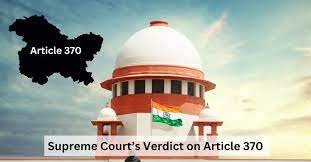
The Supreme Court’s recent verdict upholding the abrogation of Article 370 has been a pivotal moment in the legal landscape of India. This landmark decision reaffirms the constitutional validity of the government’s move to revoke the special status accorded to Jammu and Kashmir. The judgment, a culmination of meticulous legal deliberation, has significant implications for various competitive exams, including those aspiring for positions in the civil services, judiciary, and more.
The apex court’s ruling, delivered by a bench of esteemed justices, solidifies the constitutional footing of the government’s decision to nullify Article 370. This decision holds immense importance for aspirants preparing for government examinations, especially those focusing on constitutional law, political science, and the Indian polity.
Why this News is Important:
Reaffirmation of Constitutional Validity
The Supreme Court’s verdict affirming the abrogation of Article 370 marks a watershed moment in India’s legal history. This decision reiterates the constitutional validity of the government’s action and carries immense significance for aspirants preparing for exams focusing on constitutional law and the Indian polity.
Implications for Governance and Policies
This judgment has far-reaching implications for governance, particularly in the erstwhile state of Jammu and Kashmir. Aspirants eyeing civil service positions need to comprehend the ramifications on governance, administration, and policy-making in the region.
Historical Context:
The revocation of Article 370 in 2019 was a historic move by the Indian government, altering the special status of Jammu and Kashmir. This provision, granting the region a distinct autonomy, had been a subject of contention for decades. Its abrogation aimed to integrate Jammu and Kashmir more closely with the Indian Union.
Key Takeaways:
| Serial Number | Key Takeaway |
|---|---|
| 1. | Supreme Court upheld the constitutional validity of |
| the government’s decision to abrogate Article 370. | |
| 2. | Implications extend to governance and policies in |
| Jammu and Kashmir, pertinent for civil service exams. | |
| 3. | Understanding the historical context of Article 370’s |
| abrogation is crucial for comprehensive exam preparation. | |
| 4. | The judgment emphasizes the significance of constitutional |
| law and the Indian polity for aspirants aiming for exams. | |
| 5. | This ruling signifies a landmark moment in Indian legal |
| history, shaping discussions on federalism and autonomy. |
Important FAQs for Students from this News
1. What was the significance of Article 370 in Jammu and Kashmir before its abrogation?
- Article 370 granted special status to Jammu and Kashmir, providing the region with autonomy in various aspects, including legislation and governance.
2. How did the Supreme Court’s recent verdict impact the constitutional validity of the government’s decision on Article 370?
- The Supreme Court upheld the constitutional validity of the government’s move to revoke Article 370, affirming its legality.
3. Why is this judgment important for students preparing for government exams?
- Understanding this judgment is vital as it relates to constitutional law, the Indian polity, and governance, topics often tested in various competitive exams.
4. What historical events led to the abrogation of Article 370?
- The abrogation of Article 370 in 2019 was a significant decision following years of debate and contention over the region’s special status.
5. How does this verdict influence the governance and policies in the former state of Jammu and Kashmir?
- The verdict has implications for governance, administration, and policy-making in Jammu and Kashmir, an essential aspect for civil service aspirants to comprehend.
Some Important Current Affairs Links