



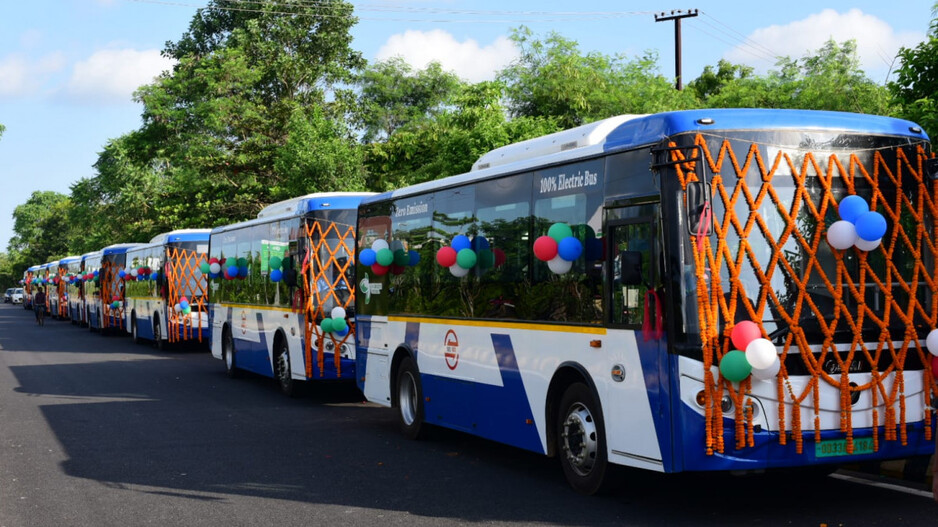
Odisha electric bus adoption ranks 5th in India with 450 e-buses. The state plans to expand its fleet to over 1,000, leading Eastern India in sustainable public transport under CRUT.
Odisha Ranks 5th in E-Bus Adoption, Plans 1,000+ Fleet
India’s Green Mobility Landscape: Where Odisha Stands
Odisha has emerged as a frontrunner in India’s push for sustainable urban transport by securing the 5th position nationwide in the adoption of electric buses. The state currently operates 450 e-buses, placing it behind Delhi (3,564), Maharashtra (3,296), Karnataka (2,236), and Uttar Pradesh (850)
Notably, Odisha has outpaced neighbouring eastern states: West Bengal (391), Andhra Pradesh (238), Chhattisgarh (215), and Jharkhand (46), establishing itself as the leading green mobility pioneer in Eastern India
Odisha’s Plan to Scale Up E-Bus Operations
Spearheading these efforts, the Capital Region Urban Transport (CRUT) has deployed e-bus services in Bhubaneswar, Cuttack, and Puri. The state’s ambition now stretches further: expanding services to Sambalpur, Jharsuguda, Keonjhar, Berhampur, and Angul, with a bold vision to more than double its fleet to over 1,000 e-buses in the near future
Enhancing Infrastructure & Commuter Experience
To facilitate this expansion, Odisha is investing in sustainable infrastructure:
- Charging stations are being installed at bus depots and terminals.
- Smart ticketing systems are being introduced, including QR-based payments, National Common Mobility Card (NCMC) integration, and app-based bookings
These measures aim to ensure seamless and commuter-friendly urban mobility.
Official Voices & Strategic Vision
Housing & Urban Development Minister Krushna Chandra Mahapatra has highlighted that Odisha’s swift adoption of e-mobility reflects its commitment to both environmental sustainability and citizens’ welfare.
Principal Secretary Usha Padhee added that by combining technology with green infrastructure, the state is creating a modern, efficient, and inclusive urban transit system

Why this News Is Important
Strengthening the Green Agenda
Odisha’s push to scale its e-bus fleet aligns with India’s broader national objectives of reducing carbon emissions, enhancing sustainable urban infrastructure, and promoting eco-friendly public transport systems. This positions Odisha as a key contributor to the country’s journey toward climate resilience.
Competitive Edge in Exam Preparation
For students preparing for government exams—especially in transport, environment, urban planning, and general studies—this news offers critical insights into state-level policy execution, public infrastructure planning, and inter-state comparisons that are often asked in both preliminary and mains stages.
Infrastructure & Policy Integration
The state’s investment in charging infrastructure and digital ticketing systems demonstrates an integrated approach combining technology, convenience, and sustainability. It provides a tangible case study for policy implementation under central support schemes such as FAME and smart urban transport missions.
Regional Leadership
Odisha’s leadership over its regional peers underscores strategic prioritization and effective governance. It sets a benchmark for other Eastern states, making it relevant for questions on federalism, regional development, and comparative analysis in exams.
Reflecting Citizen-Centric Governance
By offering affordable, air-conditioned e-bus services in cities like Bhubaneswar, Cuttack, and Puri—and soon beyond—Odisha signals a shift towards dignified, safe, and inclusive public transport. This focus on citizen welfare and accessibility ties into broader themes of governance quality, social equity, and urban policy—all vital subjects for civil services and public administration roles.
Historical Context
Origins of India’s E-Bus Networks
India’s introduction to electric buses began with Bengaluru’s first intra-city e-bus service in March 2014, followed by Ashok Leyland unveiling the country’s first indigenous e-bus in October 2016. By August 2019, the government had sanctioned 5,595 e-buses across 64 cities under the FAME-II scheme
Odisha’s Public Transport Evolution
Odisha’s Ama Bus (formerly Mo Bus), run by the Capital Region Urban Transport (CRUT), has long been central to public transport across urban areas like Bhubaneswar, Cuttack, Puri, Rourkela, Sambalpur, and Berhampur. While the fleet historically ran on diesel, CNG, and hybrid systems, the transition toward electric buses extends an existing public system into cleaner mobility
Policy Catalysts & Central Support
E-bus deployments across states have been largely facilitated through central government initiatives. Odisha’s expansion is part of a broader national ecosystem where financial incentives, policy backing, and infrastructure grants under schemes like FAME-II have driven green mobility adoption
Key Takeaways from This News
| # | Key Takeaway |
|---|---|
| 1 | Odisha ranks 5th nationally in electric bus adoption, with 450 e-buses currently operational. |
| 2 | The state aims to expand its e-bus fleet to over 1,000, more than doubling current numbers. |
| 3 | Deployment led by CRUT, starting in Bhubaneswar, Cuttack, and Puri, expanding to Sambalpur, Jharsuguda, Keonjhar, Berhampur, and Angul. |
| 4 | Investments include charging infrastructure, QR payments, NCMC integration, and app-based ticketing for commuters. |
| 5 | Odisha leads green mobility in Eastern India, outperforming states like West Bengal, Andhra Pradesh, Chhattisgarh, and Jharkhand. |
FAQs – Frequently Asked Questions
1. Which state ranks 5th in India for electric bus adoption?
Odisha ranks 5th in India with 450 operational e-buses.
2. What is Odisha’s target for expanding its e-bus fleet?
Odisha plans to scale its fleet to over 1,000 electric buses in the coming years.
3. Which cities in Odisha currently have e-bus operations?
E-buses are operational in Bhubaneswar, Cuttack, and Puri, with expansion planned for Sambalpur, Jharsuguda, Keonjhar, Berhampur, and Angul.
4. Who manages Odisha’s electric bus services?
The Capital Region Urban Transport (CRUT) manages and operates Odisha’s e-bus services.
5. What digital facilities are being introduced in Odisha’s e-buses?
The buses will feature QR code ticketing, National Common Mobility Card (NCMC) integration, and app-based ticket booking.
6. How does Odisha compare to neighbouring states in e-bus adoption?
Odisha leads Eastern India, surpassing West Bengal (391), Andhra Pradesh (238), Chhattisgarh (215), and Jharkhand (46).
7. Which central government scheme supports e-bus adoption?
The FAME-II scheme (Faster Adoption and Manufacturing of Hybrid and Electric Vehicles) provides financial and policy support for e-bus expansion.
8. Who are the key officials behind Odisha’s e-bus strategy?
Housing & Urban Development Minister Krushna Chandra Mahapatra and Principal Secretary Usha Padhee have been central in advancing the state’s e-mobility mission.
9. When did India first introduce electric buses?
India’s first intra-city e-bus service began in Bengaluru in 2014, followed by Ashok Leyland’s first indigenous e-bus in 2016.
10. Why is Odisha’s e-bus push significant for exams?
It reflects sustainable governance, regional leadership, infrastructure development, and climate policy execution—all key topics in competitive exam syllabi.
Some Important Current Affairs Links