










Introduction: A Milestone in Infrastructure Innovation
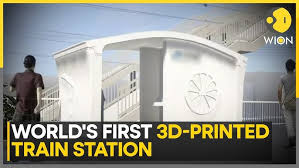
Japan has set a new benchmark in technological innovation and sustainable infrastructure development by constructing the world’s first 3D-printed train station. The East Japan Railway Company (JR East) recently completed the construction of a public-use train station using advanced 3D printing technology, showcasing a futuristic blend of efficiency, cost-effectiveness, and environmental sustainability.
Details of the Construction and Features
The station, located in Tokyo’s Takanawa Gateway area, was built using a concrete 3D printer. The structure was completed in record time, highlighting the benefits of using additive manufacturing in public infrastructure. Unlike traditional construction methods, 3D printing drastically reduces construction waste, labor requirements, and cost. The station design includes modern amenities and passenger-friendly layouts, ensuring functionality without compromising aesthetics.
Environmental and Economic Impact
The use of 3D printing not only accelerates construction but also aligns with eco-friendly goals. By minimizing raw material usage and carbon emissions, this approach supports Japan’s long-term commitment to green infrastructure. Additionally, it reduces dependency on skilled labor, an area where Japan faces workforce shortages due to an aging population.
Technological Advancement and Global Influence
Japan’s pioneering initiative could reshape global perspectives on urban development. Countries with similar infrastructure challenges, especially those looking to modernize rural or remote transportation hubs, can benefit immensely from this model. This innovation positions Japan as a leader in combining technology with sustainable development.
Relevance to Competitive Exam Aspirants
For students preparing for government exams—particularly in the fields of civil services, railways, defence, teaching, and public infrastructure—this topic is highly relevant. It combines aspects of science and technology, current affairs, environmental sustainability, and international benchmarking—all of which are significant in competitive examinations.
Why This News is Important
Innovation in Public Infrastructure
This development marks a revolutionary change in how public infrastructure can be built. Competitive exam aspirants must understand how 3D printing can be leveraged to solve real-world construction challenges, reduce cost, and accelerate development in developing countries.
Relevance for India’s Infrastructure Goals
India, like Japan, faces challenges in rapid urbanization and infrastructure development. Learning from Japan’s model can inspire policy-making and implementation of advanced technologies like 3D printing in India’s Smart Cities Mission, railway modernization, and public housing projects. Awareness of such innovations gives exam aspirants an edge in both written exams and interviews.
Historical Context: Evolution of 3D Printing in Construction
The use of 3D printing in construction dates back to the early 2000s, with experimental buildings created using large-scale printers. The technology gained traction globally due to its speed and precision. In 2018, Dubai announced the world’s first 3D-printed office, and in 2021, India witnessed the construction of its first 3D-printed house by IIT Madras in collaboration with Tvasta. Japan’s initiative takes this a step further by integrating 3D printing into a fully functional public transportation system—a first in the world.
Key Takeaways from “Japan’s 3D-Printed Train Station”
| S.No. | Key Takeaway |
|---|---|
| 1 | Japan has built the world’s first 3D-printed train station in Tokyo. |
| 2 | The project was led by the East Japan Railway Company (JR East). |
| 3 | 3D printing reduces construction time, cost, and environmental impact. |
| 4 | The technology addresses Japan’s labor shortage by minimizing manpower needs. |
| 5 | This innovation could inspire similar infrastructure models worldwide. |
FAQs: Frequently Asked Questions
Q1. Which country built the world’s first 3D-printed train station?
Ans: Japan built the world’s first 3D-printed train station in Tokyo’s Takanawa Gateway area.
Q2. What is the main advantage of 3D printing in construction?
Ans: 3D printing in construction significantly reduces building time, labor requirements, costs, and environmental impact by minimizing waste and using fewer raw materials.
Q3. Who constructed the 3D-printed train station in Japan?
Ans: The East Japan Railway Company (JR East) was responsible for constructing the world’s first 3D-printed train station.
Q4. Why is this development relevant for government exam aspirants in India?
Ans: It covers current affairs, science and technology, infrastructure development, and environmental innovation—all key subjects in exams like UPSC, State PCS, SSC, and Railways.
Q5. Has India used 3D printing in construction before?
Ans: Yes, India’s first 3D-printed house was built in 2021 by IIT Madras and Tvasta, showing the growing interest in this technology.
Some Important Current Affairs Links