



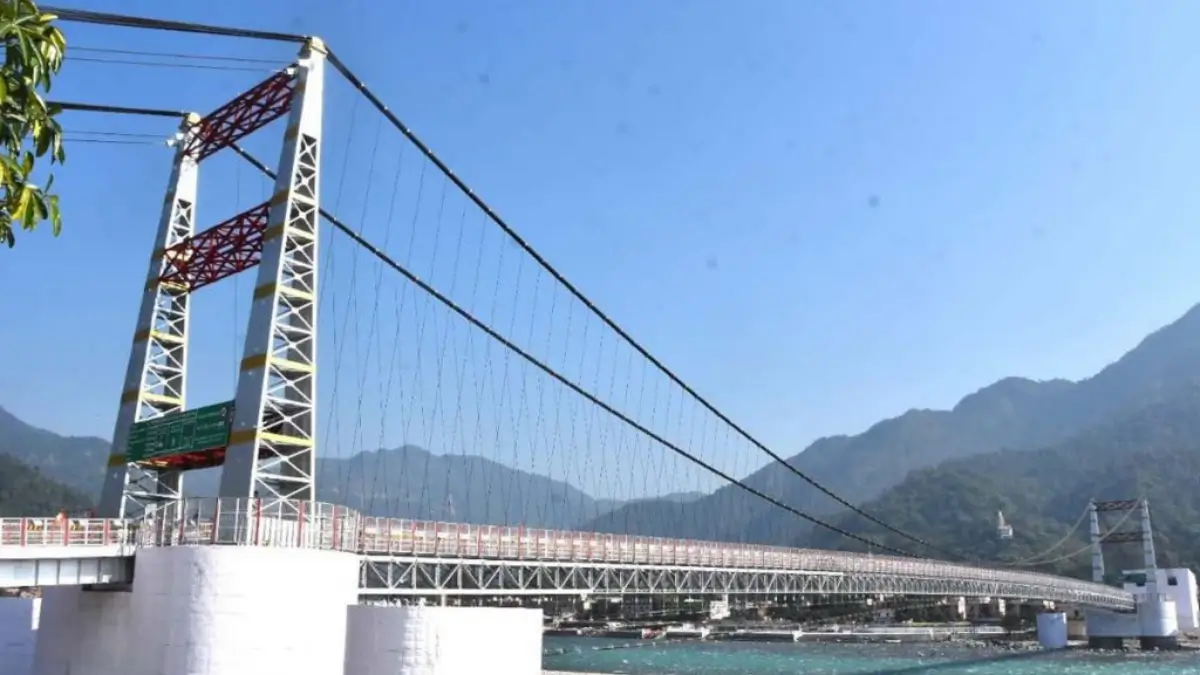
India’s first glass bridge, Bajrang Setu, set to open in Rishikesh by 2025, will replace Laxman Jhula, boosting tourism and enhancing connectivity across the Ganga River.
Bajrang Setu – India’s First Glass Suspension Bridge Set to Transform Rishikesh by 2025
Introduction to Bajrang Setu
Rishikesh, the spiritual heart of Uttarakhand, is on the brink of unveiling a monumental infrastructure project—Bajrang Setu, India’s first glass suspension bridge. Spanning 132 meters in length and 8 meters in width, this modern marvel is poised to replace the iconic Laxman Jhula, a century-old bridge that has been closed since 2019 due to safety concerns. The new bridge is expected to open by December 2025, marking a significant milestone in the region’s development.
Structural Features and Design
Bajrang Setu is engineered to blend modernity with spiritual symbolism. The bridge will feature 1.5-meter-wide glass walkways on both sides, constructed from 66-mm-thick reinforced glass panels, offering pedestrians a transparent view of the Ganga River below. The central deck is designed to accommodate light vehicles, ensuring seamless connectivity across the river. Inspired by the architecture of the Kedarnath Temple, the bridge’s towers will depict figures of Kedarnath on one side and Badrinath on the other, reflecting the region’s rich cultural heritage.
Economic and Tourism Implications
With an estimated cost of ₹60 crore, Bajrang Setu is set to be a catalyst for economic growth and tourism in Rishikesh. The bridge’s unique design and strategic location are expected to attract both domestic and international tourists, boosting local businesses and creating employment opportunities. Moreover, the project aligns with the government’s vision to enhance infrastructure while preserving the region’s spiritual essence.
Safety Considerations and Public Awareness
While the bridge promises to be a significant addition to Rishikesh’s landscape, safety remains a top priority. Authorities have issued advisories urging visitors to avoid entering construction zones. A recent incident highlighted the importance of adhering to safety guidelines: a 31-year-old software engineer from Madhya Pradesh fell into the Ganga River after entering a restricted area of the under-construction bridge. His body was recovered after an eight-day search operation.

Why This News Is Important
Enhancing Connectivity and Infrastructure
The completion of Bajrang Setu will significantly improve connectivity between the Tapovan and Jonk villages, facilitating smoother movement for locals and tourists alike. By replacing the outdated Laxman Jhula, the new bridge addresses safety concerns and accommodates modern transportation needs.
Promoting Sustainable Tourism
The introduction of a glass suspension bridge in a spiritually significant location underscores India’s commitment to sustainable tourism. Bajrang Setu is expected to become a major tourist attraction, drawing visitors interested in experiencing the fusion of modern engineering and cultural heritage.
Symbolizing Cultural Integration
The design elements of Bajrang Setu, inspired by the Kedarnath and Badrinath temples, symbolize the integration of modern infrastructure with traditional cultural values. This blend of architecture reflects India’s ability to honor its heritage while embracing innovation.
Contributing to Economic Growth
The bridge’s construction and subsequent tourism influx are anticipated to stimulate the local economy. Increased visitor numbers will benefit hospitality, retail, and transportation sectors, leading to job creation and economic development in the region
Highlighting Safety Awareness
The recent incident at the under-construction site serves as a stark reminder of the importance of safety protocols in construction zones. It emphasizes the need for public awareness and adherence to safety guidelines to prevent accidents and ensure the well-being of all individuals.
Historical Context
The Legacy of Laxman Jhula
Laxman Jhula, constructed in 1929, has been a pivotal structure in Rishikesh, connecting the villages of Tapovan and Jonk across the Ganga River. According to legend, it marks the spot where Lord Lakshman crossed the river using a jute rope. Over the years, the bridge has become a symbol of faith and resilience. However, structural assessments in recent years identified safety concerns, leading to its closure in 2019.
The Need for Modernization
The decision to replace Laxman Jhula with Bajrang Setu stems from the necessity to modernize infrastructure while preserving cultural heritage. The new bridge is designed to meet contemporary safety standards and accommodate increased traffic, ensuring the region’s connectivity and safety for years to come.
Key Takeaways from Bajrang Setu – India’s First Glass Suspension Bridge
| S.No | Key Takeaway |
|---|---|
| 1 | India’s First Glass Suspension Bridge: Bajrang Setu is set to be India’s first glass suspension bridge, combining modern engineering with spiritual symbolism. |
| 2 | Replacement of Laxman Jhula: The new bridge will replace the historic Laxman Jhula, addressing safety concerns and enhancing connectivity. |
| 3 | Glass Walkways: The bridge will feature 1.5-meter-wide glass walkways, offering pedestrians a transparent view of the Ganga River below. |
| 4 | Cultural Significance: Inspired by the architecture of the Kedarnath and Badrinath temples, the bridge reflects the region’s rich cultural heritage. |
| 5 | Safety Measures: Authorities have emphasized the importance of adhering to safety guidelines in construction zones to prevent accidents. |
Conclusion
Bajrang Setu stands as a testament to India’s commitment to merging modern infrastructure with cultural heritage. As Rishikesh prepares to unveil this architectural marvel, it signifies a new chapter in the region’s development, promising enhanced connectivity, economic growth, and a renewed sense of cultural pride.
FAQs: Frequently Asked Questions
1. What is Bajrang Setu?
Bajrang Setu is India’s first glass suspension bridge being constructed in Rishikesh, Uttarakhand. It will replace the historic Laxman Jhula and is expected to open by December 2025.
2. Why is Bajrang Setu being built?
The bridge is being built to enhance connectivity between Tapovan and Jonk villages, improve tourist infrastructure, and replace the structurally unsafe Laxman Jhula.
3. What are the unique features of Bajrang Setu?
It will have 1.5-meter-wide glass walkways on both sides, a central deck for light vehicles, and towers inspired by Kedarnath and Badrinath temples, blending modern engineering with cultural heritage.
4. How much is the estimated cost of Bajrang Setu?
The estimated cost of constructing Bajrang Setu is ₹60 crore.
5. What safety measures are emphasized during construction?
Authorities have issued advisories to avoid entering construction zones. The recent accident involving a software engineer highlights the importance of following safety protocols.
6. How will Bajrang Setu impact tourism and the economy?
The bridge is expected to attract domestic and international tourists, boosting local businesses, employment, and overall economic growth in Rishikesh.
Some Important Current Affairs Links




