







Parvati‑Arga Bird Sanctuary ESZ declared by Government of India in Uttar Pradesh to protect biodiversity and migratory birds. Learn key facts, significance, and exam notes.
Government Declares Parvati-Arga Bird Sanctuary as Eco-Sensitive Zone
Overview of the Eco-Sensitive Zone Declaration
In late December 2025, the Government of India officially declared the Parvati-Arga Bird Sanctuary in Gonda district, Uttar Pradesh as an Eco-Sensitive Zone (ESZ). This decision was announced by Union Minister of State for Environment, Forest and Climate Change, Kirti Vardhan Singh, who highlighted that the move is aimed at strengthening the ecological protection of this important wetland ecosystem and regulating developmental activities in its vicinity to protect biodiversity and promote sustainable land use.
The sanctuary, spread over approximately 1,084 hectares, has been recognised for its rich avian biodiversity, attracting migratory birds from regions such as Central Asia and Tibet during the winter season and serving as a habitat for resident bird species and other wildlife. With the ESZ notification, stringent environmental safeguards will now apply in the surrounding area to minimise ecological disturbance from industrialisation, construction and pollution.
What Are Eco-Sensitive Zones (ESZ)?
Eco-Sensitive Zones (ESZ) are areas notified by the Ministry of Environment, Forest and Climate Change (MoEFCC) under the Environment (Protection) Act, 1986, to act as shock absorbers or buffer zones around protected areas like wildlife sanctuaries, national parks, and wetlands. These zones regulate and manage human activities such as mining, industrial expansion and unplanned construction in order to minimise ecological damage. ESZs typically extend up to 10 kilometres from the boundary of a protected area, although the exact width depends on ecological considerations and administrative decisions.
By declaring the Parvati-Arga Bird Sanctuary an ESZ, the government aims to balance conservation needs with socio-economic interests, encouraging responsible tourism and sustainable livelihoods while safeguarding fragile habitats.
Ecological Significance of Parvati-Arga Bird Sanctuary
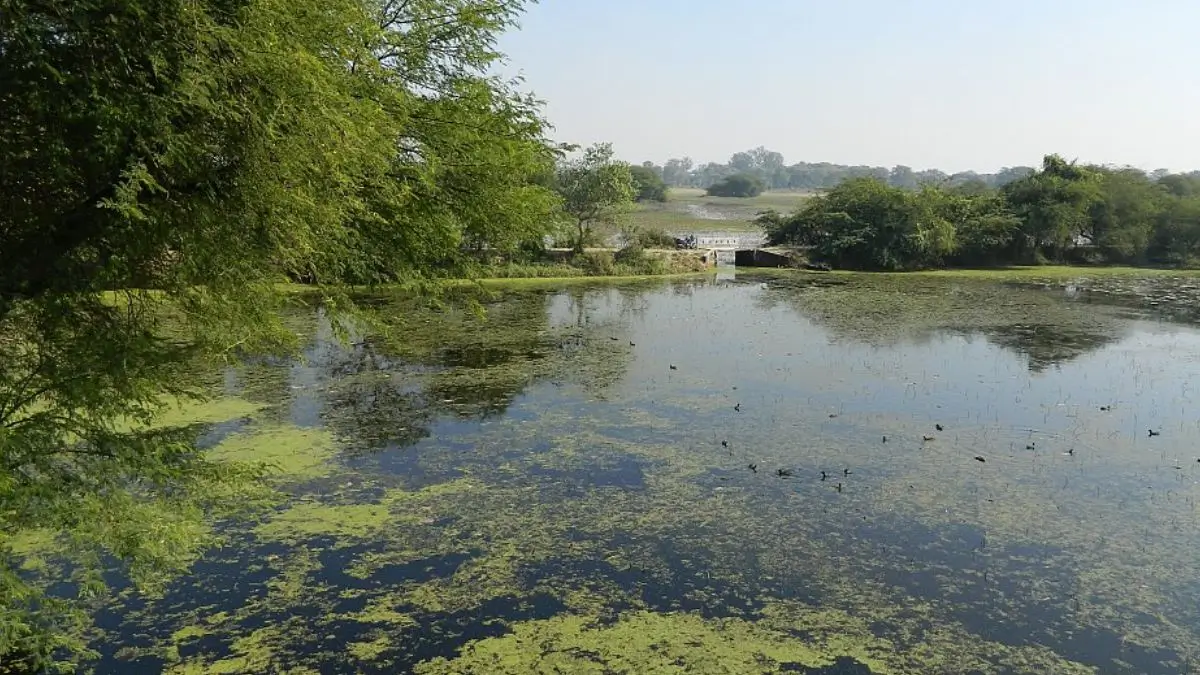
Located in Gonda district of Uttar Pradesh, Parvati-Arga Bird Sanctuary is a crucial wetland ecosystem composed of two permanent freshwater lakes — Parvati and Arga. Recognised as a Ramsar Site of International Importance, it functions as a vital ecological landscape in the Indo-Gangetic Plains.
Each year, thousands of migratory birds travel to this sanctuary during the winter months, including over 40,000 waterfowl such as ducks, geese, and cranes. The area also supports a diverse range of resident species, including the state bird Sarus Crane, and mammals like jackals and nilgai. These wetlands play a critical role in groundwater recharge, flood regulation, and maintaining biodiversity balance in the region.
Impact on Conservation and Local Livelihoods
The ESZ declaration enhances legal protection around the sanctuary and restricts activities that may degrade its environmental quality. Industries, polluting processes and large-scale construction will face strict regulation within the buffer zone, ensuring long-term habitat conservation.
At the same time, the government has emphasised the development of responsible eco-tourism, which can generate sustainable employment for local communities while encouraging environmental awareness among visitors. By focusing on eco-tourism and biodiversity conservation, the sanctuary’s protected status benefits both nature and people dependent on the wetland ecosystem.

Why this News is Important for Government Exam Aspirants
Relevance to Environment & Ecology Syllabus
This news holds significant importance for aspirants preparing for UPSC (IAS/IPS), State PSCs, SSC, Railway, Banking, Defence and Police Exams, especially for the Environment and Ecology section:
- Understanding Protected Area Management: The declaration showcases how the government uses statutory tools like ESZ under the Environment (Protection) Act, 1986 to safeguard ecological balance.
- Environmental Laws and Policies: Knowing the concept and purpose of Eco-Sensitive Zones (ESZ) is crucial for questions on environmental governance and biodiversity conservation.
- Wetland Conservation: The Parvati-Arga sanctuary exemplifies wetland protection, a recurring topic in exam papers due to its significance in climate resilience, biodiversity and sustainable development.
- Biodiversity Hotspots: Questions on migratory bird habitats, Ramsar sites and imperilled species are common in competitive exams. This news helps candidates link current affairs with static syllabus areas.
Understanding this development allows aspirants to answer factual questions and write informed essays or descriptive answers related to environment, conservation, policy implementation and sustainable development.
Historical Context: Protection of Wetlands and ESZ Policies in India
The concept of Eco-Sensitive Zones (ESZ) emerged as part of India’s broader strategy to protect its network of protected areas, including national parks, wildlife sanctuaries, biosphere reserves and wetlands. These zones are notified under the Environment (Protection) Act, 1986, empowering the government to regulate activities around critical ecological landscapes to minimise negative impacts.
Traditionally, wetlands in India received protection through various policy measures, including the Ramsar Convention — an international treaty adopted in 1971 to conserve wetlands of global importance. India, as a signatory, has designated many wetlands as Ramsar sites to prioritise ecological protection. Adding ESZ status around such wetlands strengthens legal safeguards further by imposing activity restrictions.
The declaration of ESZs also aligns with several Supreme Court directives mandating buffer zones around protected areas to reduce human–wildlife conflict and ecological degradation. Consequently, ESZs serve as an essential mechanism within India’s environmental governance framework, balancing development needs with ecological security.
Key Takeaways from ‘Parvati-Arga Bird Sanctuary Declared Eco-Sensitive Zone’
| S. No. | Key Takeaway |
|---|---|
| 1. | The Government of India declared Parvati-Arga Bird Sanctuary in Uttar Pradesh as an Eco-Sensitive Zone (ESZ) in December 2025. |
| 2. | The decision was announced by Union Minister of State for Environment, Forest and Climate Change, Kirti Vardhan Singh. |
| 3. | The sanctuary spans approximately 1,084 hectares and supports migratory and resident bird species. |
| 4. | ESZ status imposes environmental safeguards to regulate development and protect biodiversity. |
| 5. | Parvati-Arga Bird Sanctuary is a Ramsar-recognised wetland, playing a key role in ecological balance and water management in the Indo-Gangetic plains. |
FAQs: Frequently Asked Questions
1. What is the Parvati‑Arga Bird Sanctuary?
The Parvati‑Arga Bird Sanctuary is a protected wetland in Gonda district, Uttar Pradesh, known for hosting migratory and resident bird species. It spreads over approximately 1,084 hectares and includes two freshwater lakes, Parvati and Arga.
2. When was Parvati‑Arga Bird Sanctuary declared an Eco‑Sensitive Zone (ESZ)?
The sanctuary was officially declared an Eco‑Sensitive Zone (ESZ) in December 2025 by the Government of India.
3. What is the purpose of declaring an Eco‑Sensitive Zone?
ESZs act as buffer zones around protected areas to regulate developmental activities, protect biodiversity, and ensure sustainable land use. Activities like mining, industrial expansion, and unplanned construction are restricted within these zones.
4. Who announced the ESZ declaration for Parvati‑Arga Bird Sanctuary?
The announcement was made by Union Minister of State for Environment, Forest and Climate Change, Kirti Vardhan Singh.
5. Why is Parvati‑Arga Bird Sanctuary ecologically important?
It is home to migratory birds from Central Asia and Tibet, supports species like the Sarus Crane, and plays a crucial role in groundwater recharge, flood regulation, and biodiversity maintenance in the Indo‑Gangetic Plains.
6. Is Parvati‑Arga Bird Sanctuary recognised internationally?
Yes, it is recognised as a Ramsar Wetland of International Importance, highlighting its global ecological significance.
7. How does the ESZ status impact local communities?
The ESZ promotes eco‑tourism and sustainable livelihoods, while restricting harmful industrial or construction activities, balancing conservation with local economic benefits.
Some Important Current Affairs Links