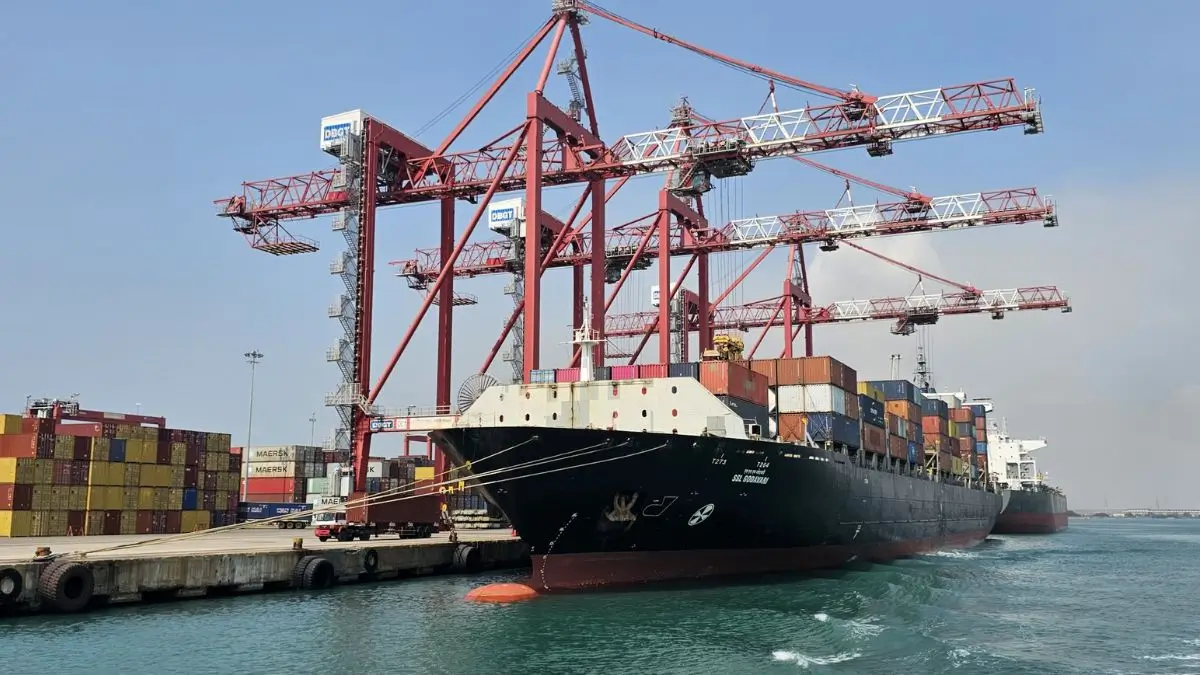







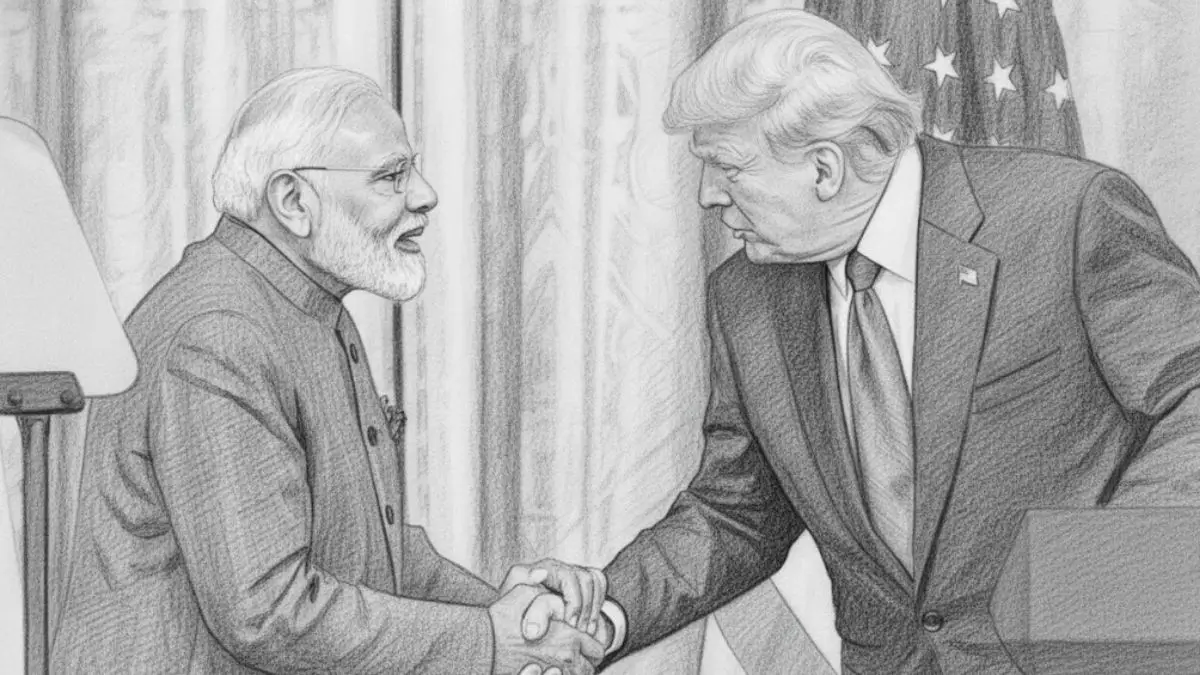
US lifts tariff on India after its Russian oil commitment, marking a major shift in India–US trade relations and global energy diplomacy important for competitive exam current affairs.
US Lifts 25% Tariff on Indian Goods After India’s Russian Oil Commitment – A Major Trade Breakthrough
Background of the US-India Tariff Issue
In August 2025, the United States, under President Donald Trump’s administration, imposed an additional 25% tariff on Indian imports beyond standard trade duties as a penalty for India’s continued purchases of discounted Russian crude oil — a move widely condemned by Indian industry and government as unfair and hurtful to exporters.
This tariff piled on top of the existing 25% reciprocal duty, taking the total effective tariff on many Indian exports to roughly 50%, thereby significantly raising trade costs.
What Changed: India’s Commitment on Russian Oil
On February 7, 2026, the US officially lifted the additional 25% punitive tariff on Indian goods after New Delhi made a key strategic commitment to stop importing Russian oil — both directly and indirectly.
According to the executive order, the tariff rollback was conditioned on India’s commitment not only on Russian oil, but also to expand defence cooperation and increase energy purchases from the United States over the next five years.
Interim Trade Framework and Tariff Reductions
Alongside the tariff removal, India and the US agreed upon an interim trade framework aimed at reducing reciprocal tariffs from 25% to 18% on Indian imports, thereby resetting bilateral trade terms and reducing uncertainties for exporters.
As part of this framework, India also pledged to purchase US goods worth $500 billion including energy, technology products, and aviation components over a period of five years.
Economic and Strategic Significance
This shift marks a considerable strategic realignment in India-US economic relations, potentially boosting Indian export competitiveness and stabilizing bilateral trade flows that had faced disruption due to tariffs.
While U.S. tariffs will remain on other imports, reducing punitive measures and recalibrating tariff levels provides enhanced clarity for businesses and exporters in both countries.

Why This News is Important for Government Exam Aspirants
Strategic Economic Relations Between India and the United States
Understanding the dynamics of India-US relations is crucial for exams like UPSC Civil Services, Banking, SSC, and other competitive tests, as this news highlights how trade policy and energy commitments can shape bilateral diplomatic ties. For aspirants, this event underscores the importance of economic diplomacy and global strategic partnerships in contemporary world affairs.
This development is also relevant to economic sections of exams, particularly topics like international trade agreements, tariff structures, and export-import policies. Students should note how geopolitical considerations — such as the Russia-Ukraine conflict — influence trade policy decisions between major economies.
The tariff rollback also illustrates real-world application of trade instruments like quantitative tariffs, executive orders, and how policy conditionality impacts global trade flows and negotiations.
This news is also significant for aspirants in defence and foreign affairs subjects, as it reflects shifting priorities in strategic ties between India and the US and how trade incentives can be linked to broader geopolitical interests. Understanding these nuances adds depth to answers and essays in competitive examinations.
Historical Context: India, Trade Tensions, and Russian Oil
India has historically sourced its crude oil from the Middle East and other traditional suppliers. However, after Western sanctions on Russia following its 2022 invasion of Ukraine, India emerged as a major buyer of discounted Russian crude oil due to energy security considerations.
India’s purchase strategy helped fuel economic growth by lowering import bills, but it drew strong objections from several Western nations, notably the US. In 2025, President Trump escalated trade tensions by imposing an additional 25% tariff specifically tied to India’s Russian oil imports.
This punitive tariff, coupled with existing duties, raised the total tariff burden to roughly 50% on many Indian exports, leading to protests from Indian industry bodies and policymakers.
The 2026 interim trade framework and the rollback of punitive tariffs reflect a significant turning point in this dispute — balancing India’s geopolitical decisions with broader trade objectives and strategic cooperation.
Key Takeaways from US Lifts Additional 25% Tariff After India’s Russian Oil Commitment
| S.No. | Key Takeaway |
|---|---|
| 1 | The US lifted the additional 25% punitive tariff on Indian imports imposed over Russia oil purchases. |
| 2 | India committed to stop direct and indirect imports of Russian oil as part of the agreement. |
| 3 | Bilateral trade framework includes reducing reciprocal tariffs to 18% from 25%. |
| 4 | India agreed to purchase $500 billion worth of US goods, boosting trade cooperation. |
| 5 | The move resets India-US trade relations and aims to reduce geopolitical tensions and trade uncertainties. |
FAQs: Frequently Asked Questions
1. Why did the United States impose an additional 25% tariff on Indian goods?
The US imposed an 25% additional tariff on Indian goods as a punitive trade measure in response to India’s continued purchase of discounted Russian crude oil. The move was linked to geopolitical tensions arising from the Russia-Ukraine conflict and was intended to pressure India to reduce its dependence on Russian energy imports.
2. What commitment did India make to get the tariff lifted?
India committed to stopping direct and indirect imports of Russian oil and agreed to strengthen trade and energy cooperation with the United States. This included increasing purchases of American energy and defence-related goods under an interim trade framework.
3. How does this decision impact India–US trade relations?
The lifting of the tariff improves bilateral trade relations by reducing export costs for Indian goods and restoring business confidence. It also signals deeper strategic and economic cooperation between the two countries, which is important for global trade and diplomacy.
4. Why is this news important for government exam aspirants?
This news is relevant for exams like UPSC, SSC, Banking, Railways, and State PSCs because it relates to international trade, foreign policy, energy security, and India–US diplomatic relations. These are key topics in current affairs and general studies sections.
5. What sectors are likely to benefit from the tariff removal?
Export-oriented sectors such as textiles, pharmaceuticals, engineering goods, and information technology are expected to benefit. Reduced tariffs make Indian products more competitive in the US market.
6. What broader geopolitical issue is connected to this development?
The development is connected to the Russia-Ukraine conflict and global energy politics. It highlights how geopolitical tensions influence international trade decisions and diplomatic negotiations.
Some Important Current Affairs Links