







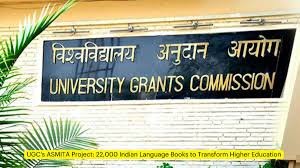
UGC’s ASMITA Project: Transforming Higher Education through Indian Language Books
Project Overview
The Ministry of Education and the University Grants Commission (UGC) have launched the ASMITA project to enhance Indian language literature in higher education. The initiative aims to develop 22,000 books in Indian languages over five years, promoting multilingual education and preserving linguistic heritage.
Project Launch and Leadership
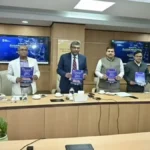
Launched by Sanjay Murthy, Secretary of Higher Education, the project aligns with the National Education Policy (NEP). UGC Chairman Jagadesh Kumar highlighted the goal of creating a robust ecosystem for translation and original book writing in 22 scheduled languages.
Implementation Strategy
Thirteen nodal universities will lead the project, working with regional institutions to create and translate content. The UGC’s Standard Operating Procedure (SOP) ensures consistency and quality in the book-writing process, covering stages from author identification to e-publication.
Complementary Initiatives
Alongside ASMITA, the ministry introduced the Bahubhasha Shabdakosh, a multilingual dictionary by the Central Institute of Indian Languages (CIIL) and the Bharatiya Bhasha Samiti. A Real-time Translation Architecture was also launched to facilitate the use of Indian languages in various domains.
Impact and Significance
Education Minister Dharmendra Pradhan emphasized the project’s potential to empower learners and promote linguistic diversity. By providing academic resources in multiple languages, ASMITA aims to make quality education more accessible and foster social cohesion.
Why This News is Important
Promoting Multilingual Education
The ASMITA project supports the National Education Policy (NEP) by emphasizing multilingual education. This initiative is crucial for preserving India’s linguistic heritage and promoting the use of regional languages in higher education.
Enhancing Accessibility
By developing 22,000 books in 22 scheduled languages, ASMITA aims to bridge linguistic gaps and make quality education more accessible to students from diverse linguistic backgrounds. This effort is expected to empower learners and improve academic outcomes.
Supporting Inclusive Education
ASMITA’s focus on creating academic resources in Indian languages aligns with the broader goal of inclusive education. By providing study materials in regional languages, the project aims to cater to the needs of students across different regions and socio-economic backgrounds.
Boosting Academic Research
The project’s emphasis on original book writing and translation in various disciplines is expected to enhance academic research and knowledge production in Indian languages. This initiative will contribute to the overall growth of India’s higher education sector.
Fostering Social Cohesion
The promotion of linguistic diversity through ASMITA is expected to foster social cohesion and unity. By encouraging the appreciation of various Indian languages and cultures, the project aims to build a more integrated and harmonious society.
Historical Context
National Education Policy (NEP)
The NEP, introduced in 2020, emphasizes the importance of multilingual education and the preservation of India’s linguistic heritage. It aims to promote the use of regional languages in education, aligning with the objectives of the ASMITA project.
Previous Initiatives
India has a history of initiatives aimed at promoting regional languages in education. Projects like the Central Institute of Indian Languages (CIIL) have played a significant role in developing language resources and supporting linguistic research.
Bharatiya Bhasha Samiti
The Bharatiya Bhasha Samiti, a high-powered committee under the Ministry of Education, has been instrumental in promoting Indian languages. The ASMITA project is a collaborative effort involving this committee, highlighting its ongoing contributions to linguistic education.
Multilingual Education in India
India’s diverse linguistic landscape has always necessitated multilingual education. Initiatives like ASMITA aim to address the challenges of providing quality education in multiple languages, supporting the nation’s linguistic diversity and cultural richness.
Technological Advancements
Advances in technology have facilitated the development and dissemination of educational resources in multiple languages. The ASMITA project leverages these advancements to create and distribute books in Indian languages, ensuring wider accessibility and impact.
Key Takeaways from ASMITA Project
| S.No | Key Takeaway |
|---|---|
| 1 | ASMITA aims to develop 22,000 books in Indian languages over five years. |
| 2 | The project supports the NEP’s emphasis on multilingual education. |
| 3 | Thirteen nodal universities will lead the implementation, with regional collaboration. |
| 4 | Complementary initiatives include the Bahubhasha Shabdakosh and Real-time Translation Architecture. |
| 5 | The project aims to enhance accessibility, promote linguistic diversity, and foster social cohesion. |
Important FAQs for Students from this News
What is the UGC’s Asmita Project?
- The UGC’s Asmita Project aims to integrate 22,000 books in Indian languages into higher education to promote linguistic diversity and inclusivity.
Why is the Asmita Project significant?
- This project is significant as it enhances accessibility to educational resources in regional languages, catering to a diverse student population.
How will the Asmita Project impact higher education?
- It will broaden the curriculum scope, encourage research in regional languages, and empower students with culturally relevant learning materials.
Which Indian languages are covered under the Asmita Project?
- The project includes books in various Indian languages such as Hindi, Bengali, Tamil, Telugu, Marathi, and more.
How can students access the books under the Asmita Project?
- The books will be made available through educational institutions and digital platforms, ensuring widespread access across the country.
Some Important Current Affairs Links