





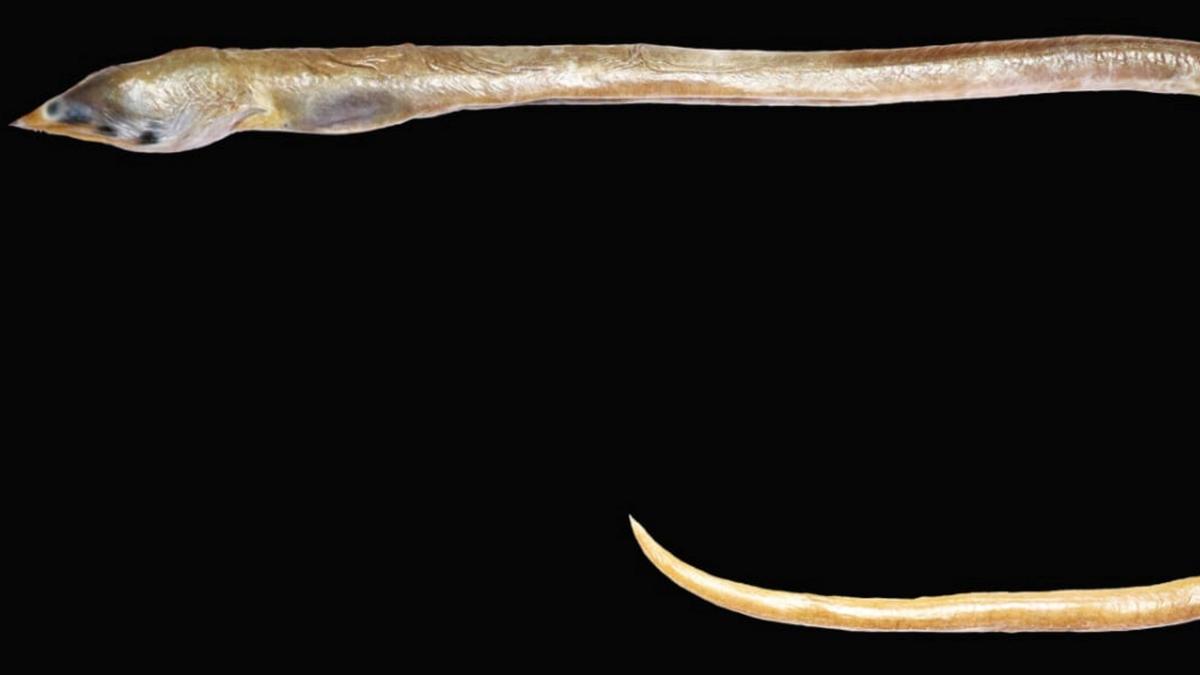
Apterichtus kanniyakumari discovery highlights a new eel species off Tamil Nadu coast, enhancing India’s marine biodiversity knowledge and deep-sea research insights.
New Eel Species ‘Apterichtus kanniyakumari’ Discovered off Tamil Nadu Coast
Discovery of a New Marine Species
A significant marine discovery has been made off the Colachel coast in the Kanyakumari district of Tamil Nadu. Researchers from the Indian Council of Agricultural Research – National Bureau of Fish Genetic Resources (ICAR-NBFGR), Kochi, have identified a new species of finless snake eel, named Apterichtus kanniyakumari.
Morphological Characteristics
The new eel species is characterized by its golden-yellow body coloration, pale white ventral side of the head with yellow lines along the lower jaw, and three black blotches—one behind the eyes, one at the rictus, and another behind the origin of the rictus. It has conical uniserial teeth on its jaws and vomer, and a vertebral formula of 52-131. The specimens collected were less than 40 cm in length.
Discovery Method and Significance
The specimens were collected during deep-sea trawling at a depth of approximately 100 meters. This discovery highlights the rich yet underexplored marine biodiversity of the Arabian Sea. The naming of the species honors the cultural, linguistic, historical, and geographical significance of the Kanyakumari district.

📌 Why This News is Important
Contribution to Marine Biodiversity
The discovery of Apterichtus kanniyakumari adds to the growing list of marine species identified in Indian waters, underscoring the country’s rich and diverse marine biodiversity.
Implications for Marine Research
This finding emphasizes the need for systematic surveys and taxonomic research to explore and document the marine life in underexplored regions, which is crucial for conservation and sustainable management of marine resources.
Recognition of Local Heritage
By naming the species after Kanyakumari, the discovery acknowledges the region’s cultural and geographical significance, fostering a sense of pride and awareness about local biodiversity.
🕰️ Historical Context
Marine Biodiversity in India
India’s extensive coastline and diverse marine ecosystems have been home to a wide variety of marine species. However, many regions remain underexplored, and new species continue to be discovered, highlighting the need for ongoing marine research and conservation efforts.
Previous Discoveries
Prior to this, other species such as Gymnothorax tamilnaduensis, a short brown unpatterned moray eel, were discovered off the southeast coast of India. These discoveries contribute to the growing understanding of India’s marine biodiversity.
✅ Key Takeaways from ‘Apterichtus kanniyakumari’ Discovery
| # | Key Takeaway |
|---|---|
| 1 | Apterichtus kanniyakumari is a newly discovered finless snake eel species. |
| 2 | The species was found off the Colachel coast in Kanyakumari district, Tamil Nadu. |
| 3 | It was collected at a depth of approximately 100 meters during deep-sea trawling. |
| 4 | The eel exhibits unique morphological traits, including golden-yellow body coloration and black blotches. |
| 5 | The species is named to honor the cultural and geographical significance of Kanyakumari district. |
FAQs: Frequently Asked Questions
1. What is Apterichtus kanniyakumari?
Apterichtus kanniyakumari is a newly discovered species of finless snake eel found off the Colachel coast in Kanyakumari, Tamil Nadu.
2. Which organization discovered Apterichtus kanniyakumari?
The species was identified by researchers from ICAR-NBFGR (Indian Council of Agricultural Research – National Bureau of Fish Genetic Resources), Kochi.
3. At what depth was Apterichtus kanniyakumari found?
The eel was collected during deep-sea trawling at a depth of around 100 meters.
4. What are the unique features of Apterichtus kanniyakumari?
It has a golden-yellow body, pale white ventral head with yellow lines, three black blotches, conical uniserial teeth, and a vertebral formula of 52-131.
5. Why is the species named after Kanyakumari?
The name honors the cultural, linguistic, historical, and geographical significance of the Kanyakumari district.
6. How does this discovery contribute to marine biodiversity?
It highlights the rich and underexplored marine biodiversity of the Arabian Sea, emphasizing the need for systematic surveys and research.
7. How long are the specimens of this species?
The collected specimens were less than 40 cm in length.
8. What is the importance of documenting new marine species?
Documenting new species helps in conservation, sustainable marine resource management, and scientific research.
9. Has India discovered other marine eel species recently?
Yes, species such as Gymnothorax tamilnaduensis have also been discovered along India’s southeast coast.
10. Can this discovery impact local awareness about biodiversity?
Yes, naming the species after Kanyakumari raises awareness about local marine life and promotes regional pride.
Some Important Current Affairs Links