






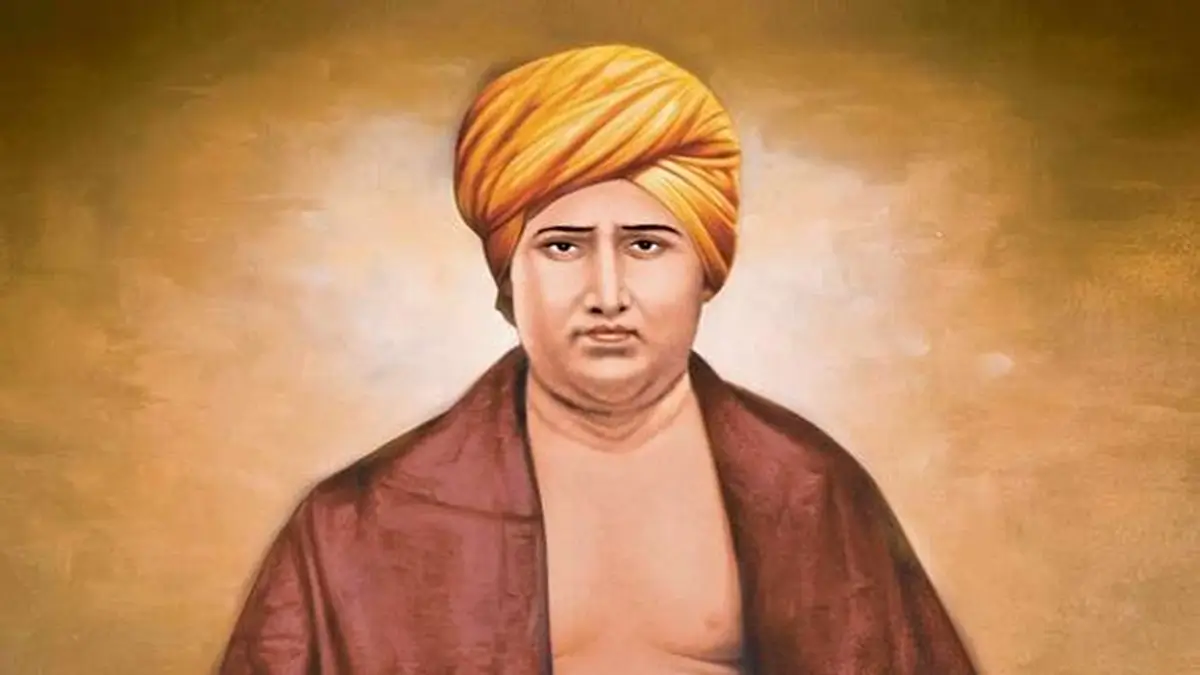
Swami Dayanand Saraswati 202nd birth anniversary 2026 celebrated nationwide. Learn about his Arya Samaj, social reforms, education initiatives, and contributions to India’s cultural revival.
Swami Dayanand Saraswati Remembered on His 202nd Birth Anniversary — A Legacy of Social Reform and National Awakening
Swami Dayanand Saraswati — The Visionary Reformer
Swami Dayanand Saraswati, a towering figure in India’s socio‑religious history, was remembered across the nation on his 202nd birth anniversary on 12 February 2026. Born in 1824 in Tankara, Gujarat, he emerged as a spiritual leader, scholar of the Vedas, and founder of the Arya Samaj — a reform movement dedicated to cultural revival and eradicating societal ills. His teachings emphasized “Back to the Vedas”, encouraging people to uphold universal truths, equality, and rational thinking rooted in ancient Indian wisdom.
Nationwide Tributes by Leaders and Institutions
Across India, eminent leaders, educational institutions, and cultural organisations paid homage to Swami Dayanand’s enduring legacy. Prime Minister Narendra Modi, in a heartfelt tribute on social media platform X, recognised Dayanand’s lifelong service to Mother Bharati (the nation), acknowledging his unparalleled contributions to education, culture, and social reforms.
Union Home Minister Amit Shah also honoured the reformer, highlighting Dayanand’s role in promoting Swaraj (self‑rule), Swadeshi (indigenous self‑reliance), and his relentless efforts to abolish social evils. His words underlined that Dayanand’s vision continues to inspire modern India’s journey towards self‑respect and cultural pride.
Educational Ceremonies and Cultural Programs
In educational institutions, students engaged in Vedic hymn recitations, poster‑making, and Sanskrit competitions to commemorate Dayanand’s devotion to learning and Vedic literacy. Arya Samaj committees led respectful Vedic Havan (fire ceremonies), echoing his belief in spiritual harmony and intellectual awakening.
Legacy That Transcends Time
Swami Dayanand Saraswati’s reformist message resonates strongly today. His efforts to eliminate caste‑based discrimination, awaken national consciousness, and promote women’s education laid a foundation for progressive social change in India. Across generations, his call for rational inquiry and revival of core ethical values continues to be reflected in educational and cultural movements.

Why This News Is Important for Exam Aspirants
Understanding Social Reform Movements in India
The commemoration of Swami Dayanand Saraswati’s birth anniversary is more than a cultural event — it highlights critical aspects of India’s socio‑political evolution. Exam topics in subjects like History, Polity, and Contemporary Affairs often reference reformers who shaped modern India’s identity. Dayanand’s advocacy for women’s education, abolition of social evils, and return to rational Vedic principles is a key example of 19th‑century reform movements that challenged rigid orthodoxies and contributed to national awakening.
Relevance to Current Government Initiatives
Leaders paying tribute to Swami Dayanand reinforce the ongoing relevance of his ideas in current governance and policy, particularly in education and cultural revival. Understanding these connections helps civil services candidates, especially in General Studies, to link historical reform movements with present‑day government discourse.
Cultural Heritage and National Identity
Dayanand’s life reflects the intertwined nature of religious thought and social progress in India’s historical context. Knowledge of such personalities helps aspirants gain deeper insights into the evolution of Indian society — a common theme in examinations ranging from SSC, Banking, Railway, Defence, to UPSC.
Historical Context: Life and Influence of Swami Dayanand Saraswati
Swami Dayanand Saraswati (1824‑1883) was born as Mool Shankar Tiwari in Gujarat. Early in life, he rejected ritualistic practices and focused on understanding Vedic scriptures to uncover universal truths. His interpretation challenged rigid traditions and idol worship, advocating a direct, rational connection with spirituality.
In 1875, he founded the Arya Samaj, a reform institution committed to social welfare, education for all, eradication of caste discrimination, and gender equality. His seminal work, Satyarth Prakash (“The Light of Truth”), became a foundational text promoting Vedic ideals opposed to blind ritualism. His call for Swaraj (self rule) in 1876 predated and influenced later freedom movement leaders.
Despite facing opposition from orthodox groups, Dayanand’s teachings inspired generations to pursue cultural pride, rational thinking, and social justice — values that continue to resonate in modern educational and reformist frameworks.
Key Takeaways from “Swami Dayanand Saraswati Remembered on His 202nd Birth Anniversary”
| Sr. No. | Key Takeaway |
|---|---|
| 1 | Swami Dayanand Saraswati’s 202nd birth anniversary was observed across India on 12 February 2026 with tributes and ceremonies. |
| 2 | He was a key social reformer and founder of the Arya Samaj, promoting education and social equality. |
| 3 | National leaders including PM Modi and Amit Shah honoured his contributions to culture and reform. |
| 4 | Educational institutions held Vedic chanting and cultural activities to commemorate his ideals. |
| 5 | His philosophy emphasizing rational thought and eradication of social evils is still relevant today. |
FAQs: Frequently Asked Questions
1. Who was Swami Dayanand Saraswati?
Swami Dayanand Saraswati (1824‑1883) was a renowned social reformer, Vedic scholar, and founder of the Arya Samaj, advocating for education, social equality, and return to Vedic principles.
2. When is Swami Dayanand Saraswati’s birth anniversary celebrated?
His birth anniversary is celebrated on 12 February every year, marking his contribution to social reform and education.
3. What is Arya Samaj and why did Swami Dayanand found it?
Arya Samaj is a socio‑religious reform movement founded in 1875 by Swami Dayanand Saraswati to promote Vedic values, eradicate social evils, and encourage education for all.
4. What are the main teachings of Swami Dayanand Saraswati?
His key teachings include Back to the Vedas, rational thinking, eradication of caste discrimination, promotion of women’s education, and fostering national pride and social reform.
5. How is Swami Dayanand Saraswati relevant to current affairs exams?
His life and teachings are important for History, Polity, General Studies, and Current Affairs sections in competitive exams like SSC, Banking, Railways, Defence, and UPSC.
6. Which notable leaders paid tribute to Swami Dayanand on his 202nd birth anniversary?
Leaders including Prime Minister Narendra Modi and Union Home Minister Amit Shah paid tributes, emphasizing his role in cultural revival and social reforms.
7. What is the significance of his book ‘Satyarth Prakash’?
‘Satyarth Prakash’ (“The Light of Truth”) is his seminal work advocating rationalism, Vedic knowledge, social reform, and moral principles for society.
Some Important Current Affairs Links