











Suzuki ₹70,000 Crore Investment in India boosts EV production, R&D, and aligns with Make in India initiative. Discover key takeaways, e-Vitara launch, and economic impact.
Suzuki’s ₹70,000 Crore Investment in India: A Strategic Move Towards Electric Mobility
Introduction: Suzuki’s Bold Commitment to India
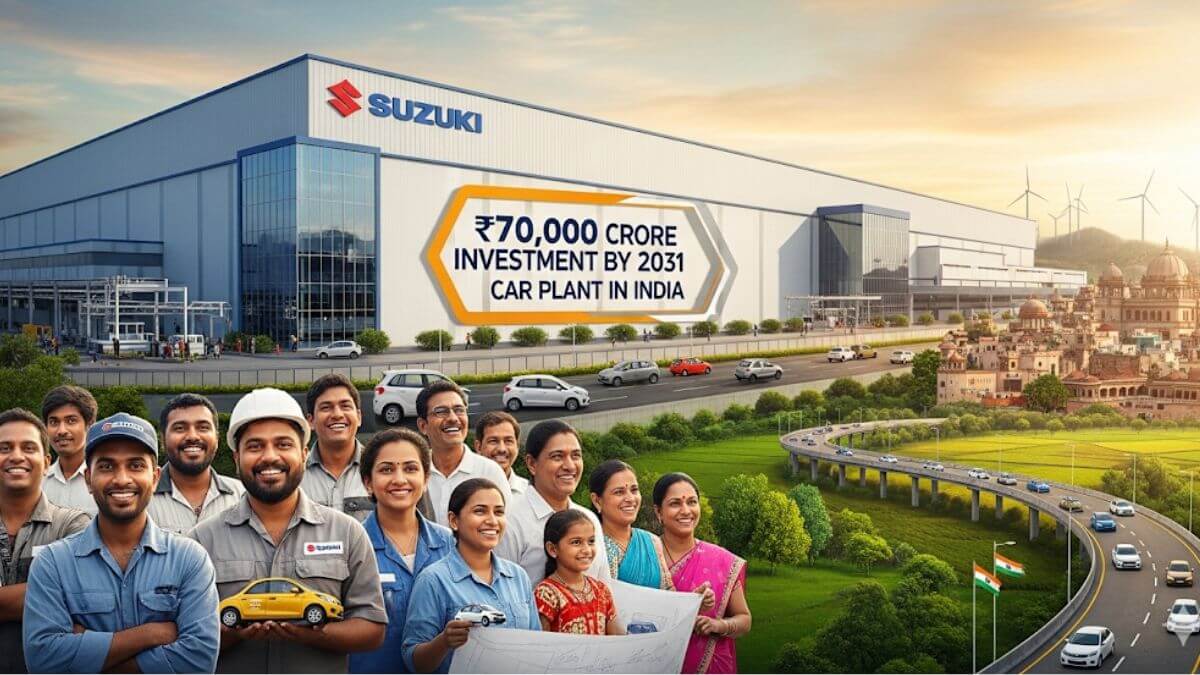
Japanese automaker Suzuki Motor Corporation has announced a significant investment of ₹70,000 crore in India over the next five to six years. This move underscores Suzuki’s commitment to strengthening its operations in India, particularly in the electric vehicle (EV) sector. The announcement coincided with the launch of Suzuki’s first electric vehicle, the e-Vitara, at its Hansalpur facility in Gujarat.
Strategic Focus Areas of the Investment
The ₹70,000 crore investment will be allocated across several key areas:
- Manufacturing Expansion: A significant portion of the investment, approximately ₹32,000 crore, will be directed towards expanding the production capacity at the Hansalpur facility to 1 million units annually.
- Research and Development (R&D): Around ₹23,240 crore will be invested in developing new models, including four battery electric vehicles (BEVs) by 2030, starting with the e-Vitara.
- Sustainability Initiatives: Approximately ₹15,000 crore will be allocated to carbon-neutral initiatives and manufacturing quality upgrades.
This comprehensive approach aims to position India as Suzuki’s global hub for electric vehicle production.
The e-Vitara: Suzuki’s First Electric Vehicle
The e-Vitara marks Suzuki’s entry into the electric vehicle market. Manufactured exclusively at the Hansalpur facility, the e-Vitara is a mid-sized electric SUV designed to compete with models like Hyundai’s Creta and Mahindra’s XUV700. The vehicle will be exported to over 100 countries, including Japan and several European nations, aligning with Suzuki’s global export strategy.
India’s Role in Suzuki’s Global Strategy
India holds a pivotal position in Suzuki’s global operations. The country accounts for over 61% of Suzuki’s total output and 57% of its global sales. The Hansalpur facility, with its planned capacity of 1 million units annually, is set to become one of the world’s largest automobile manufacturing hubs.
Alignment with India’s ‘Make in India’ Initiative
Prime Minister Narendra Modi inaugurated the e-Vitara production at the Hansalpur facility, emphasizing the importance of supporting products made on Indian soil. This aligns with the government’s ‘Make in India’ initiative, which aims to promote domestic manufacturing and reduce reliance on imports.
Why This News is Important
Economic Impact
Suzuki’s ₹70,000 crore investment is poised to stimulate significant economic growth. The expansion of manufacturing facilities and the introduction of new models are expected to create numerous direct and indirect employment opportunities. Additionally, the increased production capacity will contribute to India’s position as a global manufacturing hub.
Technological Advancements
The focus on electric vehicles and sustainability initiatives highlights Suzuki’s commitment to technological innovation. The development of new BEVs and the implementation of carbon-neutral practices will contribute to the advancement of green technologies in the automotive sector.
Strengthening Bilateral Relations
The collaboration between Suzuki and the Indian government underscores the strengthening of bilateral relations between Japan and India. The ‘Make in India’ initiative, supported by foreign investments like Suzuki’s, fosters a conducive environment for international partnerships.
Historical Context
Suzuki has been a significant player in the Indian automotive market for over four decades. Through its subsidiary, Maruti Suzuki, the company has established a strong presence, contributing to the development of the Indian automotive industry. The recent announcement of the ₹70,000 crore investment signifies Suzuki’s long-term commitment to India and its strategic focus on electric mobility.
Key Takeaways from ‘Suzuki’s ₹70,000 Crore Investment in India’
| S.No | Key Takeaway |
|---|---|
| 1 | Suzuki Motor Corporation plans to invest ₹70,000 crore in India over the next 5–6 years. |
| 2 | The investment will focus on expanding manufacturing capacity, R&D, and sustainability initiatives. |
| 3 | The e-Vitara, Suzuki’s first electric vehicle, will be produced at the Hansalpur facility. |
| 4 | India will serve as Suzuki’s global hub for electric vehicle production. |
| 5 | The investment aligns with India’s ‘Make in India’ initiative, promoting domestic manufacturing. |
FAQs: Frequently Asked Questions
Q1: How much is Suzuki investing in India?
A1: Suzuki Motor Corporation is investing ₹70,000 crore in India over the next 5–6 years.
Q2: What is the purpose of Suzuki’s investment?
A2: The investment aims to expand manufacturing capacity, develop electric vehicles, enhance R&D, and implement sustainability initiatives.
Q3: Which facility will produce Suzuki’s first electric vehicle?
A3: The e-Vitara, Suzuki’s first electric vehicle, will be manufactured at the Hansalpur facility in Gujarat.
Q4: How does this investment align with India’s government initiatives?
A4: It supports the ‘Make in India’ initiative, promoting domestic manufacturing and positioning India as a global EV hub.
Q5: How significant is India for Suzuki globally?
A5: India accounts for over 61% of Suzuki’s total output and 57% of its global sales, making it a pivotal hub for the company.
Q6: Which electric vehicle will be launched first under this plan?
A6: The e-Vitara will be the first of four battery electric vehicles to be launched by 2030.
Q7: How will this investment impact employment in India?
A7: The investment is expected to create numerous direct and indirect jobs in manufacturing, R&D, and ancillary industries.
Q8: How many countries will the e-Vitara be exported to?
A8: The e-Vitara will be exported to over 100 countries, including Japan and several European nations.
Some Important Current Affairs Links




