






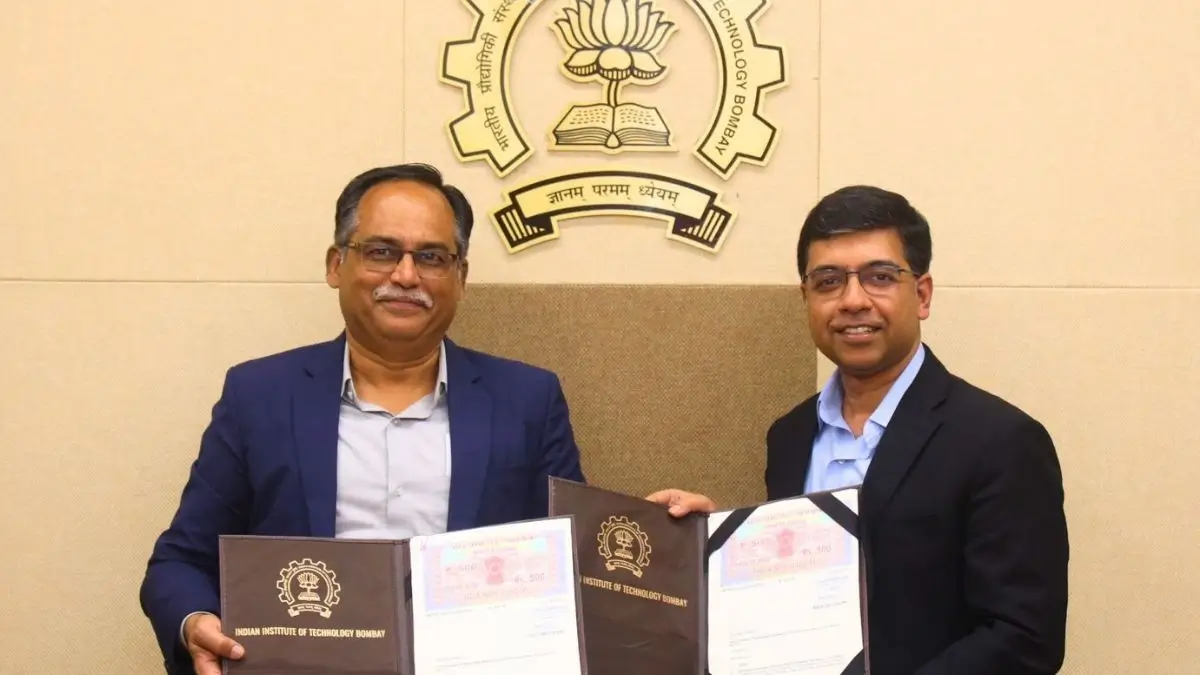
Sustainability Skills Hub at IIT Bombay launched with Honeywell aims to train 100,000 students by 2030 in renewable energy, sustainable finance, and green technologies to strengthen India’s green workforce.
IIT Bombay and Honeywell Launch Sustainability Skills Hub to Train Future Green Workforce
Introduction: New Collaboration for Sustainability Skills
Indian Institute of Technology Bombay has partnered with Honeywell to establish a Centre of Excellence (CoE) for Future Skills and Innovation at the institute’s Powai campus in Mumbai. The initiative aims to strengthen sustainability education and equip students with practical knowledge required to tackle environmental and climate-related challenges.
This collaboration reflects the growing need for skilled professionals who can work in sectors related to green technology, renewable energy, and sustainable infrastructure. By creating this hub, the partners intend to bridge the gap between academic learning and real-world sustainability solutions.
Objective of the Sustainability Skills Hub
The newly established centre aims to train more than 100,000 students by the year 2030 in sustainability-related disciplines. This will be achieved through industry–academia collaboration that integrates practical experience with academic coursework.
The initiative also addresses India’s rising demand for skilled professionals in green sectors. As the country expands its renewable energy capacity and sustainability initiatives, the need for trained professionals with interdisciplinary expertise has become increasingly important.
Funding and Institutional Support
The Centre of Excellence will be funded by the Honeywell Hometown Solutions India Foundation, which is the philanthropic arm of Honeywell in India. The funding will support infrastructure development, laboratory facilities, research activities, and curriculum design.
The centre will also provide research grants and equipment to encourage innovation in sustainable technologies. By combining corporate support with academic expertise, the hub aims to promote advanced research and innovation in sustainability.
Certificate Programmes and Experiential Learning
The Sustainability Skills Hub will offer certificate-based programmes that combine classroom learning with hands-on projects. Students will work on real-world sustainability challenges while receiving guidance from industry experts and academic faculty.
These programmes will be open to undergraduate, postgraduate, and doctoral students from across India. During the initial phase, the centre will train a pilot batch of around 250 students before expanding the programme to thousands of participants annually.
Key Learning Areas of the Sustainability Hub
The training curriculum will focus on five major learning tracks designed to support India’s green transition:
- Sustainability reporting
- Sustainable finance
- Energy security
- Sustainable infrastructure
- Policy advocacy
These areas combine technology, economics, and policy knowledge to prepare students for emerging careers in the global green economy.
Contribution to India’s Green Job Ecosystem
India is expected to create millions of green jobs in the coming years, especially in sectors such as renewable energy, climate technology, and environmental management. However, there is a shortage of skilled professionals in these areas.
The IIT Bombay–Honeywell collaboration aims to address this challenge by producing industry-ready graduates who can contribute to sustainable development and climate action.

Why This News Is Important
Importance for India’s Green Economy
India is moving rapidly toward a low-carbon and sustainable economy, with increased investments in renewable energy, electric mobility, and green infrastructure. To support this transition, the country requires a workforce equipped with sustainability knowledge and technical expertise.
The new Sustainability Skills Hub at IIT Bombay will help develop this workforce by providing specialised training and practical exposure to sustainability challenges. By training more than 100,000 students, the initiative could significantly strengthen India’s green workforce.
Strengthening Industry–Academia Collaboration
The partnership between IIT Bombay and Honeywell highlights the importance of collaboration between academic institutions and industry. Such collaborations ensure that students gain practical skills aligned with real-world industry requirements.
Through this initiative, students will have access to advanced laboratories, industry mentorship, and research opportunities. This will improve their employability and prepare them for careers in sustainability-driven sectors.
Relevance for Competitive Examinations
This development is particularly relevant for government exam aspirants, as sustainability and climate action are major policy priorities in India and globally. Questions related to green jobs, sustainability initiatives, and industry–academia collaborations often appear in exams like UPSC, SSC, Banking, and State PSC.
Understanding initiatives such as this sustainability skills hub helps candidates stay informed about current developments in education, technology, and environmental policy.
Historical Context: Evolution of Sustainability Education in India
Growing Focus on Sustainability in Higher Education
Over the last decade, Indian universities and research institutions have increasingly focused on sustainability and climate-related education. This shift reflects global concerns about climate change and environmental degradation.
Institutions like IITs have established research centres dedicated to renewable energy, climate science, and sustainable development. These initiatives aim to produce skilled professionals capable of addressing environmental challenges.
Expansion of Green Skills and Jobs
India’s economic policies have increasingly emphasised the creation of green jobs, particularly in renewable energy, sustainable urban planning, and climate technologies. Government policies such as the National Solar Mission and energy transition goals have created demand for trained professionals in sustainability-related sectors.
Role of Industry Partnerships
Industry partnerships with universities have played a crucial role in bridging the skills gap between education and employment. Companies collaborate with institutions to develop specialised programmes that equip students with practical skills.
The IIT Bombay–Honeywell Centre of Excellence is part of this broader trend of industry-supported educational initiatives designed to prepare students for emerging global challenges.
Key Takeaways from “IIT Bombay–Honeywell Sustainability Skills Hub”
| S. No. | Key Takeaway |
|---|---|
| 1 | IIT Bombay and Honeywell have partnered to establish a Centre of Excellence for sustainability skills. |
| 2 | The initiative aims to train more than 100,000 students by 2030 in sustainability-related fields. |
| 3 | The centre will be funded by the Honeywell Hometown Solutions India Foundation. |
| 4 | Training programmes will include certificate courses and hands-on projects for students across India. |
| 5 | The curriculum will focus on five areas: sustainability reporting, sustainable finance, energy security, sustainable infrastructure, and policy advocacy. |
FAQs: Frequently Asked Questions
1. What is the IIT Bombay–Honeywell Sustainability Skills Hub?
The hub is a Centre of Excellence for Future Skills and Innovation, established in collaboration between IIT Bombay and Honeywell, aimed at training students in sustainability, green technologies, and climate solutions.
2. How many students will be trained under this initiative?
The hub aims to train more than 100,000 students by 2030 through certificate programs, hands-on projects, and industry-academia collaboration.
3. Who is funding the Sustainability Skills Hub?
The hub is funded by the Honeywell Hometown Solutions India Foundation, Honeywell’s philanthropic arm in India, which supports infrastructure, research, and skill development initiatives.
4. What are the key learning areas of the hub?
The hub focuses on sustainability reporting, sustainable finance, energy security, sustainable infrastructure, and policy advocacy, integrating technology, economics, and policy.
5. Who can join the certificate programs at the hub?
The programs are open to undergraduate, postgraduate, and doctoral students from across India.
6. Why is this hub important for India’s green economy?
India is rapidly transitioning to a low-carbon, sustainable economy, creating millions of green jobs. The hub will prepare skilled professionals to contribute to renewable energy, climate technologies, and sustainable infrastructure.
7. How does this initiative benefit government exam aspirants?
Questions related to sustainability, green jobs, and industry-academia collaborations are relevant for UPSC, SSC, Banking, State PSCs, and other competitive exams. This hub reflects India’s policy focus on climate action and sustainable development.
Some Important Current Affairs Links