








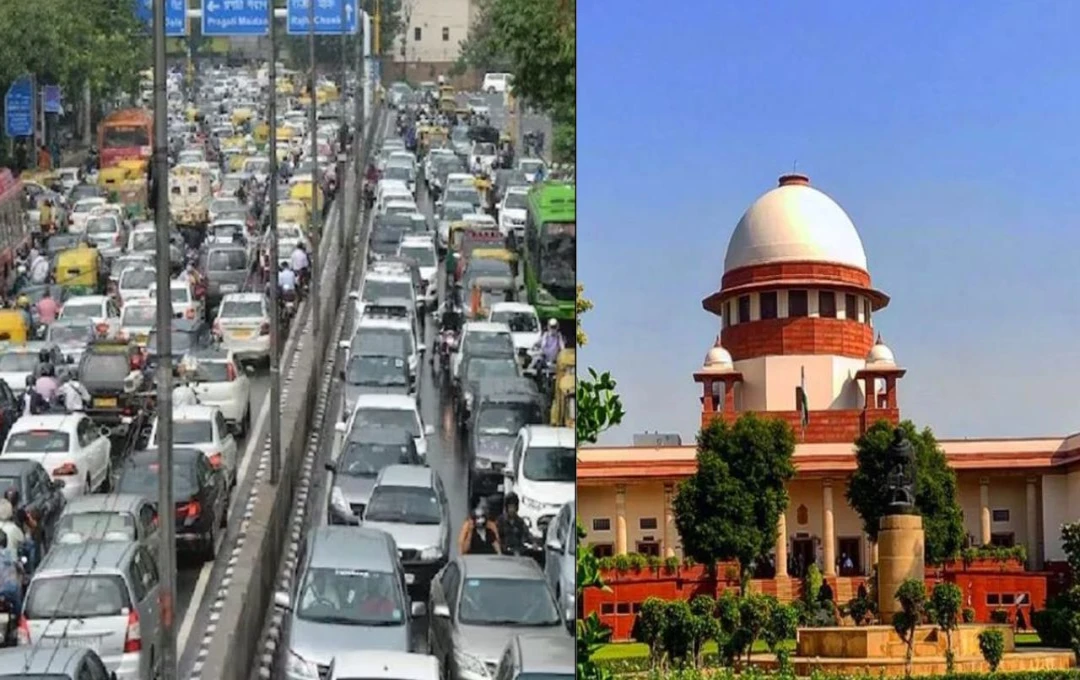
Supreme Court old vehicle relief in Delhi NCR provides interim relief to diesel and petrol vehicles, emphasizing evidence-based emission regulations and updated environmental policies.
Supreme Court’s Interim Relief on Old Vehicle Ban: Balancing Ecology and Citizens’ Rights
Interim Relief for Vehicle Owners in Delhi-NCR
On August 12, 2025, the Supreme Court of India granted interim relief to owners of older vehicles in the Delhi-National Capital Region (NCR). The Court directed that no coercive action, such as impounding or penalizing, should be taken against diesel vehicles older than 10 years and petrol vehicles older than 15 years. This decision temporarily halts the enforcement of the 2018 ban on these vehicles, pending further examination.
Delhi Government’s Plea for Reconsideration
The Delhi government filed a plea seeking to reconsider the existing ban, arguing that the age-based restrictions are outdated and do not account for advancements in vehicle technology and emission standards. The government emphasized the need for a more scientific approach, focusing on actual emission levels and vehicle fitness rather than arbitrary age limits. The Court has agreed to re-examine the matter, signaling a potential shift towards evidence-based environmental policies.
Broader Implications for Environmental Policy
This development underscores the importance of aligning environmental regulations with technological progress. It highlights the necessity for policies that are adaptable and grounded in scientific data, ensuring they are both effective and equitable. The outcome of this case could set a precedent for future environmental governance in India.
Why This News is Important
Relevance to Environmental Governance
The Supreme Court’s decision to halt the enforcement of the old vehicle ban reflects a shift towards more nuanced environmental governance. It emphasizes the need for policies that consider technological advancements and actual emission levels, rather than relying solely on vehicle age as a criterion for environmental impact. This approach aligns with global best practices in environmental regulation.
Impact on Citizens’ Rights
By granting interim relief to vehicle owners, the Court has acknowledged the practical challenges faced by citizens due to the stringent age-based ban. This decision balances environmental objectives with the rights and livelihoods of individuals, ensuring that policies do not disproportionately affect the public.
Implications for Policy-Making
The case underscores the importance of evidence-based policy-making in addressing complex issues like air pollution. It calls for a reassessment of existing regulations to ensure they are effective, fair, and adaptable to changing circumstances. The outcome could influence future environmental policies in India.
Historical Context
The 2018 Supreme Court Order
In 2018, the Supreme Court of India upheld a National Green Tribunal (NGT) order banning diesel vehicles older than 10 years and petrol vehicles older than 15 years in Delhi-NCR. The ban was implemented to combat severe air pollution in the region. However, the Delhi government has since argued that the age-based restrictions are not scientifically justified and do not consider improvements in vehicle technology and emission standards.
Technological Advancements in Emission Standards
Over the years, India has implemented stricter emission norms, such as the Bharat Stage VI (BS-VI) standards, which have significantly reduced vehicular emissions. Additionally, advancements in Pollution Under Control (PUC) testing and vehicle retrofitting options, like converting to CNG or electric, have further mitigated the environmental impact of older vehicles. These developments challenge the rationale for blanket age-based bans.
Key Takeaways from “Supreme Court’s Interim Relief on Old Vehicle Ban”
| S.No | Key Takeaway |
|---|---|
| 1. | The Supreme Court has temporarily halted the enforcement of the 2018 ban on diesel vehicles older than 10 years and petrol vehicles older than 15 years in Delhi-NCR. |
| 2. | The Delhi government has filed a plea seeking to reconsider the existing ban, advocating for a more scientific approach based on actual emission levels and vehicle fitness. |
| 3. | The Court has agreed to re-examine the matter, indicating a potential shift towards evidence-based environmental policies. |
| 4. | The decision balances environmental objectives with citizens’ rights, acknowledging the practical challenges faced by vehicle owners. |
| 5. | The case highlights the importance of aligning environmental regulations with technological advancements and scientific data in policy-making. |
FAQs: Frequently Asked Questions
1. What was the Supreme Court’s recent decision regarding old vehicles in Delhi-NCR?
The Supreme Court granted interim relief, halting coercive action against diesel vehicles older than 10 years and petrol vehicles older than 15 years.
2. Why did the Delhi government seek reconsideration of the old vehicle ban?
The Delhi government argued that age-based restrictions are outdated and suggested policies should focus on actual emission levels and vehicle fitness.
3. What are the broader implications of this Supreme Court decision?
The ruling highlights the need for evidence-based environmental policies, balancing ecological concerns with citizens’ rights.
4. Which vehicles are temporarily exempt from the ban under this interim relief?
Diesel vehicles older than 10 years and petrol vehicles older than 15 years are temporarily exempt.
5. How does this decision affect environmental governance in India?
It promotes a shift toward scientific and adaptable policies for controlling vehicular emissions, emphasizing technological advancements and actual emission data.
6. What historical regulation is related to this news?
The 2018 Supreme Court order and National Green Tribunal (NGT) directive banned older diesel and petrol vehicles in Delhi-NCR to control air pollution.
7. What are Bharat Stage (BS) emission norms?
BS emission norms are standards set by the Indian government to regulate air pollutants from vehicles, with BS-VI being the latest and strictest standard.
8. What is the significance of Pollution Under Control (PUC) tests?
PUC tests ensure vehicles meet prescribed emission standards, reducing environmental impact from older vehicles.
Some Important Current Affairs Links