









Supreme Court new judges 2025 – Justices Alok Aradhe and Vipul Pancholi have been elevated, restoring the top court’s full strength of 34 judges. Know details, dissent notes, and exam-relevant facts.
Supreme Court Strength Restored as Justices Alok Aradhe and Vipul M. Pancholi Elevated
Contextual Overview
In a significant move by the judicial system of India, the Supreme Court has regained its full sanctioned strength of 34 judges. On August 25, 2025, the Supreme Court Collegium—led by Chief Justice of India B.R. Gavai—recommended the elevation of two High Court Chief Justices: Alok Aradhe of the Bombay High Court and Vipul M. Pancholi of the Patna High Court
The central government swiftly approved the recommendations within two days. On August 27, 2025, Law Minister Arjun Ram Meghwal announced via X that the elevation of both judges was officially cleared The swearing-in ceremony took place on August 29, 2025, at the Supreme Court auditorium, administered by CJI Gavai. This event marked the restoration of the Supreme Court’s full bench of 34 judges
Supreme Court Collegium Recommendation
Who Recommended and When
The five-member collegium, headed by CJI B.R. Gavai and including Justices Surya Kant, Vikram Nath, J.K. Maheshwari, and B.V. Nagarathna, met on August 25, 2025, to deliberate and recommend the elevation of Justices Aradhe and Pancholi
Selection Rationale
Justice Aradhe’s elevation ensures representation from his diverse judicial background across multiple High Courts, whereas Justice Pancholi is notable for his rapid ascent within the judiciary
Controversy and Collegium Dissent
Justice B.V. Nagarathna, the sole woman member of the collegium, issued a rare and strongly worded dissent regarding Justice Pancholi’s elevation. She cited concerns over his relatively low seniority (57th in the all-India list), the atypical nature of his transfer from the Gujarat High Court to Patna High Court, and the disproportionate representation from Gujarat in the Supreme Court Critics, including CJAR (Campaign for Judicial Accountability and Reforms), flagged this move as potentially undermining credibility and transparency in judicial appointments
Oath of Office and Full Court Strength
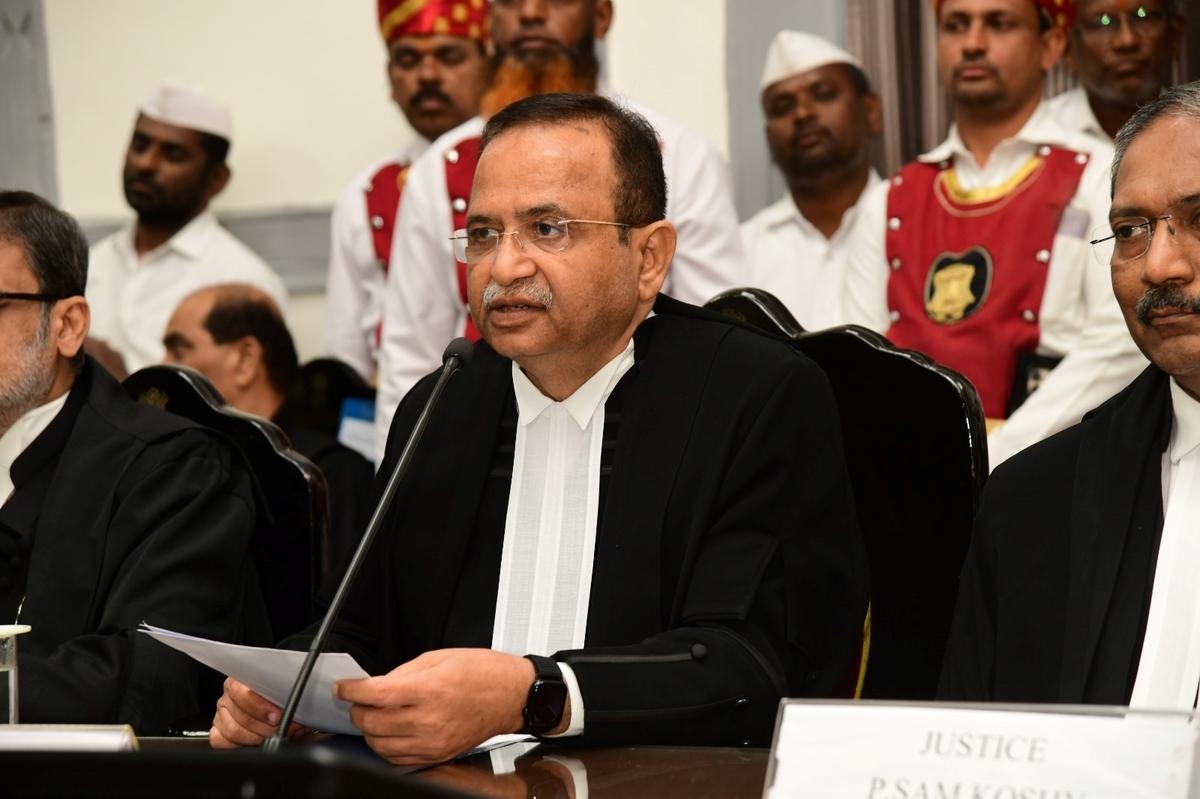
On August 29, 2025, Justices Aradhe and Pancholi were sworn in by CJI Gavai amidst a packed auditorium, officially bringing the Supreme Court’s bench to its full capacity of 34 judges The solemn ceremony underscored the significance of completing the apex court’s full complement of judges, ensuring smoother judicial functioning.
Why This News Is Important
Significance for Judicial Efficiency and Governance
Restoring the Supreme Court’s full bench is a milestone for India’s judiciary. A complete roster of 34 justices empowers the Court to function without rotational constraints or overwhelmed benches. This enriches the court’s ability to handle a heavier docket, ensures timely disposition of cases, and reinforces judicial efficacy.
Reflection on Collegium System and Transparency
The dissent by Justice Nagarathna shines a spotlight on the often opaque workings of the collegium. Her rare opposition touches on systemic concerns: balance in representation, seniority norms, meritocracy, and integrity in appointments. These issues may fuel calls for reforms and enhanced transparency in judicial selection.
Relevance to Exam Aspirants
Understanding this appointment is vital for students studying judicial structure, the collegium mechanism, and constitutional processes—topics frequently examined in civil services and judiciary-linked exams. It illustrates the interaction between the judiciary and executive, nuances of merit versus convention, and dynamics of internal dissent.
Broader Constitutional Implications
Elevating judges from diverse High Court backgrounds (Madhya Pradesh→Bombay, Gujarat→Patna) enriches judicial diversity. Furthermore, Pancholi’s projected elevation to Chief Justice of India in October 2031 (for a term of around 1.5 years) introduces a forward-looking dimension to succession planning within the highest judiciary
Historical Context
Evolution of the Collegium System
India’s collegium system, established through the Second Judges Case (1993) and reaffirmed by the Third Judges Case (1998), entrusts judges themselves with the responsibility to recommend appointments to the higher judiciary. Its opaque nature has long been a matter of debate.
Precedents of Dissent
Collegium dissent notes are rare but not unprecedented. Justice Nagarathna’s detailed dissent echoes past calls for transparency and highlights gender dynamics—especially as she is currently the only woman in the apex court following Justice Bela Trivedi’s retirement
Past Promotions from Madhya Pradesh and Gujarat HCs
Both states have contributed to the Supreme Court bench before. Justice Aradhe’s elevation continues Madhya Pradesh High Court’s representation, while Pancholi becomes the third from Gujarat—a historical note linked to regional representation imbalance
Transition Speed and Administrative Efficiency
The swift government’s approval—just two days after the collegium’s recommendation—highlights a seamless coordination between branches of government. It contrasts with past delays and typifies administrative efficiency in judicial appointments
Key Takeaways from Supreme Court Elevations
| S. No. | Key Takeaway |
|---|---|
| 1 | The Supreme Court has regained its full sanctioned strength of 34 judges as of August 29, 2025. |
| 2 | Justices Alok Aradhe and Vipul Manubhai Pancholi, Chief Justices of Bombay and Patna High Courts respectively, have been appointed to the Supreme Court. |
| 3 | Justice B.V. Nagarathna issued a notable dissent over Pancholi’s elevation, citing seniority concerns, questionable transfer, and regional imbalance. |
| 4 | Justice Pancholi is likely in line to become Chief Justice of India in October 2031, for approximately a 1.5-year tenure. |
| 5 | The controversy highlights systemic issues within the collegium system—namely, transparency, representation, and adherence to merit versus convention. |
FAQs on Supreme Court Elevation of Justices Alok Aradhe and Vipul Pancholi
Q1. Who recommended the elevation of Justices Alok Aradhe and Vipul M. Pancholi to the Supreme Court?
The Supreme Court Collegium, headed by Chief Justice of India B.R. Gavai, recommended their elevation on August 25, 2025.
Q2. What is the sanctioned strength of the Supreme Court of India?
The sanctioned strength is 34 judges, including the Chief Justice of India.
Q3. When did Justices Alok Aradhe and Vipul Pancholi take oath as Supreme Court judges?
They took oath on August 29, 2025.
Q4. Why did Justice B.V. Nagarathna dissent in the collegium recommendation?
She raised concerns about Justice Pancholi’s low seniority, his unusual transfer history, and the over-representation of judges from Gujarat in the Supreme Court.
Q5. Who administered the oath of office to the new judges?
Chief Justice of India B.R. Gavai administered the oath in the Supreme Court auditorium.
Q6. Which High Courts did Justice Alok Aradhe and Justice Vipul Pancholi serve before elevation?
Justice Alok Aradhe was the Chief Justice of Bombay High Court and Justice Vipul Pancholi was the Chief Justice of Patna High Court.
Q7. When is Justice Vipul Pancholi expected to become the Chief Justice of India (CJI)?
He is in line to become the CJI in October 2031 for about 1.5 years.
Q8. What is the collegium system in India?
It is a system where appointments and transfers of judges to the higher judiciary are decided by a group of senior Supreme Court judges, led by the CJI.
Q9. Why is this news important for competitive exam aspirants?
It is relevant for questions on Indian Polity, Constitution, Judiciary structure, and Current Affairs—common sections in UPSC, SSC, Banking, and State PSC exams.
Q10. How fast did the government act on the collegium’s recommendation in this case?
The central government approved the recommendations in just two days—a relatively swift move compared to previous appointments.
Some Important Current Affairs Links