









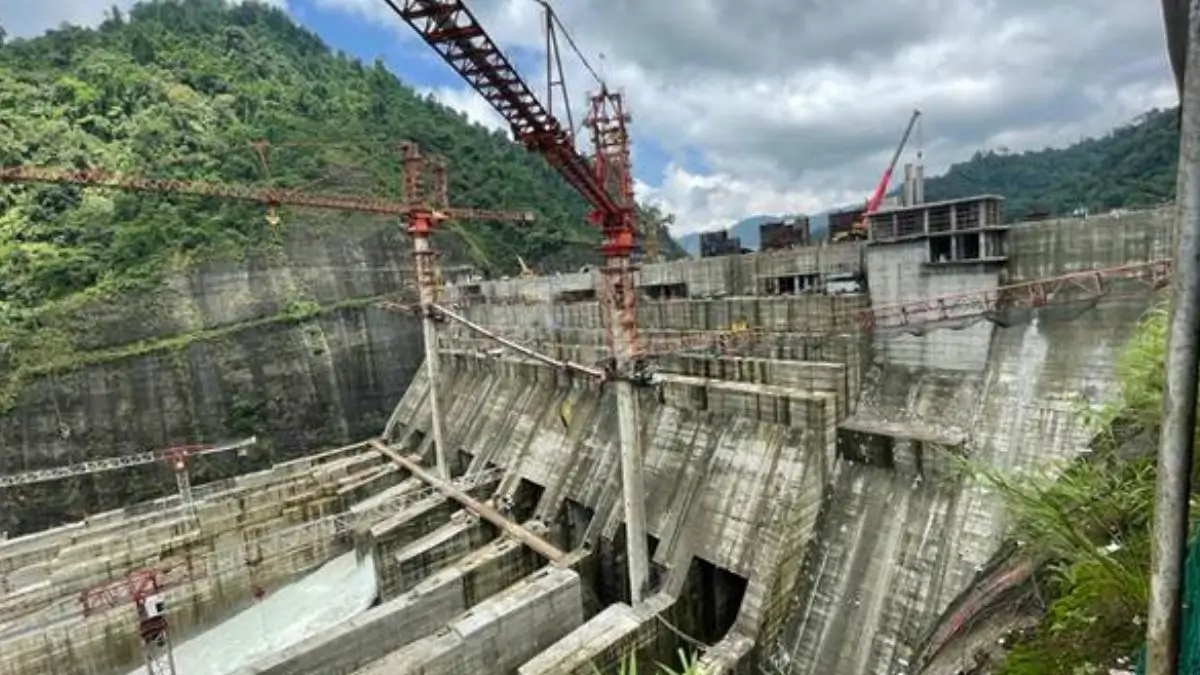
Subansiri Lower Project Unit-2 Commissioned, adding 250 MW to North-East power supply. NHPC hydroelectric project boosts renewable energy and regional development in India.
:
📌 Subansiri Lower Project Unit-2 Commissioned, Strengthening North-East Power Supply
The Government of India has taken a major stride in strengthening renewable energy infrastructure with the commissioning of Unit-2 of the Subansiri Lower Hydroelectric Project. Unit-2, with a capacity of 250 MW, started its commercial operations on December 23, 2025, marking a significant milestone in India’s clean energy and regional development journey.
Located on the Subansiri River along the Arunachal Pradesh–Assam border, this project is part of the larger 2,000 MW Subansiri Lower Hydroelectric Project developed by NHPC Limited, a central public sector undertaking under the Ministry of Power. When fully operational, this project will be India’s largest hydropower installation, playing a key role in meeting rising power demand while advancing the government’s renewable energy commitments.
🔌 What the Unit-2 Commissioning Means
The commissioning of Unit-2 brings 250 MW of clean electricity into the national grid, bolstering energy availability, especially in the North-Eastern region of India. With increasing electrification and industrial growth, reliable energy supply has become a strategic necessity. This unit’s integration into the grid not only enhances the power supply stability but also aids in reducing the country’s dependence on fossil fuel-based energy sources.
The inauguration of Unit-2 was conducted virtually by the Union Minister of Power, who highlighted the project’s importance in accelerating India’s transition to green energy and achieving its Net Zero targets.
🏗️ Project Features and Engineering Excellence
Engineered as a run-of-the-river hydroelectric scheme, the Subansiri Lower Project includes eight units of 250 MW each, totaling a capacity of 2,000 MW. The design emphasises renewable power generation with minimal ecological footprint.
A remarkable feature of the project is its 116-metre-high concrete gravity dam, the largest in North-East India, which enhances water regulation and provides flood moderation benefits downstream. The dam’s small pondage design ensures efficient power generation while maintaining environmental balance.
🌱 Socio-Economic and Regional Impact
Beyond power generation, the Subansiri Lower Project has made significant socio-economic contributions. During construction, around 7,000 local labourers were employed, offering direct economic upliftment to communities in the region. Upon full operation, the project will supply electricity to 16 beneficiary states, with 1,000 MW allocated to the North-East and free power for host states like Arunachal Pradesh and Assam.
Extensive CSR activities and community development initiatives in sectors like sericulture, handloom, and livelihoods have further strengthened regional growth. Additionally, riverbank protection and erosion control measures safeguard long-term environmental sustainability.
📈 Future Path of the Subansiri Lower Project
With Unit-2 now operational, NHPC is poised to commission three more units in the near term, followed by phased commissioning of the remaining four units through 2026–27. Once complete, the project is expected to generate over 7,400 million units (MU) of renewable power annually, significantly enhancing national grid resilience and contributing to India’s low-carbon energy transition.

🌟 Why This News Is Important for Students Preparing for Government Exams
🧠 Relevance to Government Exam Syllabi
The commissioning of Unit-2 of the Subansiri Lower Hydroelectric Project is a significant development in India’s energy landscape, making it highly relevant for aspirants preparing for UPSC/PSC/SSC/Banking and other competitive exams. Questions in General Studies and Current Affairs often focus on infrastructure development, renewable energy initiatives, and regional empowerment — all of which are embodied in this project.
This news also aligns with the Government of India’s broader policies on clean energy transition, Net Zero targets, and promoting sustainable development, which are key components of static and dynamic portions of exam syllabi. Aspirants may encounter questions related to hydropower projects, renewable energy contributions to India’s energy mix, and policy frameworks supporting green energy growth.
📘 Conceptual Understanding and Analytical Insights
Understanding the Subansiri Project offers aspirants a practical example of hydroelectric technology, regional integration of power infrastructure, and the socio-economic impact of large infrastructure projects in border regions like Northeast India. It also provides context to study flood moderation and environmental safeguards implemented in major dam projects — topics frequently discussed in mains answer writing and interview stages.
Furthermore, the project’s commissioning reflects on India’s aim to balance energy security with environmental sustainability, an important theme in General Studies papers. These insights help candidates write balanced answers and make strategic connections across subject areas.
📜 Historical Context: Background of Subansiri Lower Hydroelectric Project
The Subansiri Lower Hydroelectric Project was conceived to harness the hydropower potential of the Subansiri River, one of the largest tributaries of the Brahmaputra. The project’s roots trace back to India’s push for expanding renewable energy capacity and decentralised power generation to support long-term energy security and regional development.
Prior to this year’s commissioning, the project underwent rigorous planning, environmental assessments, and phases of construction, with significant focus on engineering design suited to the rugged terrains of Arunachal Pradesh and Assam. Hydropower projects in this region have historically faced challenges related to geography, ecology, and seismic considerations, making their successful completion a notable engineering achievement.
Revised timelines have seen phased commissioning of units through 2025 and 2026, demonstrating resilience in project execution despite pandemic-related and logistical delays. The initiative further aligns with India’s policy shift towards renewable energy expansion, complementing solar and wind energy deployments across the country.
📊 Key Takeaways from “Subansiri Lower Project Unit-2 Commissioned”
| S.No. | Key Takeaway |
|---|---|
| 1 | Unit-2 (250 MW) of Subansiri Lower Hydroelectric Project commissioned in December 2025. |
| 2 | Part of the 2,000 MW project on Subansiri River, Arunachal Pradesh–Assam border. |
| 3 | Project developed by NHPC Limited under the Ministry of Power. |
| 4 | Enhances renewable energy supply and strengthens North-East power grid. |
| 5 | Project will generate over 7,400 MU annually once fully operational. |
FAQs: Frequently Asked Questions
1. What is the Subansiri Lower Hydroelectric Project?
The Subansiri Lower Hydroelectric Project is a major hydroelectric project on the Subansiri River along the Arunachal Pradesh–Assam border, developed by NHPC Limited. Its total capacity is 2,000 MW with eight units of 250 MW each.
2. When was Unit‑2 of the Subansiri Lower Project commissioned?
Unit‑2 of the Subansiri Lower Project was commissioned on December 23, 2025, adding 250 MW of renewable electricity to the national grid.
3. Who developed the Subansiri Lower Hydroelectric Project?
The project is developed by NHPC Limited, a Central Public Sector Undertaking under the Ministry of Power, Government of India.
4. How does the Subansiri Lower Project benefit the North-East region?
The project strengthens the power supply in the North-East, provides free power to host states like Arunachal Pradesh and Assam, creates employment, and supports regional economic and infrastructure development.
5. What is the expected annual power generation of the project once fully operational?
Once all eight units are commissioned, the project is expected to generate over 7,400 million units (MU) of renewable electricity annually.
6. What is the height of the Subansiri Lower Dam?
The dam is 116 metres high, making it the largest concrete gravity dam in North-East India, contributing to flood moderation and water regulation.
7. How many units does the project have in total?
The project has eight units, each with 250 MW capacity, totaling 2,000 MW of hydroelectric power.
8. What type of hydroelectric scheme is the Subansiri Lower Project?
It is a run-of-the-river hydroelectric project, designed to minimize environmental impact while generating renewable energy efficiently.
9. What socio-economic benefits does the project provide?
The project created employment for about 7,000 local laborers, supports community development programs in handloom, sericulture, and livelihoods, and promotes regional growth.
10. Why is this project important for India’s energy sector?
It enhances renewable energy capacity, reduces dependence on fossil fuels, strengthens grid stability, and contributes to India’s clean energy transition and Net Zero goals.
Some Important Current Affairs Links




