






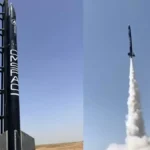




Shubhanshu Shukla Axiom mission: Indian Air Force officer Shubhanshu Shukla becomes the first Indian to pilot a private space mission to the ISS on SpaceX’s Falcon 9. Know mission details, significance, and exam facts.
🚀 Shubhanshu Shukla Pilots Axiom‑4 on SpaceX Falcon 9 to ISS
Mission Overview
On 25 June 2025 at 12:01 IST, Group Captain Shubhanshu Shukla of the Indian Air Force launched aboard SpaceX Falcon 9 as the pilot for Axiom Mission 4 (Ax‑4) to the International Space Station (ISS) The nation’s first Air Force test‑pilot-turned-astronaut, Shukla becomes the first Indian to pilot a private crewed mission to the ISS under a landmark Indo-US collaboration involving Axiom Space, NASA, ISRO, and SpaceX
Flight Details & Crew
Ax‑4 deployed aboard the Falcon 9 Block 5 B1094‑2 from NASA’s Kennedy Space Center, LC‑39A The four-member crew includes mission commander Peggy Whitson, mission specialists Sławosz Uznański-Wiśniewski and Tibor Kapu, alongside Shukla. They are aboard the Crew Dragon C213 “Grace”, marking its maiden flight After scrubbed attempts in mid-June due to technical issues (LOX leak in rocket and Zvezda ISS module), the mission took off successfully on 25 June
Docking & Mission Objectives
Scheduled to last between 14–21 days, the spacecraft docked with ISS on 26 June at 10:31 UTC (16:01 IST) via the Harmony module Objectives include conducting scientific experiments, testing advanced spaceflight systems, and furthering international collaboration in Low Earth Orbit.
National & Strategic Significance
Shukla, commissioned into the IAF in June 2006, is a seasoned test-pilot with over 2,000 flight hours on advanced fighter and transport aircraft His flight places India back on the space exploration map after Rakesh Sharma’s 1984 mission, this time via a private-sector-led international mission . His achievement is being widely celebrated by President Droupadi Murmu, Prime Minister Narendra Modi, and the IAF
Future Collaboration & Human Spaceflight Roadmap
Shukla’s mission is seen as a key stepping stone for India’s Gaganyaan programme, demonstrating the nation’s ability to collaborate internationally for human spaceflight . Post Ax‑4, ISRO is working toward crewed domestic missions. Axiom–and NASA-sanctioned private missions like this are opening doors for unprecedented global partnership in space exploration.

Why This News Is Important
Inspires Indian Aspirants
This mission marks a milestone, showing that an IAF Officer can become an astronaut via a private-public international initiative—a powerful signal for students and aspirants of defence, railways, banking, civil services, and teaching, especially those preparing for exams like PSCs, IAS, IPS, etc. It reinforces India’s ascent in the global aerospace sector.
Public-Private Model
It exemplifies the growing trend of public-private collaboration in space—a major shift from government-led efforts. Such developments are part of the modern Atmanirbhar Bharat push and role models for exam themes involving economics, governance, and technology.
Relevant for GS and Current Affairs
Shukla’s mission intersects several areas relevant to competitive exams—science & tech (Aerospace), Polity & Governance (international cooperation), Defence (IAF involvement), and Economy (private sector role). Understanding it will help aspirants seamlessly connect multi-disciplinary topics.
Historical Context
India’s Early Steps in Space
India’s first astronaut, Rakesh Sharma, flew aboard a Soviet Soyuz spacecraft in April 1984, marking the country’s initial foray into manned spaceflight.
Evolution of Private Missions
Axiom Space, formed to commercialize space travel, has been flying private missions since Ax-1 (2022). Ax‑4 is part of this ongoing trend of commercialization in Low Earth Orbit, showcasing the rising role of non-government entities.
India’s Gaganyaan Vision
In February 2024, PM Modi announced the first Gaganyaan crew, including Shukla, and a subsequent Indo-US mission (Ax‑4) at the Vikram Sarabhai Space Center This mission bridges past ambitions with future plans for a fully indigenous crewed spacecraft.
Key Takeaways from “Shubhanshu Shukla Pilots Axiom‑4”
| # | Key Takeaway |
|---|---|
| 1 | Mission Pilot: Group Captain Shubhanshu Shukla flew as the pilot for Ax‑4, launched on 25 June 2025 aboard Falcon 9. |
| 2 | First Indian IAF Pilot in Space: First Indian Air Force officer and first Indian private astronaut pilot to reach the ISS. |
| 3 | International Collaboration: Mission involves cooperation between Axiom Space, NASA, ISRO, reflecting growing public-private synergy. |
| 4 | Progress Towards Gaganyaan: Serves as a precursor to India’s own Gaganyaan manned missions, part of India’s strategic space roadmap. |
| 5 | Multi-disciplinary Exam Relevance: Mission impacts topics in Science & Tech, Defence, Economy (private sector), and Polity (international collaboration). |
FAQs: Frequently Asked Questions
1. Who is Group Captain Shubhanshu Shukla?
Group Captain Shubhanshu Shukla is an Indian Air Force test pilot who served as the pilot of Axiom Mission 4 (Ax-4) to the International Space Station. He is the first Indian to pilot a private space mission to the ISS.
2. What is the Axiom Mission 4 (Ax-4)?
Axiom Mission 4 is a private crewed space mission launched by Axiom Space in collaboration with NASA, SpaceX, and international space agencies. It aims to promote private research and collaboration on the ISS.
3. What is the significance of Ax‑4 for India?
Ax‑4 marks India’s return to human spaceflight missions after four decades, and it strengthens India’s position in the global space community. It also sets the stage for the Gaganyaan mission by ISRO.
4. Which rocket and spacecraft were used in the Ax‑4 mission?
The Ax‑4 mission used SpaceX’s Falcon 9 Block 5 rocket and the Crew Dragon capsule “Grace” for transportation to the ISS.
5. How long will the Ax‑4 mission last?
The mission is planned to last between 14 to 21 days, during which the crew will conduct scientific experiments, technology demonstrations, and collaborative projects aboard the ISS.
Some Important Current Affairs Links




