








Semicon India 2025 highlights PM Modi unveiling Vikram 32-bit processor, India’s first indigenous chip. Learn about semiconductor mission, global partnerships, and future roadmap.
PM Modi Launches Semicon India 2025: A Giant Leap in Tech
Inauguration of Semicon India 2025
On 2 September 2025, Prime Minister Narendra Modi inaugurated Semicon India 2025 at Yashobhoomi, New Delhi, marking a pivotal moment in the nation’s semiconductor journey. The event, themed around building India as a trusted global hub for chip design and manufacturing, brought together over 350 exhibitors from 33 countries, 50+ global speakers, and more than 20,000 stakeholders
Unveiling of Vikram 32-bit Processor
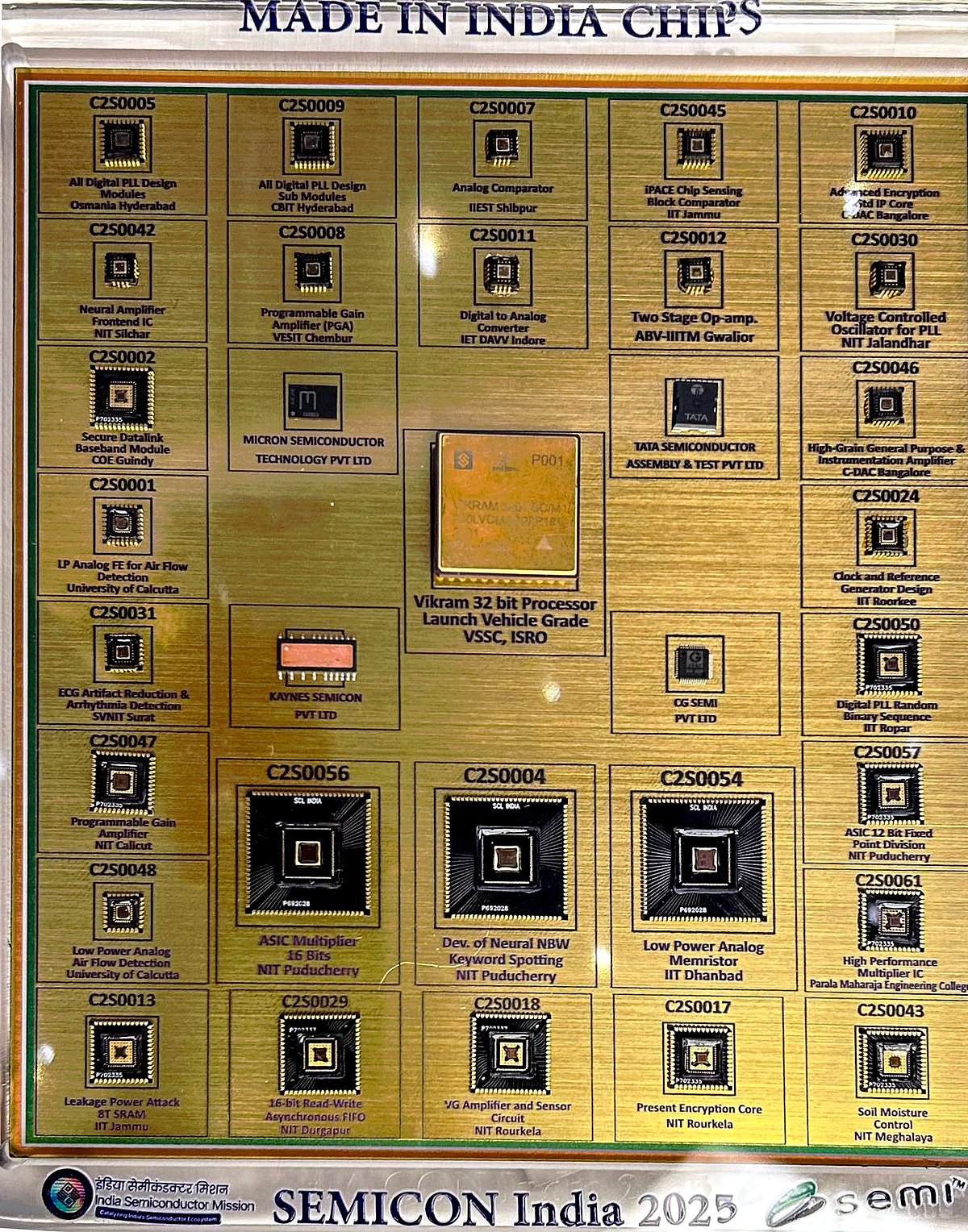
During the inauguration, Union Electronics & IT Minister Ashwini Vaishnaw presented Vikram, India’s first fully indigenously developed 32-bit microprocessor, to PM Modi. Developed by ISRO’s Semiconductor Laboratory (SCL), Chandigarh, this chip is tailored for space-grade applications and marks India’s stride toward technological self-reliance
National Momentum and Export Vision
Minister Vaishnaw highlighted that five semiconductor units are under rapid construction, with one pilot line already complete. He announced that two more units are set to begin production soon, and five additional units are in the design stage. The initiative underscores India’s emergence as a “lighthouse of stability”, especially amid global uncertainties
Strategic Outlook by PM Modi
PM Modi likened semiconductors to “digital diamonds of the 21st century”, asserting that India’s smallest chip could drive the world’s biggest change. He emphasized building not just manufacturing capacity, but a full-stack, globally competitive ecosystem rooted in Atmanirbhar Bharat
Industry Partnerships and Alliances
The conference facilitated significant collaborations. Notably:
- 12 MoUs were signed to bolster product development, service expansion, and skill-building
- The Deep Tech Alliance was launched with nearly USD 1 billion committed to semiconductors and other frontier sectors like clean energy and quantum technologies
- A high-powered CEO roundtable, featuring global semiconductor leaders, reaffirmed their confidence in India as a semiconductor capital
- IIT (ISM) Dhanbad’s APEEC1, a low-power analog memristor emulator chip, gained national acclaim for its breakthrough in energy-efficient, real-time adaptive learning applications
- Consortiums including 3rdiTech, Kaynes Semicon, and SPARSHIQ signed MoUs to strengthen India’s vision systems and semiconductor ecosystem
Why This News Is Important
Pillars of Technological Sovereignty
The unveiling of Vikram, India’s first indigenously developed 32-bit chip, represents a critical advance in reducing dependence on foreign semiconductor imports—crucial for defense, space, and strategic autonomy.
Catalyzing Economic Momentum
Semicon India 2025, backed by the ₹76,000-crore PLI scheme (with ₹65,000 crore already committed), not only boosts domestic manufacturing but positions India to grab a significant share of the projected $100–110 billion domestic semiconductor market by 2030
Ecosystem Building Over Time
From chip design to manufacturing and downstream services like OSAT, the event reflects India’s holistic, tier-wise development of the chip manufacturing value chain
Global Validation and Investments
Global CEOs and industry giants are not just observers—they’re contributors. Their engagement through MoUs and roundtables signals significant investor confidence in India’s long-term semiconductor control and innovation capacity
Strategic Edge in Defense and National Security
The chip’s space-grade reliability underlines its importance in sectors like defense and aerospace. India’s move into secure, indigenous microprocessor production enhances strategic technologies and safeguards key national interests
Historical Context
India’s semiconductor ambitions trace back to early 2020s reforms. In 2021, the India Semiconductor Mission (ISM) was launched, featuring a massive Production-Linked Incentive (PLI) scheme of ₹76,000 crore, aimed at building chip design and manufacturing capacities from the ground up
Since then:
- Major investments have been approved, including manufacturing units across several states and OSAT facilities
- The Tata Semiconductor Assembly & Test project, a ₹27,000-crore facility in Assam, targeted operational launch by mid-2025—underscoring regional value-addition and manufacturing spread
- Semicon India 2025 marks the fourth edition of the tech summit, each year escalating India’s visibility and shaping up as an innovation-friendly environment
Key Takeaways from This News
| # | Key Takeaway |
|---|---|
| 1 | First Indigenously Developed 32-bit Chip: Vikram symbolizes India’s technological self-reliance in critical microprocessor development. |
| 2 | Robust National Ecosystem: ISM and PLI schemes have catalyzed infrastructure, design, OSAT, and fab development across India. |
| 3 | Massive Industry Participation: Global collaborations and MoUs showcase India’s appeal as a trusted semiconductor innovation partner. |
| 4 | Strategic Autonomy Gains: Indigenous semiconductor capabilities bolster defense, space, and AI sectors with secure, home-grown hardware. |
| 5 | Economic and Global Impact: With a projected semiconductor market size of $100–110 bn by 2030, India positions itself as a key global tech player. |
Frequently Asked Questions (FAQs)
Q1. What is the main highlight of Semicon India 2025?
Ans: The major highlight was the unveiling of Vikram, India’s first indigenously developed 32-bit processor, designed by ISRO’s Semiconductor Laboratory (SCL).
Q2. Where was Semicon India 2025 inaugurated?
Ans: It was inaugurated by Prime Minister Narendra Modi at Yashobhoomi, New Delhi.
Q3. Who presented the Vikram chip to PM Modi?
Ans: Ashwini Vaishnaw, Union Minister for Electronics & IT, presented the chip.
Q4. Why is the Vikram chip significant for India?
Ans: It strengthens India’s strategic autonomy by reducing dependency on foreign semiconductor imports and ensuring secure technology for defense, aerospace, and space-grade applications.
Q5. How many countries and exhibitors participated in Semicon India 2025?
Ans: Over 350 exhibitors from 33 countries participated in the event.
Q6. What was the theme of Semicon India 2025?
Ans: The event revolved around India as a trusted global hub for semiconductor manufacturing and chip design.
Q7. What economic benefit does India expect from its semiconductor push?
Ans: India aims to capture a significant share of the $100–110 billion domestic semiconductor market by 2030.
Q8. What alliances or partnerships were signed during the event?
Ans: 12 MoUs were signed, and the Deep Tech Alliance was launched with nearly USD 1 billion investments committed to semiconductor and frontier technologies.
Q9. What is the role of the India Semiconductor Mission (ISM)?
Ans: ISM drives India’s semiconductor ecosystem, backed by the ₹76,000 crore Production-Linked Incentive (PLI) scheme.
Q10. How is Semicon India 2025 relevant for exam preparation?
Ans: It covers topics under science & technology, Indian economy, defense, and international relations, which are crucial for UPSC, PSCs, SSC, banking, and defense exam current affairs.
Some Important Current Affairs Links