




Saalumarada Thimmakka, known as the Mother of 385 Banyan Trees, passed away at 114. Learn about her environmental contributions, Padma Shri award, and lasting legacy.
Saalumarada Thimmakka: The Mother of 385 Banyan Trees Bids Farewell
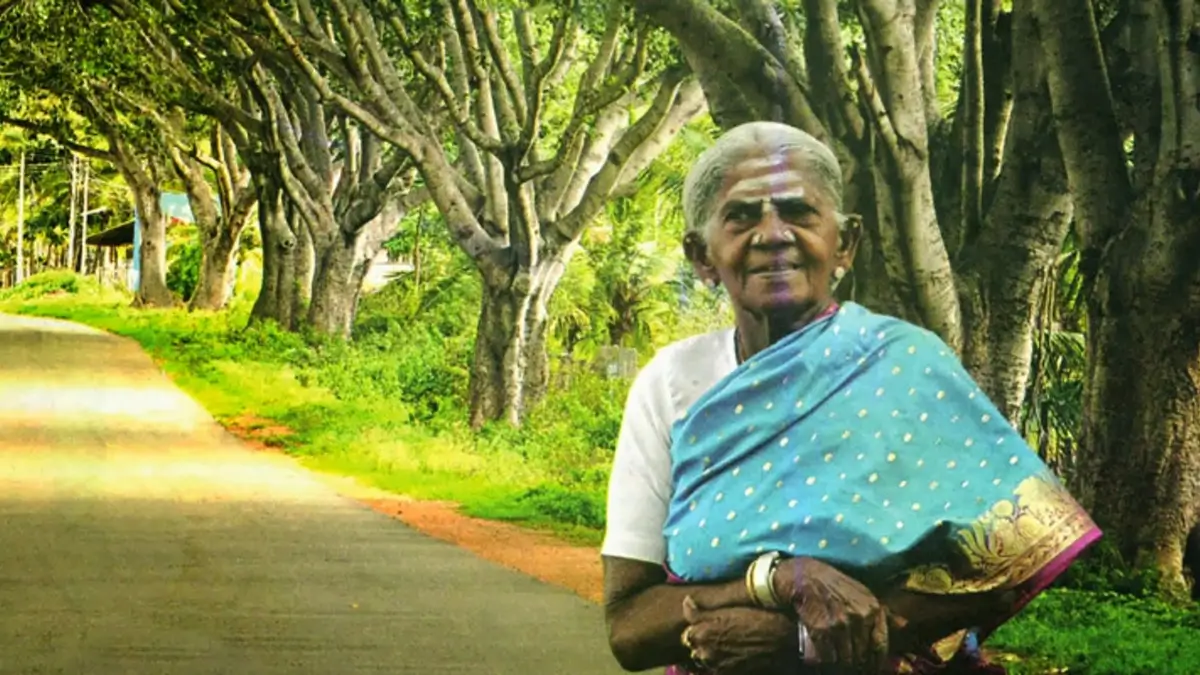
Saalumarada Thimmakka, one of India’s most iconic grassroots environmentalists, passed away on 14 November 2025 in Bengaluru at the age of 114. Her death marks the end of an era of selfless environmental stewardship, but her legacy — rooted in the 385 banyan trees she planted and nurtured — continues to inspire generations.
Early Life and Humble Origins
Born in Gubbi taluk, Tumakuru district, Karnataka, Thimmakka faced a life of hardship from her early days. She had no formal education and worked as a daily-wage laborer to support herself. She married Chikkayya, another laborer from Hulikal, but the couple was childless — a grief that later shaped her life’s mission.
From Personal Pain to a Green Mission
Rather than succumb to despair, Thimmakka channeled her longing into nurturing saplings. Starting in the 1950s, she and her husband began planting banyan saplings along State Highway 94, between Kudur and Hulikal. With love, care, and painstaking effort — watering the young trees daily, guarding them from animals, and using thorny fences — they raised 385 banyan trees over decades.
Recognition and National Acclaim
Despite her lack of formal education, Thimmakka’s devotion did not go unnoticed. In 2019, she was awarded the Padma Shri for her outstanding contribution to environmental conservation. She also received several other honors, including an honorary doctorate, the Nadoja Award, and national/local environmental awards. Over time, she became affectionately known as “Vriksha Mata” or the “Mother of Trees.”
Final Days and Passing
In her final months, Thimmakka’s health deteriorated; she was hospitalized in Bengaluru due to age-related weakness and appetite loss. On 14 November 2025, she peacefully passed away in a private hospital, leaving behind a vast living legacy.
Public Tributes and Legacy
News of her passing prompted nationwide tributes. Karnataka’s Chief Minister Siddaramaiah mourned her departure, calling her “immortal” for the mark she left on nature. The Forest Department and environmentalists alike reaffirmed their commitment to preserving her banyan grove, emphasizing that her life is a testament to what grassroots environmental action can achieve.

Why This News Is Important
Symbol of Grassroots Environmentalism
Thimmakka’s life exemplifies how individual action at the grassroots level can lead to large-scale ecological impact. By caring for trees as her own children, she built a corridor of 385 banyan trees that continues to provide ecological benefits, such as shade, habitat for birds, and an increase in green cover.
Inspiration for Sustainable Development
For students preparing for government exams — especially in civil services, environmental management, or public policy — Thimmakka’s journey is relevant because it highlights sustainable development driven by ordinary citizens. Her work underscores the importance of community-based conservation efforts and the potential of people-powered change.
Legacy for Policy & Conservation
Her passing brings fresh attention to tree conservation policies in India. It also serves as a reminder for policymakers to support and protect local environmental champions. Her life may influence future afforestation programs, particularly those that honor and replicate community-led models.
Recognition of Long-Term Commitment
Thimmakka’s decades-long dedication — without seeking financial gain — illustrates how persistent commitment to a cause can attract national recognition and institutional support. Her Padma Shri award and honorary doctorate validate that sustained grassroots work is valued at the highest levels.
Historical Context
Saalumarada Thimmakka’s journey began in the mid-20th century, a time when rural India was marked by limited resources, poverty, and minimal awareness of environmental conservation. Born in 1911 in Gubbi, Tumakuru district, she grew up in extremely modest circumstances.
Her partnership with her husband, Chikkayya, became the bedrock of their environmental mission. They started planting banyan saplings along a rural highway in Karnataka. The couple manually carried water for kilometers, fenced the saplings to protect them from cattle, and regularly tended to their “tree children” with deep affection.
Over 50‑60 years, their modest plantation grew into a majestic stretch of 4.5 km lined with 385 mature banyan trees, fundamentally transforming the roadside ecology. Their work became a living model for ecological conservation rooted in empathy, patience, and consistency.
In later years, Thimmakka gained national fame. She received the Padma Shri in 2019 for her contributions to social work and the environment, despite having no formal education Her story became a source of inspiration for environmentalists, policymakers, and citizens.
When she passed away in 2025, her death was widely mourned — but more importantly, it triggered a renewed focus on preserving her legacy and promoting tree-planting efforts at grassroots levels.
Key Takeaways from This News
| S. No. | Key Takeaway |
|---|---|
| 1 | Saalumarada Thimmakka, a grassroots environmentalist, passed away at the age of 114 on 14 November 2025. |
| 2 | She planted and nurtured 385 banyan trees along a 4.5-km stretch of State Highway 94 between Hulikal and Kudur, Karnataka. |
| 3 | Despite having no formal education and being childless, she cared for the trees as her own children, carrying water daily and protecting them from harm. |
| 4 | For her dedicated environmental work, she was awarded several honors, including the Padma Shri in 2019. |
| 5 | Her legacy is widely recognized by policymakers and environmentalists — her life is a powerful example of how individual, sustained grassroots action can drive ecological change. |
FAQs: Frequently Asked Questions
Q1. Who was Saalumarada Thimmakka?
A: Saalumarada Thimmakka was a self-taught environmentalist from Karnataka, India, renowned for planting and nurturing 385 banyan trees along a 4.5 km stretch of State Highway 94.
Q2. When did Saalumarada Thimmakka pass away?
A: She passed away on 14 November 2025 at the age of 114 in Bengaluru, Karnataka.
Q3. What awards did Thimmakka receive for her environmental contributions?
A: She received several awards, most notably the Padma Shri in 2019, an honorary doctorate, and the Nadoja Award.
Q4. Why is she called the ‘Mother of Trees’?
A: She lovingly cared for the 385 banyan trees she planted as if they were her own children, earning her the title “Vriksha Mata” or “Mother of Trees.”
Q5. What lesson can students preparing for exams learn from Thimmakka’s life?
A: Her life teaches the importance of grassroots action, sustainability, patience, and dedication toward environmental conservation, which are key topics in general studies and current affairs.
Q6. How did Thimmakka start her tree plantation work?
A: She and her husband, Chikkayya, began planting banyan saplings along State Highway 94, manually watering and protecting them, beginning in the 1950s.
Q7. How many banyan trees did Thimmakka plant in total?
A: She planted and nurtured a total of 385 banyan trees along the highway in Karnataka.
Some Important Current Affairs Links