








Rabi Abhiyan 2025 Conference focuses on national agriculture strategies, crop planning, quality inputs, Viksit Krishi Sankalp Abhiyan, and farmer welfare for the Rabi cropping season.
National Agriculture Conference – Rabi Abhiyan 2025: Strategic Roadmap for India’s Rabi Season
Conference Overview and Objective
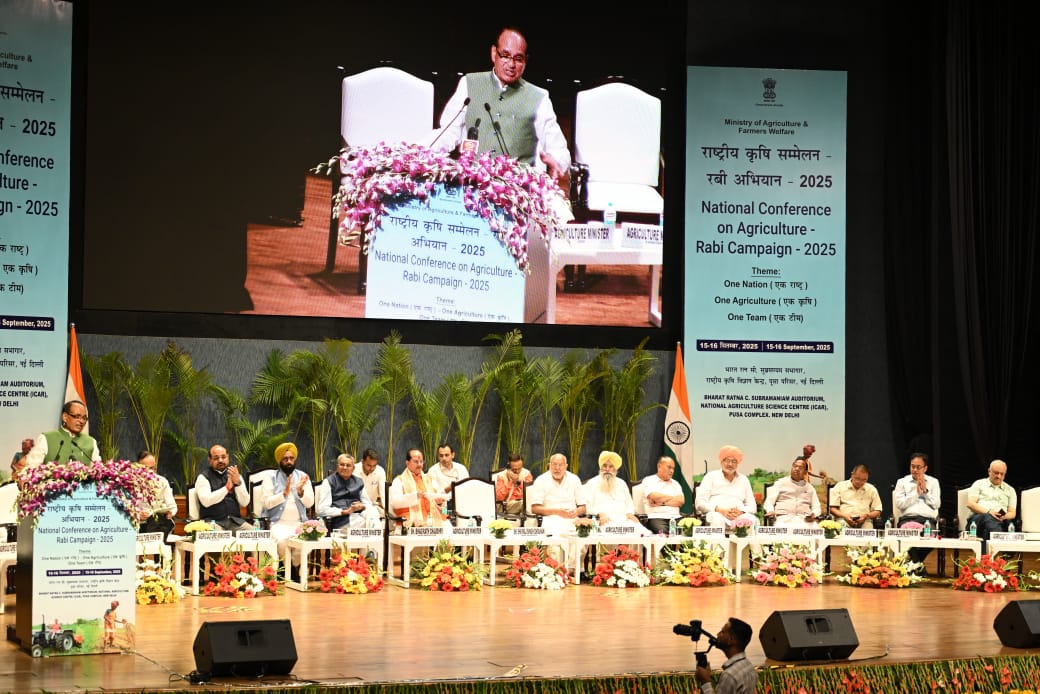
The National Agriculture Conference – Rabi Abhiyan 2025 was held in New Delhi on 15-16 September 2025, at the Pusa Campus. Chaired by Union Agriculture & Farmers’ Welfare Minister Shivraj Singh Chouhan, the conference is the central preparation forum for the upcoming Rabi cropping season (2025-26). The event brought together agriculture ministers from various states, senior officials from the Union Government, ICAR, state agriculture departments, Krishi Vigyan Kendras, scientists, and other stakeholders.
Key Themes and Areas of Discussion
A number of major themes were under the spotlight:
- Production targets and planning for Rabi crops: wheat, barley, pulses, oilseeds etc.
- Quality of inputs: seeds, fertilizers, pesticides; ensuring standards and preventing counterfeit or substandard inputs.
- Extension services and grass-roots linkages, particularly through Krishi Vigyan Kendras (KVKs) and state agricultural departments, to bring scientific advice and new technologies to farmers.
- Weather forecasting and risk mitigation: enhancing insurance coverage, leveraging crop insurance schemes such as the Pradhan Mantri Fasal Bima Yojana (PMFBY).
- Campaigns and outreach: Launching the Viksit Krishi Sankalp Abhiyan from 3 October 2025, with aim of translating research (“lab”) to implementation (“land”) across villages.
Significant Decisions & Policy Points
Several important outcomes and policy directions emerged:
- The conference has been extended to two days for the first time, indicating greater depth in deliberation.
- Stronger legal and regulatory measures to prevent the sale of spurious or poor quality agricultural inputs are to be drafted and enforced.
- The government emphasized crop diversification, especially promoting pulses and oilseeds, to reduce dependency on a few staples and to improve farmer income.
- Strengthening of extension mechanisms and institutional capacity (KVKs, state extension systems) to ensure better flow of technological advances and farmer support.
Implementation & Follow-Up
- The second phase of Viksit Krishi Sankalp Abhiyan, focusing on Rabi crops, is set to begin on 3 October 2025.
- State governments, agricultural universities and other institutions have been asked to coordinate closely with central ministries for unified action, especially in outreach, quality inputs’ distribution, and disaster risk planning.
Challenges Identified
The conference also recognized potential bottlenecks:
- Variable weather and climate change effects may undermine forecasts, requiring more adaptive and localised advisory services.
- Ensuring quality control of inputs (seeds, fertilisers, pesticides) across different states remains a logistical and regulatory challenge.
- Reaching remote farmers, ensuring they are included in schemes and infrastructure, is still uneven.
- Aligning state-level targets and planning with central guidelines while accommodating regional differences in agro-ecology and resource endowments.
Why This News Is Important
Relevance to Agricultural Goals & Food Security
India’s Rabi season constitutes a major part of its agricultural output. Preparations made now directly affect national food security, farmers’ income, and the stability of supply chains of staples like wheat, pulses, and oilseeds. The decisions taken in the Rabi Abhiyan 2025 conference will influence cropping patterns, input availability, insurance mechanisms, and mitigation of risks — all crucial to ensuring adequate production. For students, understanding this helps in the context of agricultural policy, economic planning, and rural development, which are common topics in exams for civil services, banking, and state services.
Policy Reforms & Regulatory Measures
The emphasis on quality control of inputs, regulation of counterfeit seeds/fertilizers/pesticides, and extension of insurance coverage shows policy shifts toward more farmer protection and regulatory accountability. Such measures are relevant for questions under public policy, governance, and agriculture sector reforms. This news indicates how the government is addressing past gaps—such as spurious inputs or lack of field-level extension—that often appear in exam questions.
Institutional Strengthening & Outreach
Inviting Krishi Vigyan Kendras and other local institutions for ground-level insights, launching lab-to-land campaigns, signals a move from top-down planning to more decentralized, participatory frameworks. This is important under exam segments like “Institutional Mechanisms”, “Federal Structure and Role of States”, and “Grassroots level governance”.
Historical Context
Evolution of Rabi & Kharif Conferences
India has long had seasonal agriculture conferences and campaign initiatives to plan for Kharif (monsoon) and Rabi (winter) cropping seasons. These forums serve to assess weather, input supply, crop performance, state needs, and central‐state coordination. Over the years, the importance of Rabi seasons has increased, with evolving climate patterns and rising demand for staples and pulses.
Launch of Viksit Krishi Sankalp Abhiyan & “Lab to Land”
In 2025, the government initiated the Viksit Krishi Sankalp Abhiyan, a campaign aimed at enhancing farmer outreach, increasing scientific advice delivery, and ensuring technological solutions actually reach farmers. The “Lab to Land” motto expresses the intention to take agricultural research and innovations from experimental labs or research centres directly to the fields. This initiative forms the backdrop for the Rabi Abhiyan conference.
Previous Challenges in Rabi Seasons
Historically, challenges during Rabi seasons have included delayed or inadequate supply of quality seeds and fertilizers, unpredictable weather (frosts, cold waves, erratic rains), pests, fragmented extension services, and insufficient insurance coverage. Several Rabi-season plans in the past have been criticized for mismatch between central guidelines and local ground realities. This year’s conference appears designed to address many of those past weaknesses.
Key Takeaways from “Rabi Abhiyan 2025 Conference Begins in New Delhi”
| S.No | Key Takeaway |
|---|---|
| 1 | The National Agriculture Conference – Rabi Abhiyan 2025 took place in New Delhi on 15–16 September 2025 at Pusa Campus, chaired by Agriculture Minister Shivraj Singh Chouhan. |
| 2 | For the first time, the Rabi conference was extended to two days, to allow more thorough discussions. |
| 3 | Main focus areas included quality inputs, extension services, crop diversification, strengthening of KVKs, and expanding crop insurance under schemes like PMFBY. |
| 4 | The Viksit Krishi Sankalp Abhiyan, launched earlier for Kharif, will now enter its second phase (from 3 October 2025) with emphasis on Rabi crops. |
| 5 | Strong regulatory measures are being considered to curb the sale of spurious or sub-standard agricultural inputs; also urging states to increase outreach and coordination for better outcomes. |
FAQs: Frequently Asked Questions
1. What is the Rabi Abhiyan 2025 Conference?
The Rabi Abhiyan 2025 Conference is a two-day national agricultural conference held in New Delhi to plan and strategize for the upcoming Rabi cropping season (2025–26). It brings together Union and state agriculture ministers, senior officials, scientists, and Krishi Vigyan Kendras (KVKs).
2. When and where was the Rabi Abhiyan 2025 held?
It was held on 15–16 September 2025 at the Pusa Campus, New Delhi.
3. What are the main objectives of the conference?
Key objectives include planning production targets, ensuring quality agricultural inputs, strengthening extension services, enhancing crop insurance coverage, promoting crop diversification, and preparing farmers for risks posed by weather and pests.
4. What is the Viksit Krishi Sankalp Abhiyan?
It is a government initiative aimed at translating agricultural research from “lab to land,” enhancing outreach to farmers, and providing guidance and scientific advisory services for better crop management. Its second phase for Rabi crops will start from 3 October 2025.
5. Why is the conference important for farmers and policymakers?
The conference ensures coordinated action between central and state governments, addresses quality and supply challenges, supports income growth for farmers, improves food security, and enhances institutional mechanisms for technology adoption and disaster preparedness.
6. Which crops are the main focus during the Rabi season?
Main crops include wheat, barley, pulses, oilseeds, and other winter crops essential for national food security and farmer income.
7. How does this conference impact government exams?
This news is relevant for exams like UPSC, State PSCs, Banking, Defence, Railways, and Teaching because it relates to agriculture policy, government schemes, food security, and institutional governance—all common topics in current affairs sections.
Some Important Current Affairs Links