


India to Build First Ever Polar Research Vessel (PRV) in Collaboration with Norway
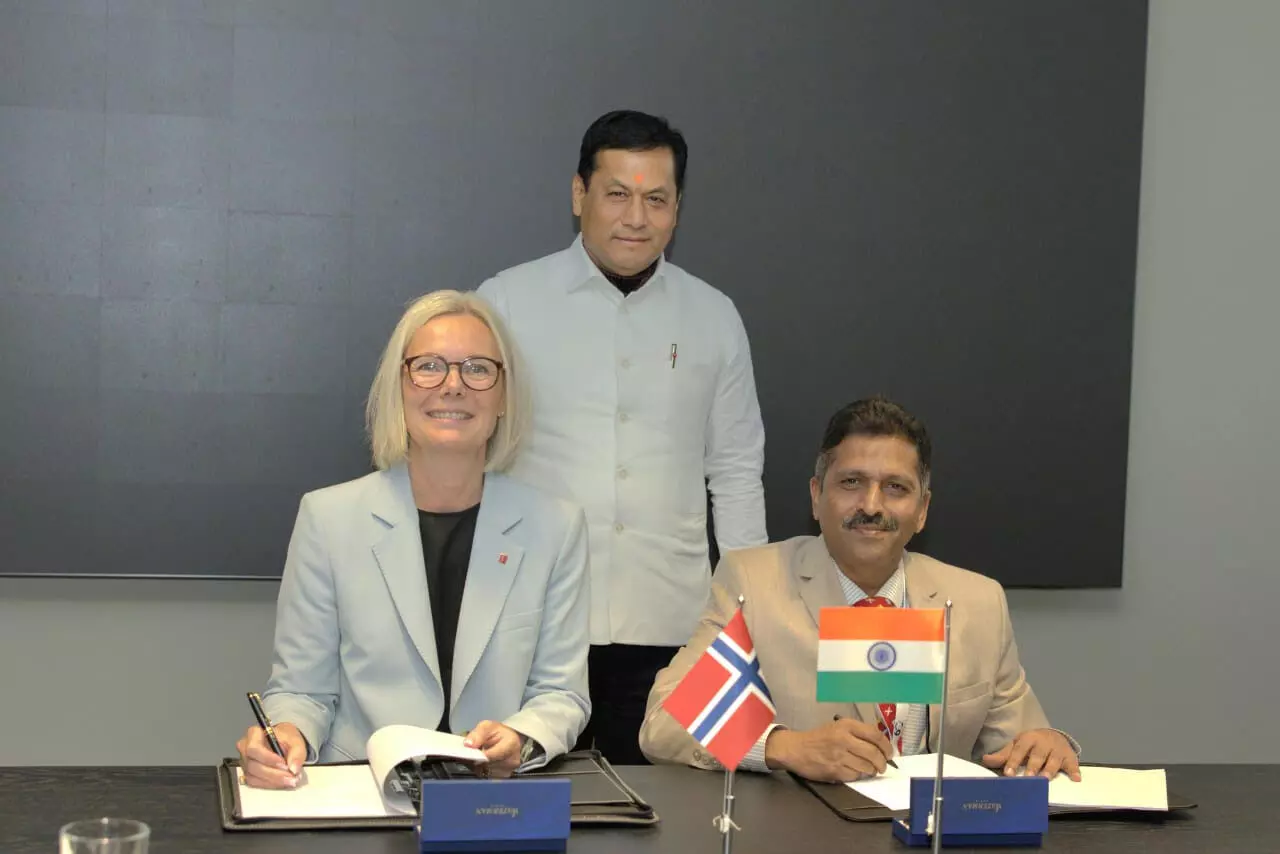
India is set to construct its first-ever Polar Research Vessel (PRV), marking a significant advancement in the nation’s scientific and maritime capabilities. This ambitious project is a result of a strategic partnership between Garden Reach Shipbuilders and Engineers Ltd. (GRSE) in Kolkata and Norway’s Kongsberg Maritime. The Memorandum of Understanding (MoU) was signed in Oslo on June 3, 2025, in the presence of Union Minister for Ports, Shipping, and Waterways, Sarbananda Sonowal.
Strategic Collaboration for Indigenous Shipbuilding
The collaboration between GRSE and Kongsberg Maritime aims to indigenously design and build the PRV at GRSE’s shipyard in Kolkata. Kongsberg will provide advanced design expertise, ensuring the vessel meets the technical and scientific requirements essential for polar research. The National Centre for Polar and Ocean Research (NCPOR), based in Goa, will utilize the vessel for conducting research in the polar and Southern Ocean regions, focusing on climate change studies, marine biodiversity, and oceanography.
Enhancing India’s Polar Research Capabilities
Currently, India operates three research base stations in Antarctica—Maitri, Bharati, and Dakshin Gangotri—and one in the Arctic region—Himadri. The new PRV will play a crucial role in sustaining these stations by providing continuous access for resupply and scientific expeditions. Equipped with state-of-the-art scientific instruments, the vessel will facilitate in-depth studies of marine ecosystems and contribute to understanding global climate dynamics.
Economic and Technological Implications
The estimated cost of the PRV is ₹2,600 crore. This investment underscores India’s commitment to enhancing its maritime infrastructure and scientific research capabilities. The project aligns with the government’s ‘Make in India’ initiative, promoting indigenous shipbuilding and technological development. The collaboration with Kongsberg Maritime brings global design expertise into the Indian shipbuilding ecosystem, marking a significant milestone in scientific maritime infrastructure development.
Future Prospects and Strategic Vision
The construction of the PRV is expected to be completed within the next five years. Union Minister Sarbananda Sonowal emphasized that this initiative is a testament to India’s unwavering commitment to scientific advancement and sustainable development. He highlighted that the vessel will not only bolster India’s capabilities in polar research but also contribute to global efforts to address pressing challenges like climate change.
Why This News is Important
Strengthening Scientific Research
The development of an indigenous PRV will significantly enhance India’s capacity to conduct comprehensive scientific research in polar regions. This advancement will provide researchers with the necessary tools to study climate change, marine ecosystems, and oceanography in greater detail, leading to more informed policy decisions and international collaborations.
Promoting Indigenous Shipbuilding
By constructing the PRV domestically, India is fostering the growth of its shipbuilding industry. This project will not only create employment opportunities but also stimulate technological advancements within the sector, aligning with the ‘Make in India’ initiative.
Enhancing Strategic Capabilities
The PRV will ensure uninterrupted access to India’s polar research stations, thereby strengthening the nation’s strategic presence in these critical regions. This capability is essential for maintaining operational continuity and supporting scientific missions in the Arctic and Antarctic.
Facilitating International Collaboration
The partnership with Norway’s Kongsberg Maritime exemplifies the importance of international collaboration in achieving complex technological feats. By integrating global expertise with domestic capabilities, India aims to bolster its maritime infrastructure and scientific research, contributing to global efforts in polar research and climate studies.
Aligning with Global Environmental Goals
The PRV will be equipped with state-of-the-art scientific instruments, enabling researchers to explore ocean depths, study marine ecosystems, and gain new insights into the planet’s history and future. This initiative aligns with India’s commitment to sustainable development and environmental conservation, contributing to global efforts to address pressing challenges like climate change.
Historical Context
India’s Polar Research Endeavors
India’s engagement in polar research began with the establishment of its first Antarctic research station, Dakshin Gangotri, in 1983. Subsequently, Maitri and Bharati stations were established to facilitate scientific research in Antarctica. In the Arctic, India set up the Himadri station in 2008, marking its entry into Arctic research. These stations have been instrumental in conducting studies on climate change, glaciology, and marine ecosystems.
Dependence on Foreign Vessels
Historically, India has relied on chartered foreign vessels to support its polar research missions. This dependence has posed challenges in terms of operational flexibility and cost-effectiveness. The development of an indigenous PRV aims to mitigate these challenges by providing a dedicated vessel tailored to India’s specific research needs.
Previous Attempts and Renewed Efforts
In 2014, the Indian government approved ₹1,051 crore for the acquisition of a Polar Research Vessel. However, the project was halted due to unforeseen conditions raised by the company awarded the contract. A renewed effort was initiated, leading to the current collaboration with Kongsberg Maritime. This partnership reflects India’s strategic vision of becoming self-reliant in critical technologies while fostering global cooperation.
Key Takeaways from “India to Build First Ever Polar Research Vessel (PRV) in Collaboration with Norway”
| S.No | Key Takeaway |
|---|---|
| 1 | India has partnered with Norway’s Kongsberg Maritime to build its first indigenous Polar Research Vessel (PRV). |
| 2 | The PRV will be constructed at Garden Reach Shipbuilders and Engineers Ltd. (GRSE) in Kolkata. |
| 3 | The vessel will support India’s polar research stations in Antarctica and the Arctic. |
| 4 | The project is estimated to cost ₹2,600 crore and is expected to be completed within five years. |
| 5 | The collaboration emphasizes India’s commitment to scientific advancement and sustainable development. |
FAQs: Frequently Asked Questions
1. What is the Polar Research Vessel (PRV) project?
The PRV project involves building India’s first indigenous polar research vessel to support scientific exploration in the Arctic and Antarctic regions.
2. Which organizations are collaborating to build the PRV?
Garden Reach Shipbuilders and Engineers Ltd. (GRSE) in Kolkata is partnering with Norway’s Kongsberg Maritime to design and build the vessel.
3. What will be the main purpose of the PRV?
The vessel will support India’s polar research stations by providing access for scientific expeditions, resupply missions, and marine ecosystem studies in the polar regions.
4. How much is the estimated cost of building the PRV?
The estimated cost for constructing the PRV is ₹2,600 crore.
5. Which Indian research institutions will use the PRV?
The National Centre for Polar and Ocean Research (NCPOR) in Goa will utilize the vessel for conducting polar and Southern Ocean research.
6. Why is India building its own Polar Research Vessel now?
India has historically relied on foreign vessels for polar research, which limited operational flexibility. Building an indigenous PRV will enhance self-reliance and scientific capabilities.
7. When is the PRV expected to be completed?
The construction is expected to be completed within the next five years.
8. What are some key features of the PRV?
The PRV will be equipped with state-of-the-art scientific instruments for climate studies, oceanography, and marine biodiversity research.
9. How does this project align with India’s broader initiatives?
The project supports the ‘Make in India’ initiative, promoting domestic technological development and strengthening India’s maritime infrastructure.
10. What is the significance of India collaborating with Norway’s Kongsberg Maritime?
The collaboration combines Norway’s advanced design expertise with India’s shipbuilding capabilities, ensuring a world-class research vessel.
Some Important Current Affairs Links




