



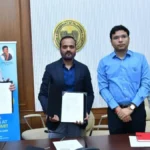



PM MITRA Scheme brings ₹1,894 crore textile park to Virudhunagar, Tamil Nadu, creating 1 lakh jobs and boosting India’s global textile ambitions.
Virudhunagar to Become a Global Textile Hub Under PM MITRA Scheme
Introduction
The Indian Government has sanctioned a ₹1,894–1,900 crore investment for establishing a world-class PM MITRA Textile Park in Virudhunagar, Tamil Nadu. This flagship initiative aims to position Virudhunagar as a next-generation textile manufacturing hub with advanced infrastructure, eco-friendly measures, and large-scale employment generation
Scale & Infrastructure
Covering approximately 1,052 acres, the park will incorporate:
- Specialized processing units for technical textiles and integrated value chains.
- A 15 MLD zero liquid discharge effluent treatment plant and a 5 MLD sewage plant.
- Plug-and-play & built-to-suit factory space totaling 1.3 million sq ft.
- Worker housing supporting 10,000 residents
Strategic Location & Development Timeline
This project falls under the PM MITRA scheme’s network of seven parks, alongside units in Telangana, Karnataka, Maharashtra, Gujarat, Madhya Pradesh, and Uttar Pradesh Jointly championed by Union Textiles Minister Giriraj Singh and Tamil Nadu officials, it is slated for completion by September 2026
Economic Impact & Employment
Tamil Nadu is projected to attract ₹10,000 crore in investments through this project, generating approximately 1 lakh jobs in the regionThe park’s focus on high-value textile segments is expected to boost exports, industrial growth, and regional development.
Sustainability & Worker Welfare
The park aligns with sustainable manufacturing goals by ensuring zero liquid discharge, efficient water treatment, and adequate worker housing. This integrates environmental responsibility with social welfare, reflecting modern industrial best practices

Why This News Is Important
Shows Centre–State Collaboration
This venture underscores the synergy between central and state governments—in this case, the cooperation between Union Minister Giriraj Singh and Tamil Nadu’s leadership, led by CM M.K. Stalin. Such collaboration models are crucial for GSEB, SSC, banking, and civil services aspirants—as they test awareness of federal dynamics.
Strengthens India’s Textile Ecosystem
As a core component of the PM MITRA Scheme, this park exemplifies India’s transition toward becoming a global textile powerhouse—important for UPSC, state PSCs, and SSC aspirants who face questions on economic and industrial policy frameworks.
Emphasis on Green Growth
Students should note the focus on zero liquid discharge, sewage treatment, and worker facilities. Questions on sustainable development goals (SDGs) may reference such large-scale green infrastructure initiatives.
Employment & Investment Metrics
The park’s projected ₹10,000 crore investment and 1 lakh jobs feed directly into topics like GDP impact, job creation, and regional growth—areas commonly tested in economic and governance sections.
Exam-Relevant Policy Awareness
This initiative highlights key government functionality: policy planning under PM MITRA, strategic infrastructure development, and socio-environmental integration—vital knowledge corners for aspirants.
Historical Context: The PM MITRA Scheme
Origins & Objectives
Launched in 2021, the PM MITRA (Mega Integrated Textile Region and Apparel) Scheme aims to integrate the textile value chain—spinning, weaving, dyeing, printing, and garmenting—within single-region parks, reminiscent of the “5F” vision: Farm → Fiber → Factory → Fashion → Foreign
Infrastructure-led Growth
Each PM MITRA park receives co-funding from the Centre and respective states through a Joint SPV. The program includes generous Capital and Incentive Support, covering greenfield/brownfield development, treatment plants, and plug-and-play infrastructure
National Rollout
In October 2021, seven parks were approved:
- Virudhunagar (TN) – greenfield
- Navsari (Gujarat) – greenfield
- Kalaburagi (Karnataka) – greenfield
- Dhar (MP) – greenfield
- Lucknow (UP) – greenfield
- Warangal (Telangana) – brownfield
- Amravati (Maharashtra) – brownfield
Strategic Benefits
These parks reduce logistics costs, improve manufacturing efficiency, and are aligned with Make-in-India and sustainable development objectives—eventually enhancing India’s global export competitiveness
Key Takeaways from “Virudhunagar Textile Hub”
| S.No | Key Takeaway |
|---|---|
| 1 | Project cost: ₹1,894–1,900 crore sanctioned under PM MITRA. |
| 2 | Site: 1,052-acre greenfield park focusing on technical textiles. |
| 3 | Timeline: Completion targeted by September 2026. |
| 4 | Impact: ₹10,000 crore investment and 1 lakh jobs expected. |
| 5 | Green features: 15 MLD zero liquid discharge & 5 MLD sewage treatment. |
FAQs: Frequently Asked Questions
1. What is the PM MITRA Scheme?
The PM MITRA (Mega Integrated Textile Region and Apparel) Scheme is a flagship initiative launched by the Government of India in 2021 to strengthen the textile sector by creating world-class industrial infrastructure integrated with the textile value chain.
2. Why was Virudhunagar chosen for the PM MITRA park?
Virudhunagar in Tamil Nadu was selected for its strategic location, strong industrial base, availability of land, and proactive support from the Tamil Nadu government. It is well-connected and has the potential to attract textile investors.
3. How much investment has been sanctioned for the Virudhunagar Textile Park?
The central government has approved approximately ₹1,894–1,900 crore for developing the PM MITRA Park in Virudhunagar.
4. What are the expected benefits of the textile park?
The park is projected to generate ₹10,000 crore in investment, create over 1 lakh jobs, and strengthen India’s global textile competitiveness, while also promoting sustainable development.
5. How many PM MITRA parks have been announced in India?
Seven PM MITRA parks have been announced across different states: Tamil Nadu, Telangana, Karnataka, Maharashtra, Gujarat, Madhya Pradesh, and Uttar Pradesh.
Some Important Current Affairs Links