
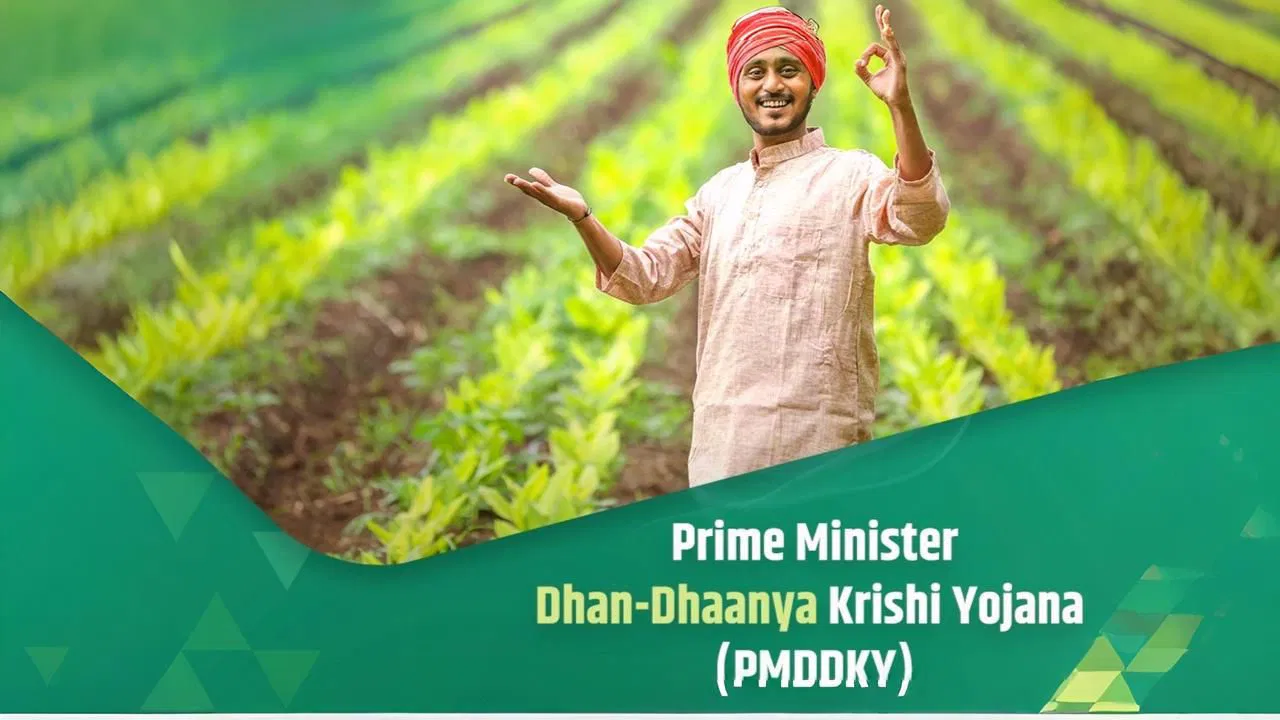
PM Dhan Dhaanya Krishi Yojana 2025 aims to benefit 1.7 crore farmers across 100 districts with ₹24,000 crore investment, promoting sustainable farming and rural development.
Prime Minister Narendra Modi launched the Pradhan Mantri Dhan Dhaanya Krishi Yojana (PMDDKY), a transformative agricultural initiative aimed at enhancing productivity and self-reliance among farmers in India’s most underdeveloped districts. The scheme, with an investment of ₹24,000 crore, is set to benefit approximately 1.7 crore farmers across 100 districts identified based on low agricultural performance.
Objectives of PMDDKY
PMDDKY seeks to address the challenges faced by farmers in these districts by:
- Enhancing Agricultural Productivity: Introducing advanced farming techniques and technologies.
- Improving Irrigation Infrastructure: Expanding micro-irrigation systems to ensure efficient water use.
- Providing Financial Support: Facilitating easy access to credit and insurance for farmers.
- Promoting Crop Diversification: Encouraging the cultivation of pulses and oilseeds to reduce dependency on traditional crops.
Integration of Existing Schemes
The initiative integrates 36 existing central and state schemes, aligning them to create a cohesive support system for farmers. This approach ensures that resources are utilized efficiently, and benefits reach the intended recipients without duplication.
Focus on Sustainable Practices
Emphasizing sustainability, PMDDKY promotes natural farming methods. Over 2.22 lakh farmers have been trained under the Prakritik Kheti Khushhal Kisan Yojana, adopting eco-friendly agricultural practices on more than 38,000 hectares across the country.
Infrastructure Development
The scheme also focuses on developing essential infrastructure, including:
- Cold Storage Facilities: To reduce post-harvest losses.
- Warehouses and Silos: For better storage and handling of produce.
- Processing Units: To add value to raw agricultural products.
Expected Outcomes
By 2030, PMDDKY aims to:
- Double Farmers’ Income: Through increased productivity and better market access.
- Achieve Self-Reliance in Pulses: Reducing imports and ensuring nutritional security.
- Enhance Rural Employment: Generating jobs through agro-based industries and infrastructure projects.

🧭 Why This News Is Important
Strategic Focus on Underdeveloped Districts
PMDDKY targets 100 districts identified as underperforming in agriculture. By focusing on these areas, the scheme aims to uplift regions that have historically lagged in agricultural development, ensuring balanced growth across the country.
Economic Implications
With an investment of ₹24,000 crore, PMDDKY is one of the most significant agricultural initiatives in recent times. The infusion of capital is expected to stimulate rural economies, create employment opportunities, and enhance the overall economic landscape of the targeted districts.
Alignment with National Goals
The scheme aligns with India’s broader objectives of achieving food security, promoting sustainable agriculture, and enhancing farmers’ welfare. It complements other initiatives like the Mission for Aatmanirbharta in Pulses, which focuses on making India self-sufficient in pulse production.
Technological Integration
By integrating existing schemes and focusing on technological advancements, PMDDKY ensures that farmers have access to the latest tools and techniques. This approach not only improves productivity but also makes farming more resilient to climate change and market fluctuations.
Long-Term Vision
PMDDKY is not just a short-term intervention but part of a long-term strategy to transform Indian agriculture. The emphasis on infrastructure development, sustainable practices, and financial inclusion lays the foundation for a robust agricultural sector in the years to come.
🕰️ Historical Context
The launch of PMDDKY on October 11 coincided with the birth anniversaries of two eminent leaders, Bharat Ratna Shri Jayaprakash Narayan and Bharat Ratna Shri Nanaji Deshmukh, both of whom were stalwarts in advocating for rural development and farmers’ welfare. Their legacy continues to inspire policies aimed at uplifting the rural populace.
Historically, India’s agricultural sector has faced challenges such as low productivity, inadequate irrigation, and limited access to markets. Previous initiatives like the Pradhan Mantri Krishi Sinchayee Yojana (PMKSY) and Pradhan Mantri Fasal Bima Yojana (PMFBY) have laid the groundwork for addressing these issues. PMDDKY builds upon these foundations, integrating various schemes to provide a holistic solution to the challenges faced by farmers.
📊 Key Takeaways from PMDDKY
| S.No | Key Takeaway |
|---|---|
| 1. | ₹24,000 crore investment to benefit 1.7 crore farmers in 100 underdeveloped districts. |
| 2. | Integration of 36 existing schemes to create a cohesive support system for farmers. |
| 3. | Promotion of sustainable farming practices, with over 2.22 lakh farmers adopting natural farming methods. |
| 4. | Development of infrastructure including cold storage, warehouses, and processing units to enhance value addition. |
| 5. | Alignment with national goals of achieving self-reliance in pulses and doubling farmers’ income by 2030. |
FAQs: Frequently Asked Questions
1. What is the Pradhan Mantri Dhan Dhaanya Krishi Yojana (PMDDKY)?
PMDDKY is a government scheme launched by PM Narendra Modi on October 11, 2025, aimed at enhancing agricultural productivity, income, and self-reliance among farmers in 100 underdeveloped districts.
2. How many farmers will benefit from PMDDKY?
Approximately 1.7 crore farmers across 100 low-performing agricultural districts will benefit from this scheme.
3. What is the total investment for PMDDKY?
The government has allocated ₹24,000 crore to implement this initiative over the targeted districts.
4. Which schemes are integrated into PMDDKY?
PMDDKY integrates 36 existing central and state schemes to provide a cohesive and efficient support system for farmers.
5. What are the key objectives of the scheme?
Key objectives include improving productivity, promoting sustainable farming practices, developing irrigation and storage infrastructure, ensuring financial support, and promoting crop diversification.
6. What role does sustainability play in PMDDKY?
The scheme promotes natural farming methods and eco-friendly practices under initiatives like Prakritik Kheti Khushhal Kisan Yojana, ensuring long-term agricultural sustainability.
7. How will PMDDKY help in achieving self-reliance in pulses?
By encouraging the cultivation of pulses and oilseeds and supporting infrastructure development, the scheme aims to reduce dependency on imports and enhance nutritional security.
8. What historical significance does the launch date hold?
The launch coincided with the birth anniversaries of Bharat Ratna Shri Jayaprakash Narayan and Bharat Ratna Shri Nanaji Deshmukh, both advocates for rural development and farmers’ welfare.
Some Important Current Affairs Links