






Missile Integration Facility at BEL inaugurated by Rajnath Singh strengthens India’s indigenous defence manufacturing, Akash missile systems, AI policy, and self-reliance initiatives under Make in India.
Rajnath Singh Unveils Missile Integration Facility & AI Push at BEL – A Major Boost to India’s Defence Capabilities
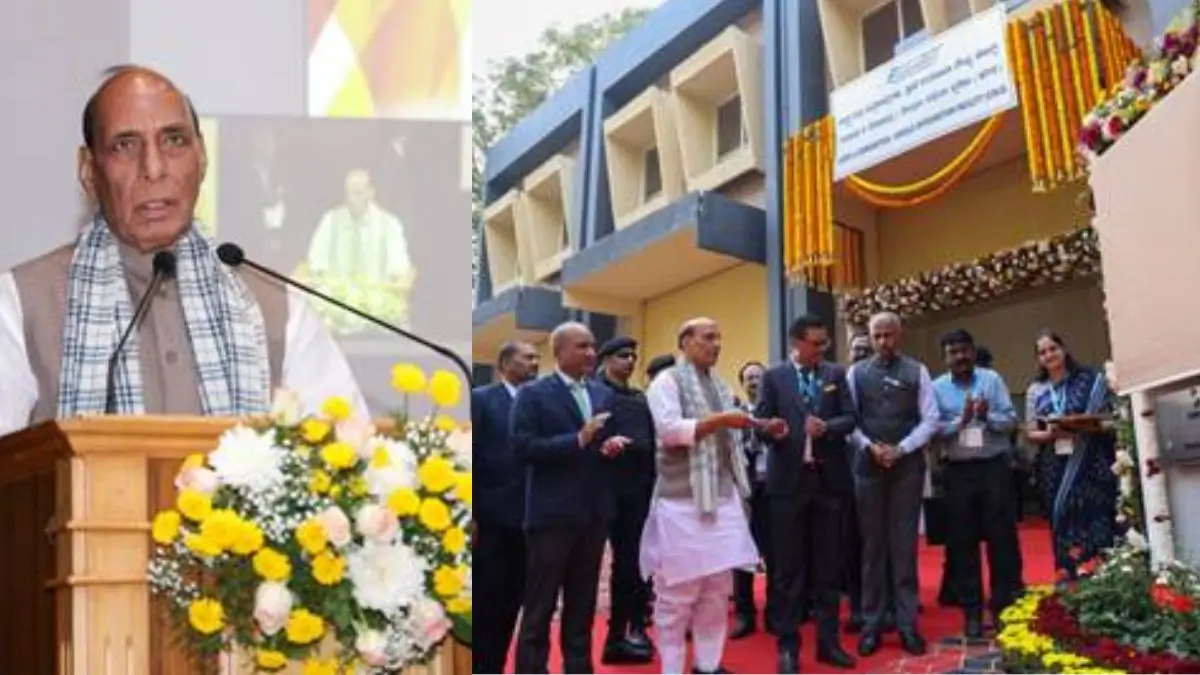
On 16 February 2026, Raksha Mantri Rajnath Singh inaugurated a state-of-the-art Missile Integration Facility at
Rajnath Singh at **Bharat Electronics Limited (BEL), marking a key milestone in strengthening India’s indigenous defence manufacturing ecosystem.
Missile Integration Facility: Strengthening Indigenous Defence Production
The newly inaugurated Missile Integration Facility will act as a central hub for the assembly, testing, and integration of advanced missile systems, ensuring quicker deployment and enhanced reliability. This facility plays a vital role in making India’s defence capable of producing complex weapon systems domestically, reducing dependency on foreign imports.
In the same event, the Raksha Mantri also flagged off the 3rd and 4th Regiment Akash Combat Systems—medium-range surface-to-air missiles designed to intercept aerial threats efficiently—thereby strengthening India’s air defence grid.
Another highlight was the unveiling of the Mountain Fire Control Radar, a radar system designed for operations in rugged and high-altitude terrains, crucial for border surveillance and defence.
AI Push: BEL’s AI Policy and Centre of Excellence
Beyond hardware, the Defence Minister laid significant emphasis on Artificial Intelligence (AI). He remotely inaugurated BEL’s Centre of Excellence for AI located in Pune, aimed at integrating AI across defence product lines and improving future combat capabilities.
BEL also formally launched its AI Policy, focusing on integrating AI into threat prediction systems, autonomous platforms, and real-time operational decision-making tools—an important step towards next-generation defence technologies.
Championing Indigenous R&D and Self-Reliance
During his visit, Rajnath Singh was briefed on wide-ranging indigenous defence research and development projects, including Quick Reaction Surface to Air Missiles (QRSAM), Light Combat Aircraft Mk II (LCA Mk II), Advanced Medium Combat Aircraft (AMCA), and counter-drone systems, reflecting India’s broader push for self-reliance in defence technology.
The event showcased India’s commitment to ‘Make in India’ in defence, enhancing technological competence, military readiness, and strategic autonomy, aligning with the Viksit Bharat 2047 vision.

Why This News Is Important
Boosting National Security and Defence Preparedness
This announcement marks a major strategic development for India’s defence sector, especially for students preparing for exams related to defence, civil services, and public sector jobs. Establishing a Missile Integration Facility greatly enhances India’s ability to manufacture advanced weapon systems domestically, a critical aspect of national security.
The integration of Akash systems and Mountain Fire Control Radar adds significant strength to India’s air and border defence capabilities, both key topics for UPSC, CDS exam syllabi and defence-related GK. These systems improve operational readiness and create new avenues for technological employment in defence PSUs.
AI in Defence: Future-Ready Capabilities
The formal launch of BEL’s AI Policy and the Centre of Excellence for AI reflects the military’s shift toward AI-driven warfare and decision-making. This is a contemporary trend in global defence strategy, making it essential current affairs knowledge for government exam aspirants—especially in sections relating to science & tech and national policies.
Understanding the defence sector’s pivot to AI and advanced technologies helps candidates answer questions on government policy, defence preparedness, and technological advancement in India’s strategic frameworks. Moreover, it aligns with syllabus topics under national security, science and technology, and economy.
Historical Context
India’s Journey Toward Indigenous Defence Production
Historically, India depended heavily on imported defence equipment. In the late 20th century, most advanced weaponry, radar systems, and missiles were sourced from foreign suppliers. However, over the past two decades, there has been a shift toward indigenisation under policies like Make in India and strategic defence reforms. The government has consistently emphasized developing home-grown technologies to achieve self-reliance in defence production.
Organisations such as BEL, DRDO, and other PSUs have expanded their capabilities to design and produce critical systems. The development of systems like Akash missiles, QRSAM, and advanced radars reflects India’s growing competence. High-altitude radar systems and AI integration represent cutting-edge progression from earlier technology.
Programs like Make in India and Atmanirbhar Bharat progressively reshaped India’s defence manufacturing aspirations—encouraging public-private partnerships, R&D investments, and technology transfers. This news builds upon that continuous evolution, reinforcing India’s standing as a defence producer, not just a consumer.
Key Takeaways from “Rajnath Singh Unveils Missile Integration Facility & AI Push at BEL”
| S.No | Key Takeaway |
|---|---|
| 1 | Raksha Mantri inaugurated a new Missile Integration Facility at BEL, Bengaluru. |
| 2 | The 3rd and 4th Akash Regiment Combat Systems were flagged off, strengthening air defence. |
| 3 | The Mountain Fire Control Radar was unveiled for operations in high-altitude regions. |
| 4 | BEL’s AI Policy was launched along with Centre of Excellence for AI in Pune. |
| 5 | The event highlights India’s focus on indigenous defence tech and self-reliance |
Frequently Asked Questions (FAQs)
1. Who inaugurated the Missile Integration Facility at BEL?
The Missile Integration Facility was inaugurated by Rajnath Singh, India’s Defence Minister.
2. Where is Bharat Electronics Limited (BEL) headquartered?
Bharat Electronics Limited (BEL) is headquartered in Bengaluru.
3. What is the purpose of the Missile Integration Facility?
The facility is designed for assembly, integration, and testing of advanced missile systems to enhance indigenous defence manufacturing and improve operational readiness.
4. Which missile system regiments were flagged off during the event?
The 3rd and 4th regiments of the Akash Combat System were flagged off to strengthen India’s air defence capabilities.
5. What is the significance of the Mountain Fire Control Radar?
The Mountain Fire Control Radar is designed for high-altitude and rugged terrain operations, especially useful in border areas.
6. What new initiative related to Artificial Intelligence was launched by BEL?
BEL launched its AI Policy and inaugurated a Centre of Excellence for Artificial Intelligence to integrate AI into defence technologies.
7. Under which larger government vision does this initiative fall?
This initiative aligns with the government’s Make in India and Atmanirbhar Bharat missions.
8. Why is this news important for competitive exams?
It is important for UPSC, CDS, NDA, State PSC, Banking, Railways, and Police exams under topics like Defence, Science & Technology, Government Policies, and National Security.
Some Important Current Affairs Links