









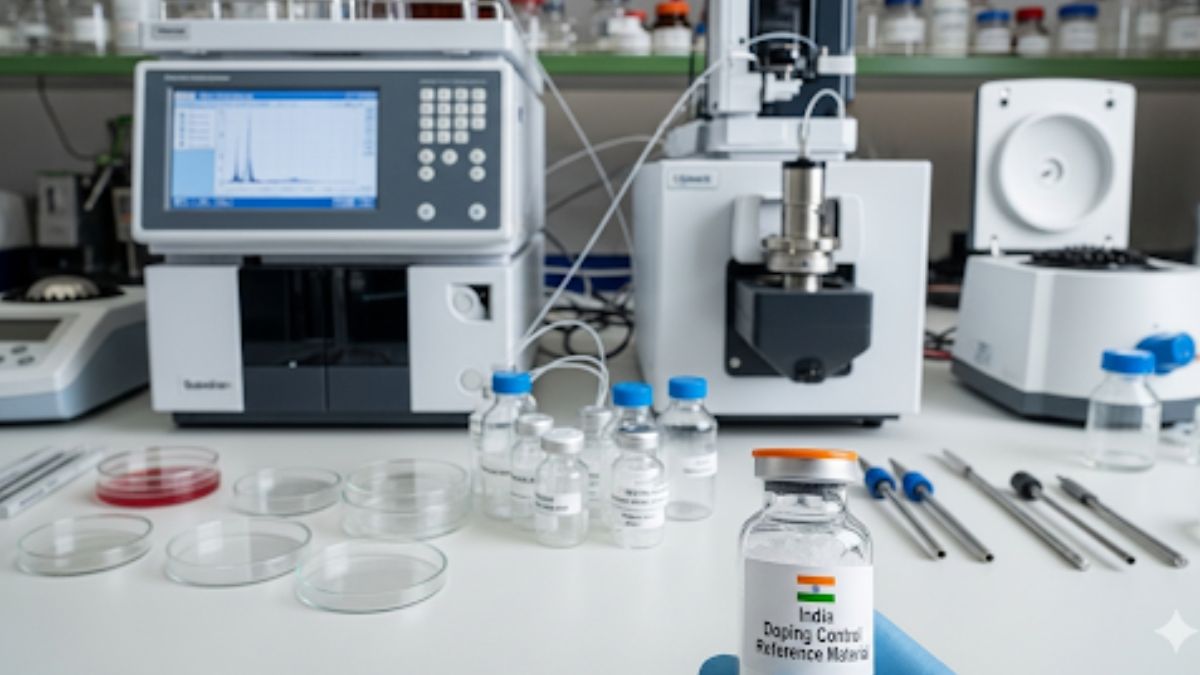
Methandienone LTM anti-doping breakthrough: India’s NIPER Guwahati and NDTL develop rare Reference Material for global WADA-accredited labs, enhancing steroid detection and clean sports.
India Synthesizes Rare Anti-Doping Reference Material for Global Use
A Scientific Milestone in Anti-Doping
In a significant breakthrough on 4 September 2025, the National Institute of Pharmaceutical Education and Research (NIPER) Guwahati, in collaboration with the National Dope Testing Laboratory (NDTL), New Delhi, has successfully developed a rare and highly purified Reference Material (RM) known as Methandienone Long-Term Metabolite (LTM). The launch took place during the 22nd Governing Body Meeting of NDTL, in the presence of Dr. Mansukh Mandaviya, the Union Minister for Youth Affairs & Sports and Labour & Employment.
What Makes This RM Critical?
Reference Materials, such as Methandienone LTM, are the most scientifically characterized substances used for precise analytical testing. They are indispensable for detecting over 450 prohibited substances under the World Anti-Doping Agency (WADA). Due to their complexity and specificity, only around 4–5 manufacturers globally produce such RMs.
India’s Contribution So Far
Since 2020, NIPER Guwahati has synthesized 12 out of the 22 targeted RMs in collaboration with NDTL. Methandienone LTM is the latest addition to this collection.
Implications for Anti-Doping Measures
Methandienone LTM is particularly valuable as it enables detection of the banned steroid Methandienone long after usage—making it possible to catch cases of doping even months or years later. This enhances test accuracy and serves as a strong deterrent to steroid abuse.
Global Outreach of the Innovation
This groundbreaking Reference Material, currently unavailable commercially anywhere in the world, will be shared with all 30 WADA-accredited laboratories worldwide, cementing India’s role as a global contributor to fair sports practices.

Why This News Is Important
Ensuring Fair Play in Sports
This achievement marks a major leap in anti-doping technology, reinforcing sports integrity by equipping labs with the tools to uncover steroid usage that might otherwise go undetected.
Boosting India’s Scientific Reputation
By producing such rare, high-value RMs domestically, India showcases its scientific and pharmaceutical prowess, strengthening its reputation in global scientific communities.
Global Collaboration for Clean Sports
Sharing Methandienone LTM with international WADA labs positions India as a key ally in ensuring clean and fair competition—promoting transparency and athlete welfare on a global scale.
Deterrence Against Doping
Extended detection windows created by this RM act as a powerful deterrent, safeguarding the spirit of competition and instilling confidence among athletes and sports authorities.
Historical Context: India’s Anti-Doping Journey
Foundational Set-Up: NDTL’s Establishment
Established in 2008, the National Dope Testing Laboratory (NDTL) became India’s premier facility for human sports doping analysis. Accredited by WADA and the National Accreditation Board for Testing & Calibration Laboratories (NABL), it handles complex testing of athletes’ urine and blood samples.
Collaboration with NIPER Guwahati Since 2020
NIPER Guwahati and NDTL have forged a productive collaboration to produce 22 specialized RMs crucial for anti-doping testing. Twelve have already been synthesized, with Methandienone LTM representing the latest advancement.
Setting the Global Stage
With international doping cases becoming increasingly sophisticated, the development of long-term metabolite RMs aligns with WADA’s evolving testing protocols. India’s capability in this domain enhances both domestic testing efficacy and global anti-doping standards.
Key Takeaways from Methandienone LTM Breakthrough
| Sl. No. | Key Takeaway |
|---|---|
| 1 | India’s NIPER Guwahati and NDTL developed Methandienone Long-Term Metabolite RM on 4 Sep 2025. |
| 2 | Methandienone LTM improves detection of the banned steroid even months or years post-use. |
| 3 | RMs are crucial for doping tests; only 4–5 manufacturers exist globally, making them rare. |
| 4 | India has synthesized 12 of 22 targeted RMs since 2020, showcasing domestic innovation. |
| 5 | The RM will be shared with 30 WADA-accredited labs worldwide, strengthening global anti-doping efforts. |
FAQs: Methandienone LTM and Anti‑Doping Development
1. What is Methandienone LTM?
Methandienone Long-Term Metabolite (LTM) is a rare Reference Material developed for detecting the banned steroid Methandienone in athletes, even months or years after consumption.
2. Which organizations developed this Reference Material?
The RM was developed collaboratively by NIPER Guwahati and National Dope Testing Laboratory (NDTL), New Delhi.
3. Why are Reference Materials (RMs) important in anti-doping?
RMs are scientifically characterized substances used for accurate detection of prohibited substances. They ensure reliability and credibility in doping tests.
4. How will India’s development of Methandienone LTM impact global sports?
This RM will be shared with 30 WADA-accredited labs worldwide, enhancing international anti-doping efforts and promoting clean sports.
5. How many Reference Materials has India synthesized so far?
Since 2020, India has synthesized 12 out of 22 targeted RMs for anti-doping purposes.
6. What is the significance of long-term metabolite detection?
It enables authorities to detect steroid use long after the initial administration, deterring doping in sports.
7. Which international agency regulates prohibited substances in sports?
The World Anti-Doping Agency (WADA) regulates and maintains the list of prohibited substances globally.
Some Important Current Affairs Links