








UNESCO world heritage forts India recognition for Maratha Military Landscapes adds India’s 44th site. Know the 12 forts, their history, strategic importance, and exam-relevant facts.
India’s Maratha Military Landscapes Added to UNESCO World Heritage List
Remarkable UNESCO Recognition
The UNESCO World Heritage Committee, during its 47ᵗʰ session in Paris, formally inscribed the Maratha Military Landscapes of India — a network of twelve strategically significant forts — into the UNESCO World Heritage List. This achievement signifies India’s 44ᵗʰ inclusion on the prestigious global roster
A Diverse Network of Fortifications
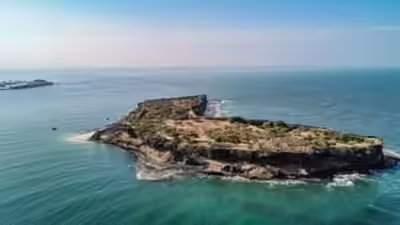
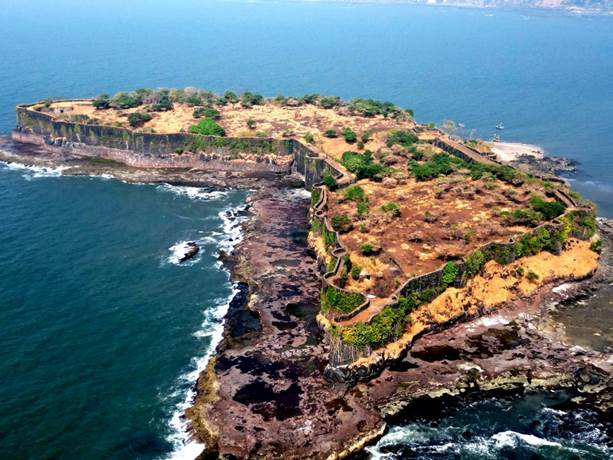
These twelve forts, primarily situated in Maharashtra with one in Tamil Nadu (Gingee), exemplify a well‑planned defense system. They cover varied terrains: hilltops (e.g., Salher, Shivneri, Lohagad, Raigad, Rajgad), a hill‑forest fort (Pratapgad), a hill‑plateau (Panhala), coastal (Vijaydurg), and island forts (Khanderi, Suvarnadurg, Sindhudurg)
Strategic and Architectural Genius
Constructed and modified between the late 17ᵗʰ and early 19ᵗʰ centuries, these forts highlight the military foresight and architectural skills of the Marathas. They reflect features like steep cliff defenses, moats, watchtowers, and sea‑based protective walls .
Unanimous International Support
India’s nomination, submitted in January 2024, underwent rigorous evaluation—culminating in consensus support from 18 out of 20 UNESCO member states. ICOMOS and IUCN advisory bodies endorsed India’s case under criteria (iv) and (vi) for architectural value and cultural significance
Official Endorsements
Prime Minister Modi, Culture Minister Gajendra Singh Shekhawat, and Maharashtra CM Devendra Fadnavis jointly celebrated the victory. External Affairs Minister Jaishankar emphasized the listing’s importance, acknowledging the Maratha forts’ legacy of “political and military prowess”
Why This News Matters for Aspirants
Enriches Cultural Awareness
The UNESCO inscription underscores the Maratha Empire’s military architecture and strategic planning, integral to understanding India’s heritage—a recurring theme in static GK and history sections of competitive exams.
Exam-Relevant Facts
Students should note:
- 44ᵗʰ UNESCO site of India.
- Network includes 12 forts across diverse terrains.
- Recognized under criteria (iv) & (vi)—key classification points in UNESCO protocols.
Boosts Heritage Conservation Knowledge
Grasping the nomination and evaluation process of global bodies like UNESCO (including ICOMOS, IUCN review) equips students to answer questions related to cultural preservation and diplomacy.
Policy & Strategic Implications
The move highlights India’s cultural diplomacy efforts and could pave the way for conservation and tourism-driven economic development, aligning with UPSC’s emphasis on sustainable development and public policy analysis.
Current Affairs Context
The news forms part of recent UNESCO recognitions—including the Moidams of Assam—useful for the “Recent Important World Heritage Sites” section in exams.
Historical Context: Rise of Maratha Fortifications
Legacy of Chhatrapati Shivaji
Maratha fort architecture developed significantly under Shivaji Maharaj (mid‑17ᵗʰ century), who strategically built hill and sea forts to assert Hindavi Swaraj and resist Mughal influence
Expanding Through Diverse Terrains
Post Shivaji, the Peshwas fortified grievances across the Deccan, plateau, coastal, and island terrains—creating a comprehensive defensive system that lasted till the early 19ᵗʰ century
Tentative to Official Inscription Path
Listed in UNESCO’s tentative list in 2021, India’s formal nomination process involved detailed documentation and field evaluations throughout 2024–2025. The final verdict was delivered in July 2025
Key Takeaways from Maratha Military Landscapes
| Sr. No. | Key Takeaway |
|---|---|
| 1 | India’s 44ᵗʰ UNESCO World Heritage site. |
| 2 | Comprises 12 key forts: 11 in Maharashtra + 1 in Tamil Nadu. |
| 3 | Categorized by terrain—hill, coastal, island, forest, plateau. |
| 4 | UNESCO recognition under criteria (iv) – architectural mastery, (vi) – living traditions and historic legacy. |
| 5 | Reflects Maratha strategic innovation from late 17ᵗʰ to early 19ᵗʰ centuries. |
Frequently Asked Questions (FAQs)
1. What are Maratha Military Landscapes?
They refer to a network of 12 strategically located forts across Maharashtra and Tamil Nadu built or modified by the Maratha Empire between the 17ᵗʰ and 19ᵗʰ centuries to serve as defensive and administrative centers.
2. Why are these forts important for Indian heritage?
They symbolize India’s indigenous military architecture, Maratha strategic brilliance, and cultural resilience, especially during the reign of Chhatrapati Shivaji Maharaj.
3. Which international body recognized these forts as a World Heritage Site?
The UNESCO World Heritage Committee, with support from advisory bodies ICOMOS and IUCN, recognized these forts for their architectural and cultural value.
4. How many World Heritage Sites does India now have?
With this addition, India now has 44 UNESCO World Heritage Sites as of July 2025.
5. Which Maratha fort is located outside Maharashtra?
The Gingee Fort in Tamil Nadu is the only fort in this listing that lies outside Maharashtra.
6. Which exam sections can this topic appear in?
It is relevant for General Awareness, Static GK, Indian History, Art and Culture, and Current Affairs sections in exams like UPSC, SSC, State PSCs, CDS, NDA, CAPF, and other government job tests.
7. What UNESCO criteria were applied for this listing?
The Maratha Military Landscapes were inscribed under Criterion (iv) (Architectural Marvel) and Criterion (vi) (Cultural and Historical Significance).
Some Important Current Affairs Links