







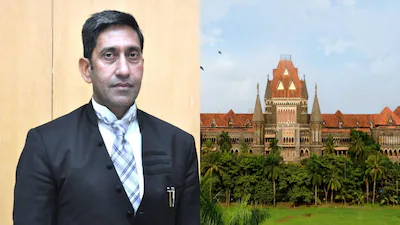
Justice Chandrashekhar appointed as Bombay High Court Chief Justice on 5 September 2025. Learn about his judicial career, swearing-in ceremony, and exam-relevant insights.
Justice Shree Chandrashekhar Sworn in as Chief Justice of the Bombay High Court
High-Profile Judicial Transition at Bombay HC
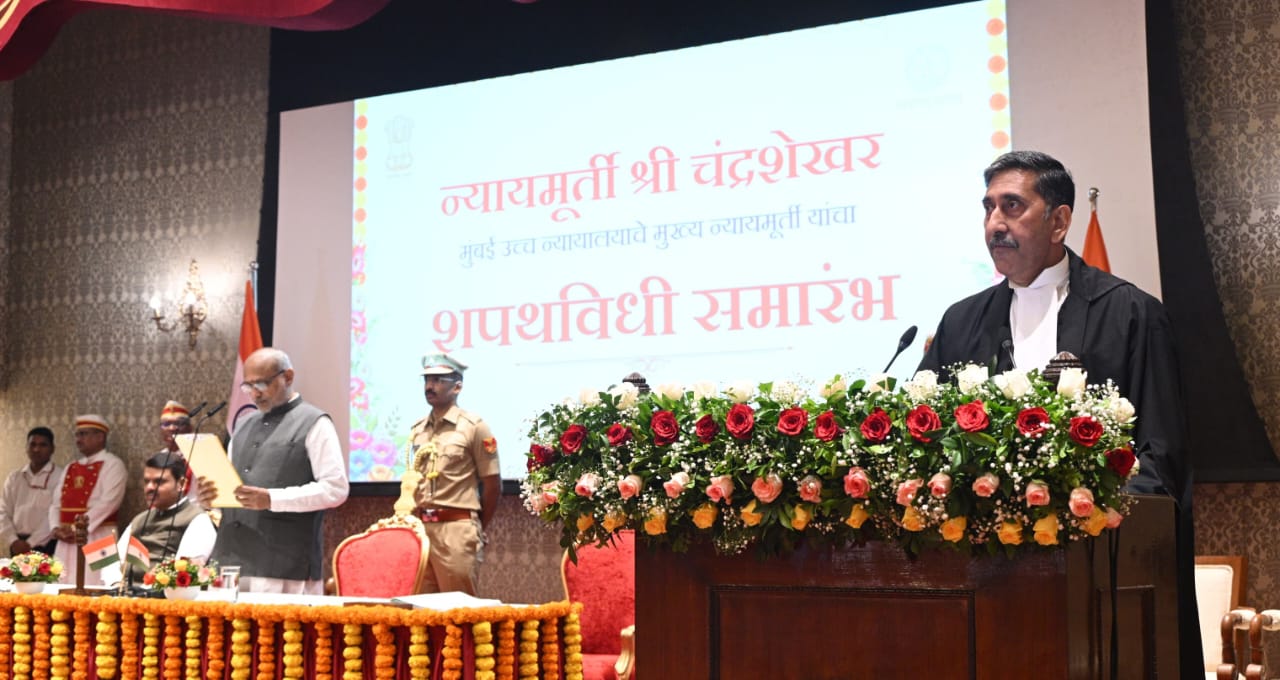
Justice Shree Chandrashekhar was officially sworn in as the Chief Justice of the Bombay High Court on 5 September 2025, following approval by the Union government and the Supreme Court Collegiu The oath was administered by Maharashtra Governor C P Radhakrishnan at a ceremony held at Raj Bhavan, Mumbai, in the presence of top dignitaries including Chief Minister Devendra Fadnavis, Assembly Speaker Rahul Narwekar, and senior police officials
Distinguished Legal Career with Extensive Judicial Experience
Born on 25 May 1965, Justice Chandrashekhar earned his LL.B. from the Campus Law Centre, University of Delhi, in 1993. Over nearly two decades of practice, he appeared in approximately 3,500 cases, including around 140 reported judgments before the Supreme Court He has represented major institutions such as AICTE, state electric boards, housing boards, and agricultural bodies
Steady Judicial Progression Leading to Bombay HC
In January 2013, he was appointed as an Additional Judge of the Jharkhand High Court, becoming permanent in June 2014. Later, on 29 December 2023, he became Acting Chief Justice of the Jharkhand High Court. Transferred to the Bombay High Court in July 2025, he initially served as Acting Chief Justice there before being elevated to Chief Justice on 5 September 2025
Reinforcing Bombay HC’s Leadership at Crucial Time
His appointment comes at a pivotal moment as the Bombay High Court continues to manage increasing caseloads and complex legal challenges, especially in Maharashtra and Goa—the High Court’s jurisdictions. With his rich experience and leadership, his tenure is expected to bring stability and direction to judicial proceedings in one of India’s most prominent high courts.
B) Why This News is Important
Establishes Key Judicial Leadership for Strategic Jurisdictions
For students preparing for civil services or judicial-related exams, this news is crucial as it highlights the elevation of Justice Shree Chandrashekhar as the Chief Justice of one of India’s most significant courts—Bombay High Court, overseeing both Maharashtra and Goa. Understanding such leadership shifts is vital in the context of judicial administration and governance dynamics.
Reflects the Collegium System and Constitutional Appointments
The appointment showcases the Supreme Court Collegium’s role in recommending judges and the constitutional process involving the President and Law Ministry in officially appointing high court chief justices. It offers a real-world case to study Article 217 and judicial accountability mechanisms.
Offers Insight into Judicial Career Trajectories
Students can draw valuable lessons from Justice Chandrashekhar’s progressive career—from practicing lawyer to Additional Judge, Acting Chief Justice in different high courts, and finally Chief Justice. It illustrates pathways and benchmarks in the judicial hierarchy and serves as a guide for those aspiring to judiciary careers.
Enhances Current Affairs Awareness
For banking, railways, defence, police, and teaching exam aspirants, this event is a noteworthy development in the national legal landscape. It helps sharpen awareness of recent judicial appointments, inter-institutional interactions, and ceremonial procedures—all of which are recurring themes in current affairs sections of competitive exams.
C) Historical Context
Evolution of Justice Shree Chandrashekhar’s Judicial Journey
Justice Chandrashekhar embarked on his legal career in 1993 after obtaining an LL.B. from the University of Delhi. Over the next 19 years, he built a prolific practice, primarily in criminal and civil law, with significant appearances in the Supreme Court—evidenced by over 140 reported judgments
Judicial Ascension Across Multiple High Courts
In January 2013, he was appointed an Additional Judge in the Jharkhand High Court and became permanent in June 2014. By December 2023, he had risen to Acting Chief Justice in Jharkhand. In mid-2025, he transferred to the Bombay High Court, assuming charge as Acting Chief Justice before being elevated to Chief Justice on 5 September 2025
Strategic Judicial Deployment and Institutional Strengthening
His elevation follows the promotion of his predecessor, Justice Alok Aradhe, to the Supreme Court. This transition underscores the collegium’s mechanism in ensuring continuity and experience-based leadership in high courts. It also reflects broader efforts to augment judicial capacity in key regional high courts, reinforcing the efficacy of the justice delivery system
D) Key Takeaways from This News
Key Takeaways from Swearing-in of Justice Shree Chandrashekhar
| Sr. No. | Key Takeaway |
|---|---|
| 1 | Justice Shree Chandrashekhar was sworn in as Chief Justice of the Bombay High Court on 5 September 2025, following Supreme Court Collegium recommendation and central government approval |
| 2 | The oath-taking was administered by Maharashtra Governor C P Radhakrishnan at Raj Bhavan, attended by key dignitaries including the CM and police leadership |
| 3 | Born 25 May 1965, Justice Chandrashekhar graduated from Delhi University in 1993 and practiced for 19 years, participating in ~3,500 cases and ~140 Supreme Court judgments |
| 4 | He began judicial service as an Additional Judge (Jharkhand HC) in 2013, became permanent in 2014, served as Acting Chief Justice in Jharkhand (2023), transferred to Bombay HC (July 2025), then elevated as Chief Justice |
| 5 | His appointment illustrates constitutional processes under Article 217, demonstrates judicial hierarchy progression, and marks a significant leadership change in India’s second-largest high court. |
FAQs: Frequently Asked Questions
Q1: Who is Justice Shree Chandrashekhar?
A: Justice Shree Chandrashekhar is the newly appointed Chief Justice of the Bombay High Court, sworn in on 5 September 2025. He has extensive experience as a lawyer and judge, having served in the Jharkhand High Court and Bombay High Court.
Q2: When was Justice Chandrashekhar sworn in as Chief Justice of Bombay HC?
A: He took the oath of office on 5 September 2025, administered by Maharashtra Governor C P Radhakrishnan.
Q3: What is the significance of his appointment for competitive exams?
A: His appointment highlights judicial hierarchy, the collegium system, and constitutional provisions under Article 217, which are key topics in civil services, banking, police, railways, and teaching exams.
Q4: What was his career progression before becoming Chief Justice?
A: He started as a lawyer in 1993, became Additional Judge of Jharkhand HC in 2013, permanent in 2014, Acting Chief Justice of Jharkhand HC in 2023, transferred to Bombay HC in 2025, and finally became Chief Justice.
Q5: Which states fall under the jurisdiction of Bombay High Court?
A: The Bombay High Court has jurisdiction over Maharashtra and Goa, managing civil and criminal cases, and supervising lower courts in these regions.
Q6: What is the Supreme Court Collegium’s role in such appointments?
A: The Collegium recommends judges for appointment or elevation, and the government follows constitutional procedures for final approval, ensuring judicial independence.
Some Important Current Affairs Links