







Introduction
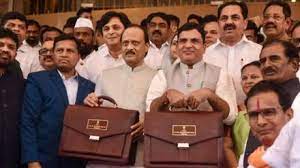
The Maharashtra Budget for the fiscal year 2025-26, presented by Deputy Chief Minister and Finance Minister Ajit Pawar, outlines significant allocations and policy initiatives aimed at bolstering the state’s economic landscape. With a total outlay of ₹7,00,020 crore, the budget emphasizes infrastructure development, job creation, and fiscal prudence.
Budget Overview
The 2025-26 budget projects a revenue deficit of ₹45,891 crore and a fiscal deficit of ₹1,36,234 crore. The state’s debt is anticipated to reach ₹9.3 lakh crore, marking the highest debt projection in its history.
Infrastructure Development Initiatives
A substantial allocation of ₹64,000 crore is earmarked for infrastructure projects in Mumbai, including the development of roads and the Vadhvan port, slated for completion by 2030.
Employment Generation Strategy
The government aims to generate 50 lakh new employment opportunities over the next five years through a new industrial policy targeting ₹40 lakh crore in investments.
Social Welfare Programs
An allocation of ₹36,000 crore is designated for the Mukhyamantri Majhi Ladki Bahin scheme, focusing on women’s empowerment. However, the anticipated increase in the monthly allowance from ₹1,500 to ₹2,100 was not addressed in this budget.
Revenue Enhancement Measures
To augment revenue, the government proposes a 1% increase in the Motor Vehicle Tax on CNG and LPG vehicles, expected to generate an additional ₹1,125 crore.
Fiscal Prudence and Debt Management
Facing a significant debt burden, the budget focuses on maintaining existing schemes and exercising fiscal discipline. The government plans to keep the fiscal deficit within prescribed limits while deferring certain promises, such as the farm loan waiver, to future budgets.
Why This News is Important
Impact on Infrastructure and Economy
The substantial investment in infrastructure is poised to enhance connectivity, stimulate economic activity, and create employment opportunities, contributing to the state’s overall development.
Employment Opportunities
The ambitious plan to generate 50 lakh jobs over five years addresses unemployment and promotes economic growth, benefiting various sectors across the state.
Fiscal Health and Sustainability
The emphasis on fiscal prudence and debt management reflects the government’s commitment to maintaining economic stability, crucial for sustainable development.
Historical Context
Maharashtra has historically been a leading state in industrialization and economic development. Previous budgets have focused on infrastructure and social welfare, with varying degrees of success. The current budget continues this trajectory, emphasizing infrastructure, employment, and fiscal responsibility.
Key Takeaways from Maharashtra Budget 2025
| S.No | Key Takeaway |
|---|---|
| 1 | The budget allocates ₹64,000 crore for Mumbai’s infrastructure development, including roads and ports. |
| 2 | An ambitious plan aims to create 50 lakh jobs over the next five years through targeted investments. |
| 3 | ₹36,000 crore is allocated for the Mukhyamantri Majhi Ladki Bahin scheme, focusing on women’s empowerment. |
| 4 | Revenue enhancement measures include a 1% increase in Motor Vehicle Tax on CNG and LPG vehicles. |
| 5 | The state’s debt is projected to reach ₹9.3 lakh crore, highlighting the need for fiscal prudence. |
FAQs: Maharashtra Budget 2025
- What is the total budget outlay for Maharashtra in 2025?
- The total budget outlay is ₹7,00,020 crore.
- How much has been allocated for infrastructure development in Mumbai?
- ₹64,000 crore has been allocated for infrastructure projects, including roads and the Vadhvan port.
- What is the employment target set in the budget?
- The government aims to create 50 lakh jobs over the next five years.
- What is the major social welfare scheme in this budget?
- The Mukhyamantri Majhi Ladki Bahin scheme, with an allocation of ₹36,000 crore, focuses on women’s welfare.
- What new revenue measures have been introduced?
- A 1% increase in the Motor Vehicle Tax on CNG and LPG vehicles and a 7% tax on light goods vehicles are introduced.
Some Important Current Affairs Links