








Spituk Gustor Festival Ladakh 2026 marks a spiritual new beginning with Cham dances, Buddhist rituals, and Ladakh’s rich cultural heritage.
Spituk Gustor Festival Marks Spiritual New Beginning in Ladakh – A Detailed Current Affairs Article
Introduction to Spituk Gustor Festival
The Spituk Gustor Festival is a traditional two-day monastic celebration held annually at the historic Spituk Monastery, located about 8 km from Leh in the Union Territory of Ladakh, India. This vibrant festival serves as the first major spiritual event of the year in Ladakh and marks a significant transition in the region’s cultural and religious calendar. The word “Gustor” translates to ’Sacrifice of the 29th day’, rooted in Tibetan Buddhist traditions, where monks and devotees come together to invoke blessings for peace, prosperity, harmony, and protection against negative energies.
Historical and Cultural Roots
Spituk Monastery, also known as Spituk Gompa, was established in the 11th century and belongs to the Gelugpa (Yellow Hat) sect of Tibetan Buddhism. The monastery’s history is interwoven with the rich cultural and religious evolution of Ladakh. Over centuries, it has remained a spiritual hub, showcasing Buddhist art, ancient masks, Thangkhas (religious scroll paintings), and traditional rituals. The Gustor Festival itself is celebrated according to the Tibetan lunar calendar on the 28th and 29th days of the 11th month, usually falling in January.
Rituals and Religious Observances
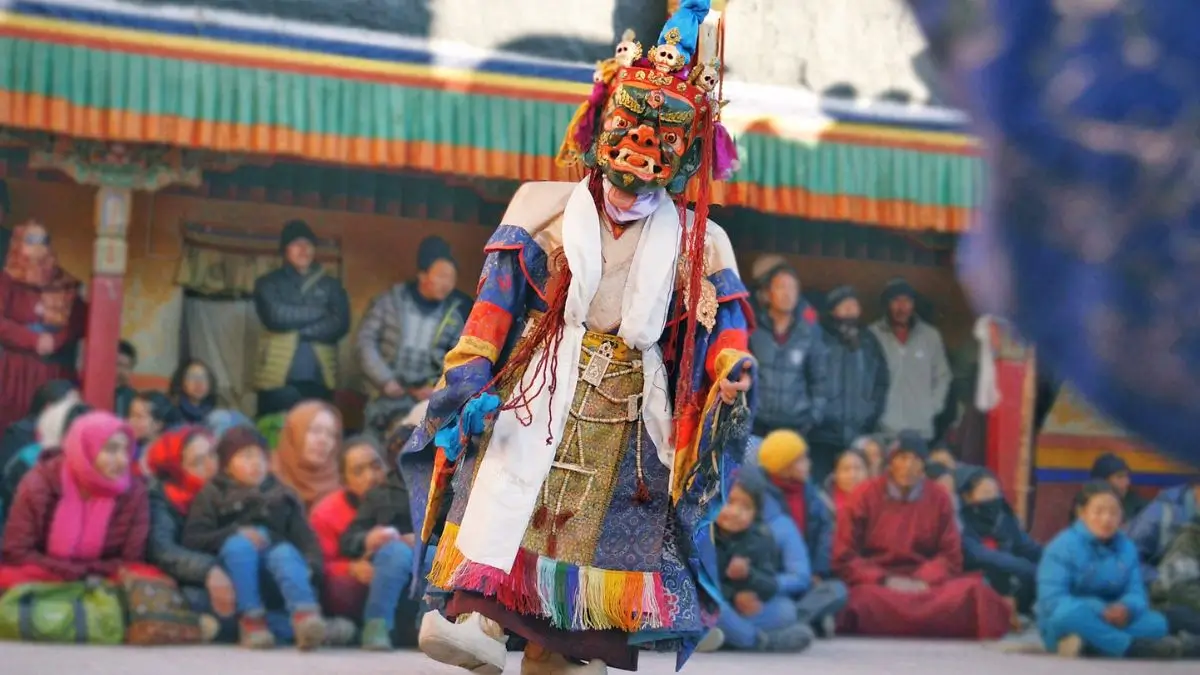
Preparations for Spituk Gustor begin days before the official start, with monks engaging in prayers and sacred rituals aimed at purifying the environment and invoking divine blessings. A central feature of the celebration is the sacred Cham dances, in which monks don brilliant robes and symbolic masks representing protective deities like Paldan Lhamo and other guardian figures. Each dance reflects moral narratives emphasizing the triumph of good over evil and the eradication of spiritual negativity. These masked performances are accompanied by traditional instruments such as long Tibetan horns, cymbals, bells, and conch shells — a symphony of sight and sound that captivates both devotees and visitors.
Symbolism and Spiritual Significance
The festival holds profound symbolic meaning: it is believed that participation and observation of the rituals help ward off evil forces, attract blessings for peace and well-being, and ensure harmonious living throughout the year. One of the concluding traditions includes the burning of a symbolic effigy of negative forces or “storma,” signifying the victory of righteousness and the banishment of adverse influences. This ritual reinforces the core Buddhist belief that inner purity and virtuous conduct lead to collective well-being and spiritual upliftment.
Community Engagement and Tourism Impact
Beyond its religious significance, the Spituk Gustor Festival also strengthens community bonds and showcases Ladakh’s cultural heritage to the world. Locals and tourists alike gather at the monastery to witness the vibrant rituals, learn about Ladakhi customs, and experience the region’s unique spiritual ethos. As the first monastic celebration of the year, it sets the tone for subsequent festivals across Ladakh, drawing attention to the importance of preserving intangible cultural heritage while supporting sustainable tourism in the Himalayan region.

Why This News Is Important for Competitive Exams
Relevance to Culture and Heritage
The Spituk Gustor Festival is a significant cultural event in the Union Territory of Ladakh deeply rooted in Tibetan Buddhist traditions. Understanding cultural festivals like these is critical for students preparing for competitive exams such as UPSC Civil Services (IAS), SSC, Railways, Banking, and State PCS, where questions on Indian culture, heritage, and traditional practices frequently appear in the General Studies and Cultural Awareness sections.
Insight into Regional Diversity
India’s diversity is reflected in its many regional festivals and rituals. The Spituk Gustor exemplifies Ladakh’s unique cultural identity — distinct from mainstream Indian festivals — thereby helping aspirants appreciate the broader social fabric of the country. Knowing such festivals improves the ability to answer questions on regional heritage, tribal and local traditions, and secular India’s multicultural ethos.
Cultural Tourism and Economy
This festival also highlights the role of cultural tourism in India, especially in remote regions like Ladakh. For exams including Banking, Railways, and Tourism roles, understanding the impact of festivals on local economies and tourism development is essential in sections relating to economy, infrastructure, and sustainable development.
Historical Context of Spituk Gustor Festival
Origins in Tibetan Buddhism
The Spituk Gustor Festival originated centuries ago as part of the religious traditions of Tibetan Buddhism. The festival’s roots lie in ancient monastic practices where sacred rituals and dances were performed to invoke blessings and protect the community from misfortune. The name “Gustor” itself connotes spiritual sacrifice and purification.
Evolution with Ladakh’s Culture
Spituk Monastery, an important spiritual center established in the 11th century, has historically served as a place for monastic learning and religious observance. Over time, the Gustor Festival became institutionalized as the annual culmination of spiritual activities during winter, integrating cultural elements unique to Ladakh’s high-altitude Himalayan environment.
Symbolism of Cham Dances
The Cham dances, central to the festival, emerged as ritualistic performances to convey moral lessons rooted in Buddhist philosophy. These mask dances visually depict battles between protective deities and negative forces, symbolizing the perpetual struggle between good and evil. The tradition of Cham has persisted for centuries, reinforcing Ladakh’s strong link to its Buddhist heritage.
Monastic and Communal Traditions
Historically, the festival served not only as a spiritual event but also as a social gathering for local communities. People from various villages would converge at the monastery, strengthening community cohesion and reinforcing shared values of peace, harmony, and collective well-being — principles that remain relevant today.
Key Takeaways from “Spituk Gustor Festival Marks Spiritual New Beginning in Ladakh”
| S.No. | Key Takeaway |
|---|---|
| 1 | Spituk Gustor Festival is a two-day annual monastic celebration in Ladakh. |
| 2 | It marks the first major spiritual festival of the year in Ladakh. |
| 3 | The festival is celebrated at Spituk Monastery, belonging to the Gelugpa sect. |
| 4 | The highlight is the sacred Cham mask dances symbolizing the triumph of good over evil. |
| 5 | It reinforces cultural heritage, community bonding, and cultural tourism in the region. |
FAQs – Spituk Gustor Festival
1. What is the Spituk Gustor Festival?
Spituk Gustor is a two-day annual monastic festival celebrated at Spituk Monastery near Leh, Ladakh, which marks a spiritual new beginning and the triumph of good over evil.
2. When is the Spituk Gustor Festival celebrated?
It is celebrated on the 28th and 29th days of the 11th month of the Tibetan lunar calendar, which usually falls in January.
3. Which Buddhist sect does Spituk Monastery belong to?
Spituk Monastery belongs to the Gelugpa (Yellow Hat) sect of Tibetan Buddhism.
4. What are Cham dances in Spituk Gustor Festival?
Cham dances are masked ritual dances performed by monks representing protective deities and the victory of good over evil, accompanied by traditional Tibetan musical instruments.
5. What is the significance of the festival?
The festival is believed to ward off evil forces, bring blessings, and promote peace, harmony, and spiritual well-being for the community.
6. Where is Spituk Monastery located?
It is located about 8 km from Leh, in the Union Territory of Ladakh, India.
7. What are the key rituals performed during the festival?
Rituals include prayers, sacred Cham dances, and burning of symbolic effigies called “storma” to symbolize the eradication of negative energies.
8. How does the festival impact tourism?
Spituk Gustor attracts locals and tourists, promoting Ladakh’s cultural heritage, strengthening community bonds, and supporting cultural tourism.
9. Why is Spituk Gustor important for exams?
It helps students understand Indian cultural heritage, Tibetan Buddhist traditions, and regional diversity, topics often asked in UPSC, SSC, Banking, Railways, and State PCS exams.
10. Which deities are represented in the Cham dances?
Protective deities like Paldan Lhamo and other guardian figures are depicted in Cham dances, symbolizing protection and spiritual purification.
Some Important Current Affairs Links