





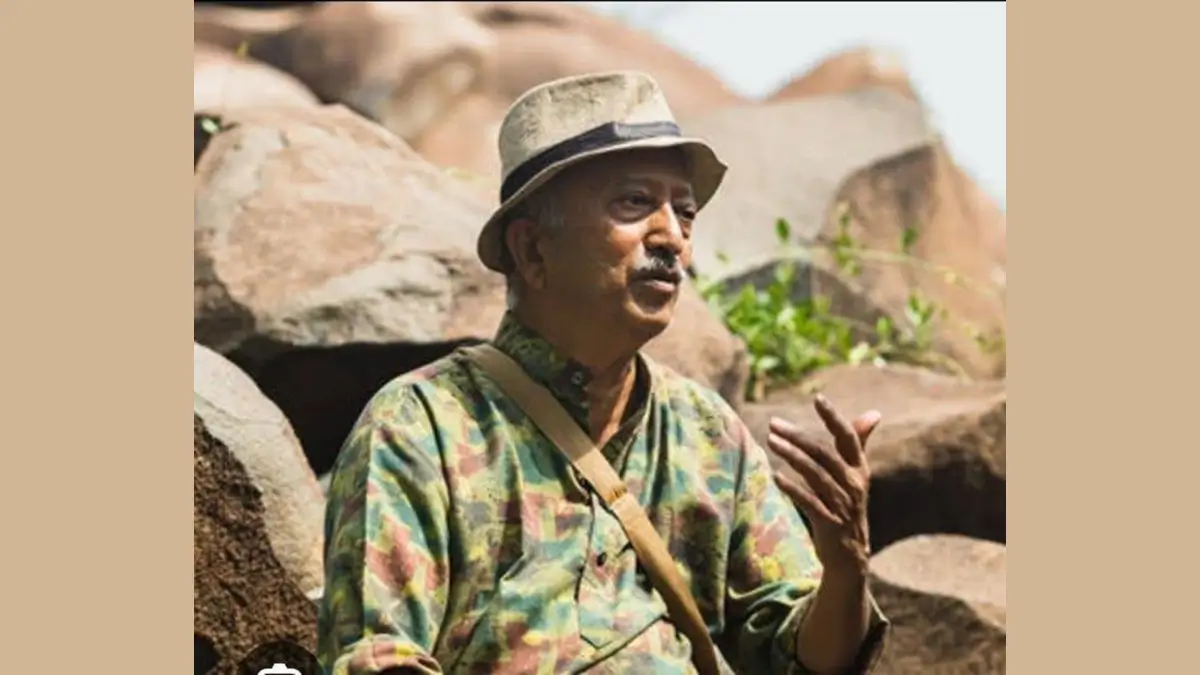
Karnataka Rajyotsava Award 2025 honours Dharwad archaeologist Prof. Ravindra Korisettar for his pioneering research in prehistoric and geo-archaeology. Know his achievements, projects and exam-relevant facts for competitive exams.
Veteran Archaeologist Ravindra Korisettar Selected for the Prestigious Karnataka Rajyotsava Award for 2025
Introduction to the award and recipient
In a distinguished honour for his lifelong contributions in archaeology, Prof. Ravindra Korisettar of Dharwad has been selected for the Karnataka Rajyotsava Award for 2025. The award — one of the highest civilian honours of the state of Karnataka — recognises his exceptional work in the fields of prehistoric archaeology, geo-archaeology and heritage preservation.
Academic credentials and early career
Born in 1951, Prof. Korisettar pursued advanced studies in archaeology and Quaternary studies at the University of Poona (now Savitribai Phule Pune University) and further engaged in specialised training under the aegis of the International Union for Quaternary Research (INQUA) in Beijing, China. He advanced through a rigorous academic journey which included international fellowships — notably a Charles Wallace–AIIT Fellowship at the University of Cambridge and a Fulbright Visiting Scholar stint at the Smithsonian Institution in Washington D.C.
Major research contributions
Over a career spanning more than four decades, Prof. Korisettar has led several landmark research projects:
- A multidisciplinary palaeoclimate project in Kashmir, implemented by the Physical Research Laboratory (Ahmedabad).
- A “Computer Application in Archaeology” project, which included creation of a gazetteer of prehistoric sites in India for the Ford Foundation.
- The “Prehistory and Geoarchaeology of the Middle Krishna Basin” research focus, which shed light on ancient human-environment interactions in South India.
Institutional & heritage-preservation engagement
Prof. Korisettar has not only conducted field research but has also contributed to building heritage infrastructure. He has been instrumental in establishing prehistory museums in Ballari and Dharwad, helping preserve and interpret India’s ancient heritage for wider public education. He has served on various academic and government committees including those involved with upgrading the status of the Karnatak University in Dharwad and contributing to the state’s Sarva Shiksha Abhiyan committee.
Significance of the award for the state and scholarship
The Karnataka Rajyotsava Award recognises citizens whose work has made a meaningful impact in their field. Prof. Korisettar’s selection underscores the state’s respect for scholarship in archaeology and heritage, aligning with broader efforts to strengthen India’s understanding of its prehistoric past. The recognition also serves as inspiration for students, teachers and researchers in the humanities and social sciences.
Conclusion
The award to Prof. Korisettar marks a milestone — recognising a lifetime of dedication to uncovering India’s prehistoric roots, advancing interdisciplinary archaeology and making heritage accessible. For students preparing for competitive exams (teacher, police, banking, civil services, defence, railways), this news underscores the relevance of India’s heritage sector and the contributions of academic pioneers in shaping national identity and knowledge systems.
Why this News is Important
Relevance to competitive exams
Understanding the selection of Prof. Korisettar for the Karnataka Rajyotsava Award matters for exam aspirants because such recognitions often form part of current-affairs questions in state-level and national competitive exams, including for teachers, banking, railways, defence services and the civil services like Union Public Service Commission (UPSC). The name of the award-recipient, the background field (archaeology), the state (Karnataka) and the year (2025) are all relevant details.
Educational and cultural significance
This news draws attention to the field of archaeology, prehistory and heritage conservation — areas often overlooked in mainstream current affairs. For teaching or general studies papers, highlighting scholarly contributions elevates awareness of India’s research ecosystem and heritage preservation initiatives. It emphasizes how academic research connects with culture, history and national identity.
Indicator of broader policy and recognition trends
The fact that a scholar specialising in prehistoric and geo-archaeological studies is being honoured reflects a shift in emphasis: India is valuing not just contemporary achievements but also long-term academic research with wider heritage implications. For exam-takers, this means being alert to such themes in questions linking state awards, cultural heritage, academic excellence and national recognition.
Historical Context
The Karnataka Rajyotsava Award was instituted by the state of Karnataka to mark and honour significant contributions of citizens in diverse fields including literature, arts, science, education, public service and social welfare. It is typically awarded annually on 1 November — Karnataka Day. Recipients are selected across regions and domains to represent contributions to state development and culture.
In the specific field of archaeology and prehistory in India, there has been a growing focus on understanding human origins, climatic change impacts, geo-archaeology and prehistoric site mapping. Researchers such as Prof. Korisettar have contributed to this field by integrating methods from geology, palaeoclimate science and archaeology. Their work helps map ancient human settlement patterns and environmental changes. Establishing museums and documentation projects of prehistoric sites has furthered public understanding and academic scholarship.
The recognition of such experts through state awards signals increased appreciation of heritage science and academic research. For competitive examinations, themes such as state-level awards, eminent scholars, and contributions to heritage often form part of static-GK and current-affairs sections.
Key Takeaways from “Veteran Archaeologist Ravindra Korisettar Chosen for Rajyotsava Award”
| S. No | Key Takeaway |
|---|---|
| 1 | Prof. Ravindra Korisettar of Dharwad, Karnataka has been selected for the Karnataka Rajyotsava Award for 2025. |
| 2 | He is a UGC Emeritus Fellow in the Department of History & Archaeology at Karnatak University, Dharwad, with over 40 years of experience. |
| 3 | His research spans prehistoric and geo-archaeological studies, including major projects like the Multidisciplinary Kashmir Palaeoclimate Project, Computer Application in Archaeology Project and Prehistory & Geoarchaeology of the Middle Krishna Basin. |
| 4 | He has held international fellowships (University of Cambridge, Smithsonian Institution) and contributed to the establishment of prehistory museums in Ballari and Dharwad. |
| 5 | The award reflects the state’s recognition of scholarship and heritage research, reinforcing the relevance of such contributions for aspirants of various competitive exams. |
FAQs: Frequently Asked Questions
1. Who is Prof. Ravindra Korisettar?
Prof. Ravindra Korisettar is a renowned archaeologist from Dharwad, Karnataka, known for his extensive research in prehistoric archaeology and geo-archaeology.
2. What is the Karnataka Rajyotsava Award?
The Karnataka Rajyotsava Award is the second-highest civilian honour conferred by the Government of Karnataka to individuals who have made exceptional contributions in various fields such as arts, literature, science, public service, and education.
3. In which year was Prof. Ravindra Korisettar chosen for the award?
He was selected for the prestigious Karnataka Rajyotsava Award for the year 2025.
4. What are Prof. Korisettar’s key research areas?
His research focuses on prehistoric archaeology, geo-archaeology, Quaternary studies, and human-environment interactions in ancient India.
5. Which universities and institutions has he been associated with?
He has been a UGC Emeritus Fellow in the Department of History & Archaeology at Karnatak University, Dharwad. He has also worked with institutions like the University of Cambridge and the Smithsonian Institution.
6. What are some of his major research projects?
His major projects include the Multidisciplinary Palaeoclimate Project in Kashmir, the Computer Application in Archaeology Project, and the Prehistory and Geo-archaeology of the Middle Krishna Basin Project.
7. Why is this news significant for government exam aspirants?
This news is important because questions about state awards, noted scholars, and cultural heritage often appear in competitive exams like UPSC, SSC, KPSC, teaching, and banking exams.
8. When is Karnataka Rajyotsava celebrated?
Karnataka Rajyotsava is celebrated every year on November 1, marking the formation of the state in 1956.
9. What is the monetary component of the Rajyotsava Award?
Awardees receive a gold medal, a citation, and a cash prize (generally ₹1 lakh, though it may vary each year).
10. What is the contribution of Prof. Korisettar in heritage preservation?
He has helped establish prehistory museums in Ballari and Dharwad and worked to promote public understanding of India’s prehistoric culture.
Some Important Current Affairs Links