










ISRO NASA NISAR satellite will launch on 30 July 2025 via GSLV-F16, featuring dual-frequency radar for high-resolution Earth observation. Know its applications, cost, and key facts for your upcoming exams.
ISRO‑NASA NISAR Mission
(Using sources including the Adda247 URL and supporting news—ensuring SEO-friendly, plagiarism‑free writing.)
Launch of ISRO‑NASA’s NISAR Satellite via GSLV-F16
India’s Geosynchronous Satellite Launch Vehicle (GSLV‑F16) is set to launch the NASA‑ISRO Synthetic Aperture Radar (NISAR) satellite on 30 July 2025 at 17:40 IST, from the Satish Dhawan Space Centre in Sriharikota. Weighing 2,392 kg, the satellite will be injected into a 743 km sun‑synchronous orbit, enabling global surveillance every 12 days, in all weather and lighting conditions
Dual‑Frequency Radar: A First in Earth Observation
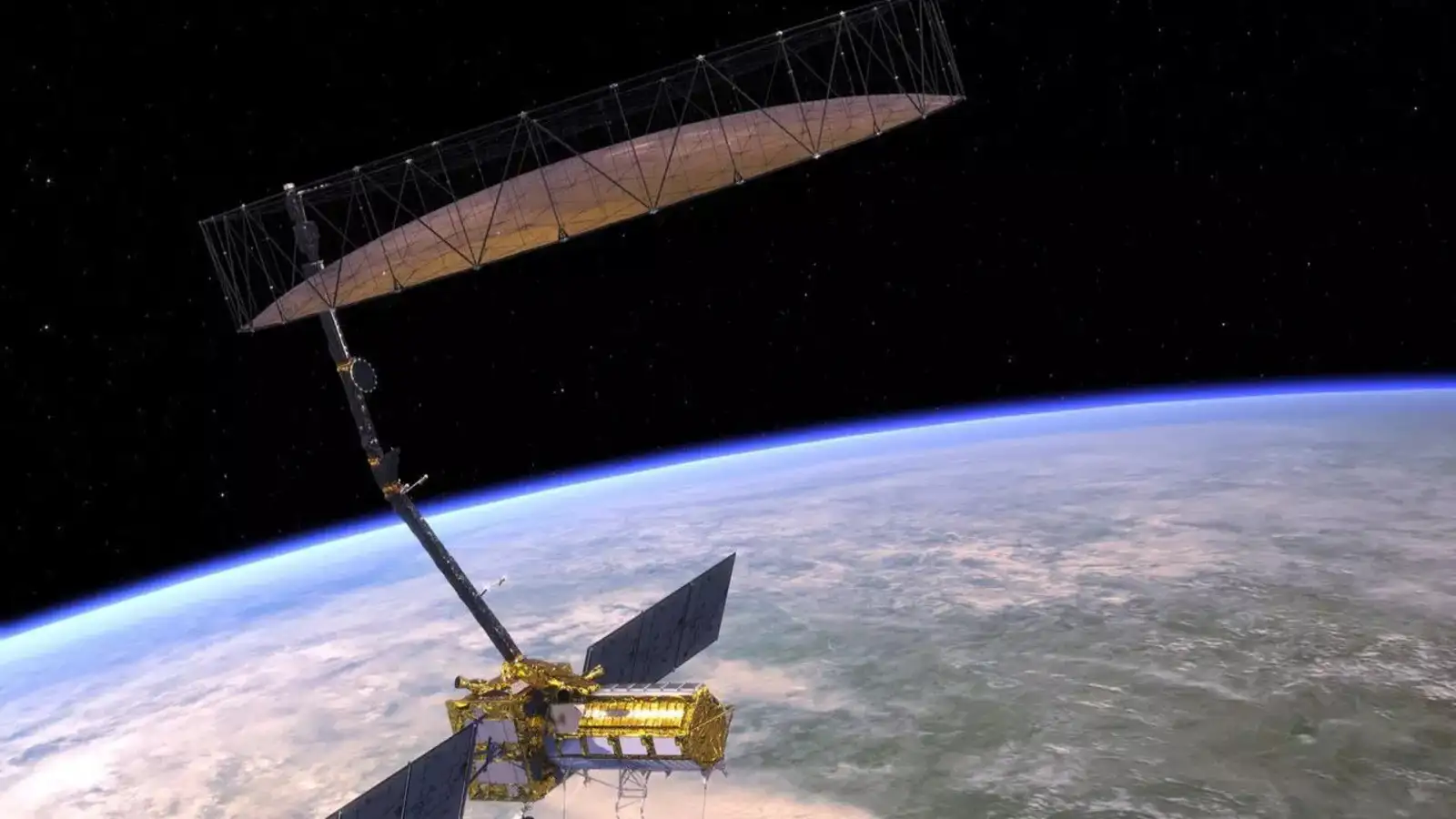
NISAR carries the world’s first dual‑frequency radar system—an L‑band radar from NASA, which penetrates deeper into vegetation and ground layers, and an S‑band radar from ISRO, optimized for surface reflections. This Radar-Aperture system enables detection of Earth‑surface changes as small as a centimeter across
Technology: SweepSAR & Unfurlable Reflector
Equipped with a massive 12‑meter mesh reflector antenna, the satellite uses SweepSAR technology to cover swaths of 242 km width per pass. The unfurlable antenna design allows high spatial resolution imaging for terrain, glacial, and ecosystem monitoring—even through cloud cover and darkness
Applications: Disaster Management, Ecosystems, Climate Monitoring
The satellite’s high‑precision data will support earthquake and landslide response, tracking glacier retreat, monitoring soil moisture and groundwater, sea‑ice classification, forest and wetland mapping, and shoreline change detection. Its all‑weather, day‑night capabilities make it especially valuable for real‑time disaster preparedness and environmental policy planning
Cost and Collaboration: Milestone in Indo‑US Relations
Costing approximately USD 1.5 billion, the NISAR mission represents one of the most ambitious and costly Earth‑observation projects globally. It reflects over a decade of scientific and technical cooperation between ISRO and NASA, symbolizing deepening strategic space ties between India and the United States
Why This News Is Important
Strategic Significance in Science & Technology Exams
For students preparing for defence, civil services, banking or teaching exams, NISAR represents a landmark mission in Science & Technology syllabus. It showcases India’s growing role in global space research, advanced radar technology, and international partnerships—all key topics in government exam frameworks.
Disaster Management & Environmental Governance
In sectors like civil services or environment-related policy planning, NISAR’s all-weather, high-resolution monitoring can transform disaster prediction, ecosystem management, and agricultural planning. The mission’s applications in tracking natural hazards and climate change align directly with syllabus themes such as disaster resilience and sustainable development.
Historical Context: The Journey to NISAR
NISAR began as a joint mission agreement between NASA and ISRO in 2014, envisioned to meet priorities set by the US National Academy of Sciences decadal survey (2007): monitoring ecosystems, ice dynamics, and Earth deformation Originally scheduled for early 2024, the launch faced delays due to thermal concerns in its radar reflector, which was temporarily returned to NASA’s Jet Propulsion Laboratory for special coatings After shipping via C‑130 flights and completing final integration and tests at Bengaluru and Sriharikota by mid‑2025, the mission entered its final countdown phase in July 2025
Key Takeaways from NISAR Mission
| S. No. | Key Takeaway |
|---|---|
| 1 | NISAR will launch on 30 July 2025 at 17:40 IST via ISRO’s GSLV‑F16 vehicle. |
| 2 | It employs dual-frequency radar systems: NASA’s L‑band and ISRO’s S‑band in one satellite. |
| 3 | The satellite will scan entire land and ice every 12 days, providing all‑weather, day‑night coverage. |
| 4 | Applications include monitoring earthquakes, glaciers, soil moisture, coastal changes, and ecosystem shifts. |
| 5 | At USD 1.5 billion, it is the most expensive Earth‑observation satellite and marks a major India‑US scientific collaboration. |
FAQs: Frequently Asked Questions
1. What is the full form of NISAR?
Ans: NASA-ISRO Synthetic Aperture Radar.
2. When is the NISAR satellite scheduled to launch?
Ans: On 30th July 2025 at 17:40 IST from Sriharikota, Andhra Pradesh.
3. Which rocket will be used to launch NISAR?
Ans: The GSLV-F16 rocket developed by ISRO.
4. What is unique about the NISAR satellite’s radar?
Ans: It is the first satellite in the world to carry dual-frequency radar (L-band and S-band) for Earth observation.
5. Which two agencies have jointly developed the NISAR mission?
Ans: The Indian Space Research Organisation (ISRO) and the National Aeronautics and Space Administration (NASA).
6. What are some key applications of the NISAR satellite?
Ans: Earthquake detection, glacier monitoring, forest mapping, groundwater analysis, and coastal surveillance.
7. What is the total cost of the NISAR mission?
Ans: Approximately USD 1.5 billion, making it one of the most expensive Earth-observing satellites.
8. Which orbit will the NISAR satellite be deployed in?
Ans: A Sun-synchronous polar orbit at 743 km altitude.
9. Which Indian radar is mounted on the NISAR satellite?
Ans: S-band radar developed by ISRO.
10. Why is NISAR considered important for civil service and defence exam aspirants?
Ans: It demonstrates India’s growing capability in Earth observation, strategic partnerships, and disaster management—frequently covered in Science & Tech and Environmental Governance topics.
Some Important Current Affairs Links