







ISRO’s Successful Pushpak Reusable Launch Vehicle (RLV) Lex-02 Landing Experiment
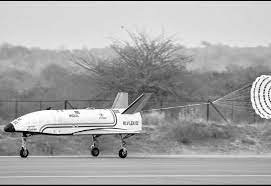
India’s space agency, the Indian Space Research Organisation (ISRO), recently achieved a significant milestone with the successful landing experiment of the Pushpak Reusable Launch Vehicle (RLV) Lex-02. This technological feat marks a pivotal moment in India’s space exploration journey, bringing to the forefront advancements in reusable launch vehicle technology.
The Indian Space Research Organisation (ISRO) has made headlines once again with its groundbreaking achievement in space technology. The successful landing experiment of the Pushpak Reusable Launch Vehicle (RLV) Lex-02 showcases India’s prowess in space exploration and marks a significant step forward in reusable launch vehicle technology.
The Pushpak RLV Lex-02 is equipped with state-of-the-art features aimed at enhancing efficiency and reducing the cost of space missions. Its reusable nature allows for multiple launches, significantly cutting down on launch expenses. Moreover, its advanced landing capabilities pave the way for more precise and controlled landings, crucial for future space missions.
The successful landing experiment of the Pushpak RLV Lex-02 holds immense promise for India’s space program. It opens up new possibilities for cost-effective and sustainable space exploration initiatives, allowing ISRO to undertake more ambitious missions while optimizing resources.
ISRO’s achievement in developing the Pushpak RLV Lex-02 is a testament to the collaborative efforts of scientists, engineers, and researchers involved in India’s space program. Looking ahead, this milestone sets the stage for further advancements in space technology and paves the way for collaborative ventures with international space agencies.
The successful landing experiment of the Pushpak RLV Lex-02 underscores India’s growing stature in the global space arena. It not only demonstrates technological prowess but also opens up new avenues for innovation and collaboration in space exploration.

Why this News is Important
Technological Advancements in Space Exploration:
The successful landing experiment of the Pushpak RLV Lex-02 signifies a significant leap in India’s capabilities in space technology. It highlights the country’s commitment to innovation and its potential to play a pivotal role in shaping the future of space exploration.
Cost-Effective Space Missions:
The development of reusable launch vehicle technology holds the promise of reducing the cost of space missions significantly. This achievement by ISRO could potentially revolutionize the economics of space exploration, making it more accessible and sustainable in the long run.
Enhanced Precision and Control:
The advanced landing capabilities demonstrated by the Pushpak RLV Lex-02 pave the way for more precise and controlled landings in future space missions. This is crucial for ensuring the success of complex missions and maximizing the efficiency of space exploration efforts.
Global Recognition and Collaboration:
ISRO’s accomplishment in the field of reusable launch vehicle technology has garnered international attention and recognition. It opens up opportunities for collaboration with other space agencies and positions India as a key player in the global space community.
Inspiration for Future Generations:
The success of the Pushpak RLV Lex-02 landing experiment serves as an inspiration for aspiring scientists, engineers, and space enthusiasts. It showcases the power of innovation and perseverance in overcoming challenges and pushing the boundaries of human knowledge.
Historical Context
India’s journey in space exploration dates back to the establishment of the Indian Space Research Organisation (ISRO) in 1969. Since then, ISRO has achieved numerous milestones, including the launch of satellites, lunar missions, and interplanetary exploration.
The development of reusable launch vehicle technology has been a long-term goal for ISRO, aimed at reducing the cost of space missions and increasing the efficiency of launch operations. The Pushpak RLV Lex-02 represents a culmination of years of research and development in this field.
The successful landing experiment of the Pushpak RLV Lex-02 aligns with global trends in space exploration, where reusable launch vehicle technology is gaining prominence due to its potential to revolutionize the economics of space missions. Countries around the world are investing in similar initiatives to enhance their capabilities in space.
5 Key Takeaways from “Pushpak RLV Lex-02 Landing Experiment”
| Serial Number | Key Takeaway |
|---|---|
| 1 | Successful landing experiment of Pushpak RLV Lex-02 |
| 2 | Advancements in reusable launch vehicle technology |
| 3 | Potential for cost-effective space missions |
| 4 | Enhanced precision and control in space operations |
| 5 | Opportunities for global collaboration in space exploration |
Important FAQs for Students from this News
Q:What is ISRO’s Pushpak Reusable Launch Vehicle (RLV) LEX-02 Landing Experiment?
A: ISRO’s Pushpak RLV LEX-02 is an experiment involving a reusable launch vehicle aimed at testing landing technology.
Q:How does the Pushpak RLV LEX-02 contribute to space exploration?
A: The experiment helps in developing reusable technology, potentially reducing the cost of space missions and making them more sustainable.
Q:What are the objectives of the Pushpak RLV LEX-02 mission?
A: The primary objective is to demonstrate the capability of the vehicle to land safely after re-entry into the Earth’s atmosphere.
Q:What significance does the success of this experiment hold for India’s space program?
A: Success in this experiment signifies advancements in indigenous technology, enhancing India’s position in the global space arena.
Q:How does the Pushpak RLV LEX-02 align with ISRO’s future plans?
A: It aligns with ISRO’s vision of developing cost-effective and efficient space transportation systems for future missions.
Some Important Current Affairs Links