







India UNESCO tentative sites: India has added seven new natural and mixed heritage sites to the UNESCO Tentative List in 2025, boosting conservation, tourism, and global recognition.
India Adds Seven New Sites to UNESCO Tentative List
India has recently submitted seven additional natural and mixed-heritage properties to the UNESCO Tentative List, expanding its collection of globally significant sites that may be nominated in the future for full World Heritage status. These additions reflect the country’s diverse geological, ecological, and spiritual heritage, and represent key steps in preserving India’s environmental and cultural wealth.
Which Sites Were Added
The new additions include:
- Deccan Traps at Panchgani and Mahabaleshwar (Maharashtra) — extensive volcanic basalt formations.
- Geological Heritage of St Mary’s Island Cluster (Udupi, Karnataka) — remarkable columnar basalt rock formations.
- Meghalayan Age Caves in the East Khasi Hills (Meghalaya) — caves that date to the Meghalayan Age, representing geological and palaeoclimatic features.
- Naga Hill Ophiolite in Kiphire, Nagaland — rare geological ophiolite formation illustrating earth’s mantle and crust interactions.
- Erra Matti Dibbalu (Red Sand Dunes) of Visakhapatnam, Andhra Pradesh — striking coastal sand dunes with unique geomorphological patterns.
- Tirumala Hills (Tirupati, Andhra Pradesh) — a site significant both naturally and spiritually, including the Eparchaean Unconformity geological boundary.
- Varkala in Kerala — coastal cliffs and formations of scenic and natural heritage.
With these additions, India’s Tentative List now comprises 69 properties (49 cultural, 17 natural, 3 mixed) earmarked for possible future nomination to the UNESCO World Heritage List.
Significance of the Tentative List
Being on the Tentative List is a mandatory first step before a site can be nominated for full inscription as a World Heritage Site. The Archaeological Survey of India (ASI) plays a central role in identifying, documenting, and preparing submissions of such sites. This involves scientific assessment, management planning, and compliance with criteria set by UNESCO.
Implications for Conservation, Tourism and Local Development
These designations help in highlighting lesser known natural wonders, increasing awareness among locals and scientists, and encouraging protection of fragile ecosystems. They often lead to funding, stricter conservation regulations, and sustainable tourism frameworks. Moreover, being included in the Tentative List boosts local pride and recognition on an international scale.
Why This News Is Important
For Examination Aspirants
For students preparing for competitive exams (like UPSC, state PSCs, SSC, banking, railways, defence), this news is relevant in several dimensions:
- Art & Culture / Geography Syllabus: UNESCO heritage topics appear often in current affairs, especially under environment, geography, and heritage conservation. Knowing the new sites and their features directly helps in GK and static portions.
- Government Policies & Schemes: Understanding how government agencies like ASI function, criteria laid by UNESCO, implications for environmental law and heritage protection, all may form part of questions.
- International Relations / Soft Power: Inclusion in UNESCO’s Tentative List is soft power diplomacy. It reflects India’s global image as a preserver of heritage and nature. This has relevance for essay topics, polity, and international organization questions.
Broader National Importance
- Conservation & Sustainable Tourism: With rising threats like urbanization, climate change, pollution and unchecked tourist footfall, identifying and preserving such sites is critical. These designations often pave the way for protective measures.
- Local Economies & Employment: Recognition often translates into tourism, scientific research, infrastructure development, and employment opportunities in remote or under-developed regions.
Altogether, this news demonstrates how India continues strengthening its heritage portfolio, balancing development with environmental and cultural conservation — a major theme in many government exam current affairs sections.
Historical Context
UNESCO World Heritage and Tentative Lists
UNESCO recognizes cultural, natural, and mixed sites of Outstanding Universal Value. Before a site can make it to the official World Heritage List, it must first appear in its country’s Tentative List. India became a State Party to the UNESCO World Heritage Convention in 1977.
Previous Heritage Additions by India
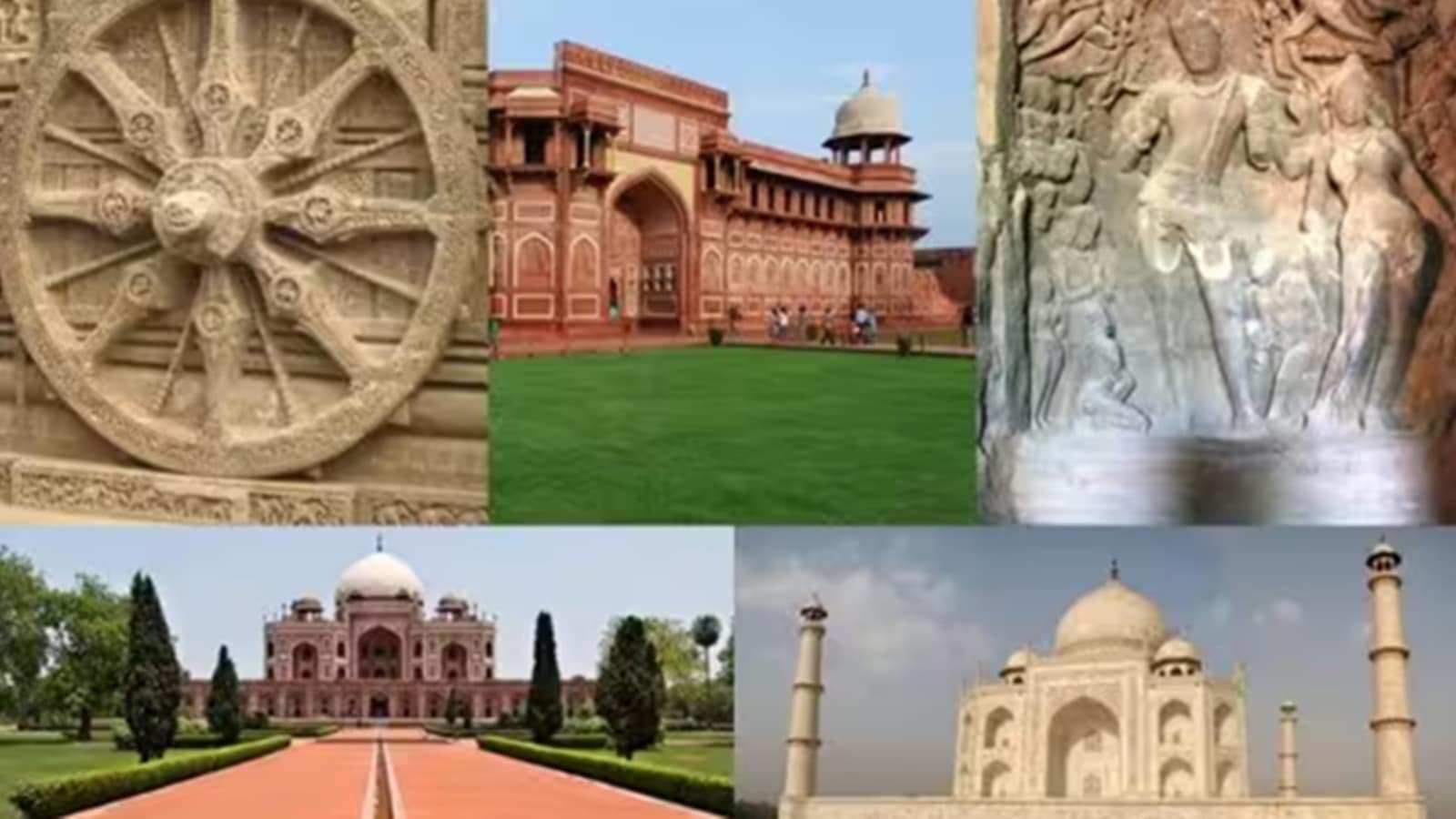
Over decades, India has built up an impressive list of World Heritage Sites (cultural, natural, and mixed). Some famous ones include the Taj Mahal, Ajanta & Ellora caves, Kaziranga, Sunderbans, and more recently, the Maratha Military Landscapes in 2025.
Geological Heritage of India
Many of the newly added sites are geologically significant (Deccan Traps, ophiolites, caves, coastal dunes). India’s geological history is diverse — from the Deccan volcanic province, the Himalayan orogeny, to coastal landforms. The Meghalayan Age (part of the Holocene Epoch) denotes recent geological time and climate transitions, which are relevant for understanding Earth’s climate history.
Conservation Challenges Over Time
Heritage sites in India have faced pressures from development, environmental degradation, uncontrolled tourism, pollution, and lack of awareness. Over time, legal frameworks (like the Ancient Monuments & Archaeological Sites and Remains Act), environmental impact assessments, notified protected areas, and local community participation have become more common. The Tentative List mechanism fits into this larger effort.
Key Takeaways from India’s New UNESCO Tentative List Additions
| Sr. No. | Key Takeaway |
|---|---|
| 1 | India has added seven new sites spanning natural, geological and spiritual significance to its UNESCO Tentative List. |
| 2 | The newly added sites include Deccan Traps (Maharashtra), St Mary’s Island Cluster (Karnataka), Meghalayan Age Caves (Meghalaya), Naga Hill Ophiolite (Nagaland), Erra Matti Dibbalu (Andhra Pradesh), Tirumala Hills (Andhra Pradesh), and Varkala (Kerala). |
| 3 | Being on the Tentative List is a precondition before a site can be nominated for UNESCO’s full World Heritage List. |
| 4 | Inclusion implies greater focus on conservation efforts, potential tourism growth, scientific interest, and local environmental protection. |
| 5 | These additions enhance India’s global heritage credentials and reflect commitment to preserving its geological and natural diversity. |
FAQs: Frequently Asked Questions
1. What is the UNESCO Tentative List?
The UNESCO Tentative List is a list of properties that a country considers for future nomination to the World Heritage List. A site must appear here before it can be officially nominated.
2. How many sites has India added to the Tentative List recently?
India has recently added seven new sites, bringing the total number of sites in its Tentative List to 69.
3. Which new sites were added to India’s Tentative List?
The newly added sites are Deccan Traps (Maharashtra), St Mary’s Island Cluster (Karnataka), Meghalayan Age Caves (Meghalaya), Naga Hill Ophiolite (Nagaland), Erra Matti Dibbalu (Andhra Pradesh), Tirumala Hills (Andhra Pradesh), and Varkala (Kerala).
4. What types of heritage sites are included in the new additions?
The new sites include geological formations, natural sites, mixed heritage sites with cultural and natural significance, and spiritually important landscapes.
5. Why is inclusion in the Tentative List important for India?
It helps in conservation, promotes sustainable tourism, boosts local development, strengthens India’s global heritage credentials, and is a prerequisite for UNESCO World Heritage nomination.
6. Which Indian organization is responsible for submitting sites to UNESCO?
The Archaeological Survey of India (ASI) identifies, documents, and prepares sites for submission to UNESCO.
7. What is the significance of sites like Deccan Traps and Meghalayan Age Caves?
These sites are geologically important, representing ancient volcanic activity, Earth’s climatic history, and unique rock formations.
8. How does UNESCO recognition benefit local communities?
It encourages tourism, employment opportunities, infrastructure development, and increased awareness for conservation efforts.
Some Important Current Affairs Links