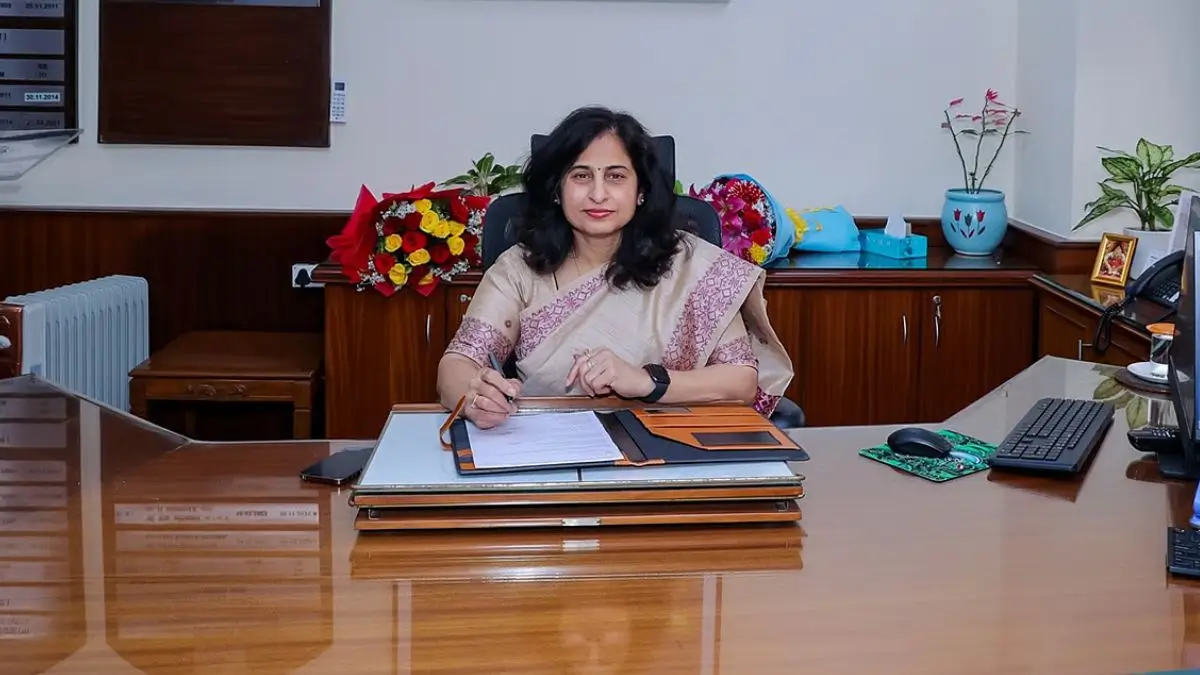









India UK science collaboration: The IN‑UK‑STP Dashboard maps 143 bilateral research projects, tracks funding, and supports evidence-based policy decisions in science, technology, and innovation.
India–UK Launch Their Science & Technology Partnership Dashboard
Strengthening Bilateral Research Collaboration
In a significant step toward enhanced research cooperation, India and the United Kingdom jointly launched the pilot version of the IN‑UK‑STP Dashboard (India‑UK Science & Technology Partnership Dashboard) in New Delhi. The digital platform was unveiled by Ajay Kumar Sood, the Principal Scientific Adviser to the Government of India, and David Warren Smith, the National Technology Adviser for the U.K.
What the Dashboard Encompasses
The dashboard currently maps 143 bilateral science and technology projects that are jointly supported by agencies in India and the U.K. Key features of the initiative include:
- Tracking project information such as funding values, implementing agencies on both sides, and funding agencies.
- A joint development effort by India’s Office of the Principal Scientific Adviser and the British High Commission in India.
- Aiming to provide policymakers with data‑driven insights to coordinate research priorities, identify collaboration gaps, and monitor how bilateral S&T engagement is evolving.
Strategic Importance for Research & Innovation
By offering a transparent mechanism to visualise bilateral S&T investments, the IN‑UK–STP Dashboard allows both nations to align their research strategies, avoid duplication of efforts, and focus on emerging fields such as artificial intelligence (AI), biotechnology and climate technology. The initiative underscores how research and development (R&D) cooperation is becoming a critical component in international diplomacy and innovation policy.
Impacts for India–UK Collaboration
This tool will enable deeper alignment between India’s research priorities (for example under its national science and innovation agendas) and the U.K.’s global science partnerships. It helps map which sectors are getting attention, which implementing agencies are active, and how funding flows are structured. The dashboard thus gives both countries a clearer view of the “who‑does‑what” in bilateral S&T, enabling smarter decision‑making.
Future Outlook
With this pilot phase covering 143 projects, the expectation is that the dashboard will expand in scope, both in terms of the number of projects covered and possibly the depth of data (e.g., outcomes, impact metrics). Over time, this could become a key tool in steering India–U.K. S&T cooperation into high‑impact areas, facilitating joint research programmes, innovation partnerships, and perhaps venture‑funding linkages.

Why This News Is Important
Relevance for Government Exam Aspirants
For students preparing for exams such as teacher recruitment, police, banking, railways, defence or civil services (e.g., PSCS to IAS), this news holds particular significance. Recent years have seen a rising emphasis on science & technology in national development and governance. Understanding bilateral cooperation mechanisms between India and other countries (in this case the U.K.) is critical for General Studies sections, especially in topics like “International Relations”, “Science & Technology”, “Government Policies”, and “Innovation Ecosystem”.
Strategic and Policy Implication
The launch of the dashboard reflects how India is moving (and being seen) as a partner in global science and innovation. It signals that bilateral ties now include structured monitoring and data‑driven frameworks, which is a shift from mere memoranda of understanding (MoUs) to actionable and traceable collaboration. Government job aspirants should note that modern governance increasingly involves digital tools, transparency and metrics‑based evaluation, which this dashboard exemplifies.
Broader Governance and Future Outlook
From the perspective of governance, the initiative exemplifies how research partnerships are being institutionalised, not left to ad‑hoc arrangements. For aspirants in civil services and allied exams, this illustrates a key trend: the integration of science & technology policy into diplomatic and economic strategy. It also points to the role of digital dashboards and platforms in public administration and policy monitoring — a concept often asked in general awareness and current affairs segments.
Historical Context
India–UK Science & Technology Collaboration
India and the United Kingdom have had a longstanding tradition of research collaboration, dating back to colonial times and strengthening post‑independence with academic exchanges, joint laboratories and bilateral funding programmes. Over the decades, both countries have signed numerous agreements to promote joint research, technology transfer and innovation partnerships.
Emergence of Digital Monitoring Tools
In recent years, governments worldwide have begun using digital dashboards and open‑data platforms to track and visualise policy outcomes, project implementation, and collaboration efforts. In the S&T realm, such tools allow for oversight, transparency and strategic alignment of investments. The IN‑UK‑STP Dashboard builds on this trend, signifying a shift from “agreement signing” to “outcome monitoring”.
Policy Push in India
India’s focus on becoming a knowledge‑economy and its push in areas like “Make in India”, “Atmanirbhar Bharat” and the “National Science & Technology Mission” has ramped up the importance of research infrastructure, international cooperation and innovation ecosystems. The dashboard aligns with these broader policy goals by enabling tighter monitoring of bilateral collaborations and aligning them with national priorities.
Key Takeaways from India–UK Science & Technology Partnership Dashboard
| S. No. | Key Takeaway |
|---|---|
| 1 | The IN‑UK‑STP Dashboard tracks 143 bilateral science & technology projects between India and the U.K. |
| 2 | It was jointly developed by India’s Office of the Principal Scientific Adviser and the British High Commission in India. |
| 3 | The dashboard enables tracking of funding values, implementing agencies and funding agencies from both countries. |
| 4 | It aims to support evidence‑based policy, enabling decision‑makers to view how research priorities and collaboration are evolving. |
| 5 | The tool helps visualise distribution of bilateral S&T cooperation across sectors and geographies — enabling better alignment of future investments and identification of emerging fields like AI, biotech and climate technologies. |
FAQs
1. What is the India–UK Science & Technology Partnership Dashboard?
The IN‑UK‑STP Dashboard is a digital platform launched jointly by India and the U.K. to map and monitor bilateral science and technology projects, track funding, implementing agencies, and project outcomes.
2. How many projects are currently covered by the dashboard?
The pilot version of the dashboard currently covers 143 bilateral projects supported by both Indian and U.K. agencies.
3. Who developed the IN‑UK‑STP Dashboard?
It was jointly developed by India’s Office of the Principal Scientific Adviser and the British High Commission in India.
4. Why is the dashboard important for policy makers?
The dashboard provides data-driven insights into bilateral research priorities, funding distribution, and sector-wise collaboration, enabling evidence-based decision-making and strategic planning.
5. Which sectors are likely to benefit from India–UK collaboration through this dashboard?
Emerging sectors such as artificial intelligence, biotechnology, climate technology, and innovation-driven research projects are expected to benefit significantly.
6. How is this news relevant for government exams?
This news is important for aspirants in exams like UPSC, SSC, banking, railways, defence, and state civil services as it relates to science & technology, international cooperation, and policy initiatives, which are commonly included in general studies and current affairs sections.
Some Important Current Affairs Links