









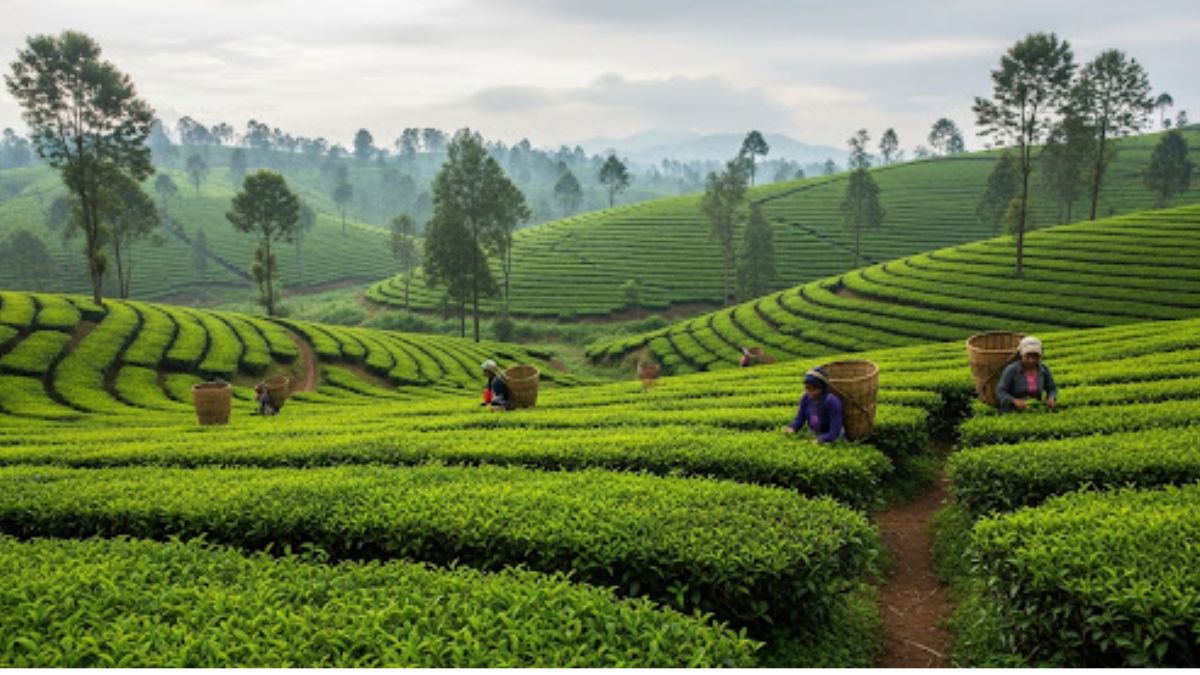
India tea production June 2025 declined by 9% due to extreme weather and pest attacks. Learn how Assam, Kerala, and small growers were impacted. Important for UPSC, SSC, and government exam prep.
India’s Tea Production Falls 9% in June 2025 Amid Weather Woes and Pest Attacks
Production Decline Overview
India’s tea output dropped by 9% year‑on‑year in June 2025, reaching 133.5 million kg, compared to 146.72 million kg in June 2024. The decline was driven by unfavourable weather, especially erratic rainfall and high temperatures, along with widespread pest attacks impacting yields across all major tea-producing regions
Regional Breakdown
North India (Assam and West Bengal) saw output fall from 121.52 million kg to 112.51 million kg, a decline of around 7%. South India suffered a sharper drop, with production down from 25.2 million kg to 20.99 million kg — roughly a 17% fall
Specifically, Assam declined by about 10%, though the Cachar region saw minor gains. West Bengal’s Dooars region fell while Terai and Darjeeling posted slight increases. In the South, Tamil Nadu dropped by 11%, Kerala plunged by 31%, and Karnataka also declined
Crop Varietal Impact
Production by category showed the bulk from CTC variety at 117.84 million kg, orthodox tea at 13.82 million kg, and green tea at 1.84 million kgNotably, small growers were hit hardest—output from them fell from 78.34 million kg to 68.28 million kg over the year
Driving Factors: Adverse Climate and Pests
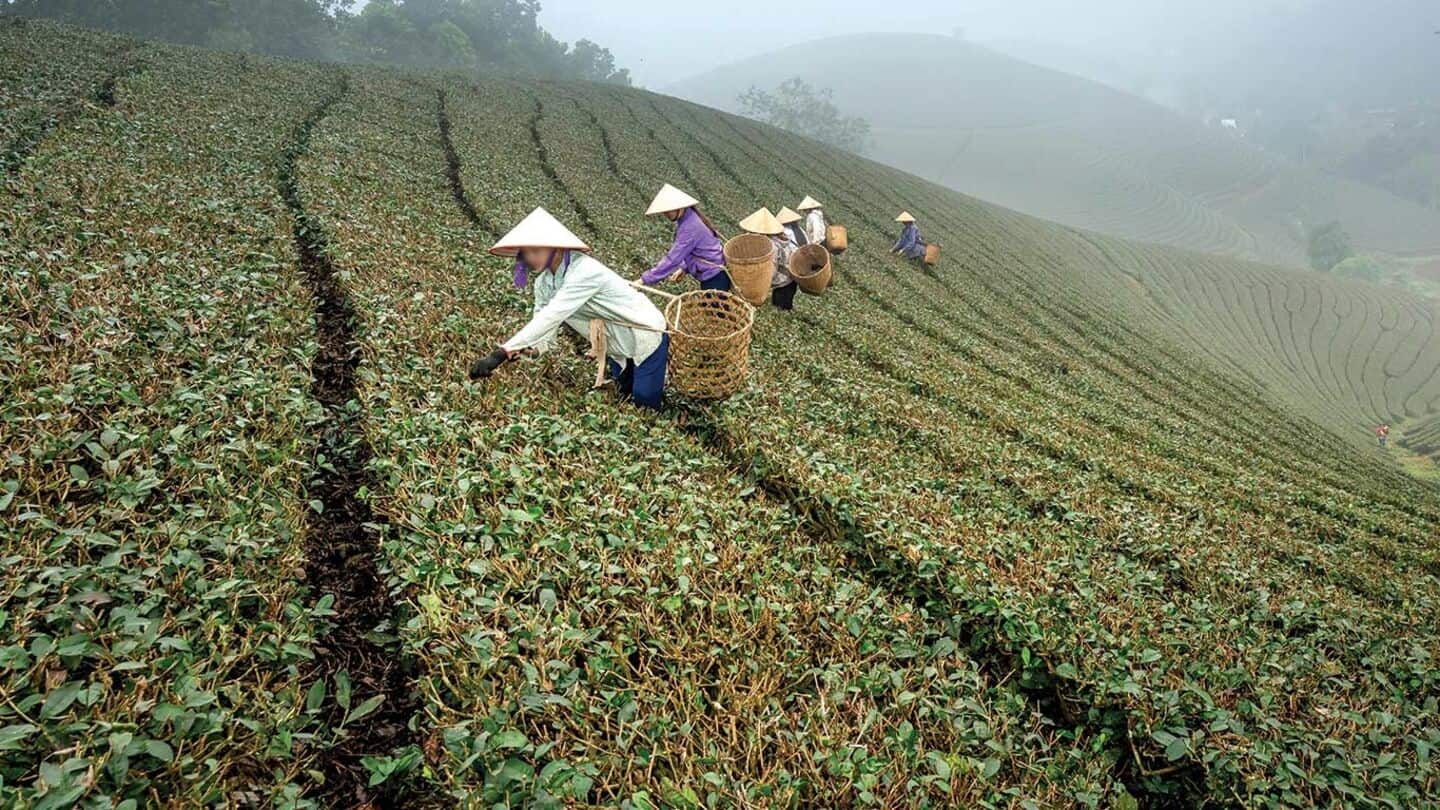
Experts cite climate anomalies such as extreme heat, multi-day waterlogging, and prolonged rains disrupting plucking schedules and even causing tea bush mortality. In Assam’s Barak Valley alone, growers reported up to 40% crop losses as estates remained submerged under 3‑4 feet of floodwater following record rainfall in Cachar—416 mm in 24 hours, far exceeding previous records Pest infestations further exacerbated yield losses across both regions.
Economic Impact on Industry
These production shocks have rippled through the tea industry, raising concerns over supply stability, price volatility, and livelihoods of planters—particularly the small farmer segment. The convergence of climate stress and pest pressures is also underlining the risk to premium segments like Darjeeling tea, which is already facing sustained production declines
Why This News Is Important
Relevance for Competitive Exams
This news is critical for government exam aspirants in agriculture, economy, climate change, and rural development sections. It illustrates how climate variability and agro‑pests directly impact a key export commodity—tea.
Economic & Policy Implications
A 9% production drop points to supply-side fragility that can affect global export totals, domestic price levels, and the income of over a million stakeholders in the tea ecosystem, including small and marginal farmers. Understanding this dynamic is vital for exams covering national economic trends and policymaking.
Linkages to Sustainable Development Goals
The story also ties into SDG‑2 (Zero Hunger) and SDG‑13 (Climate Action): adaptation measures, water management, and integrated pest management are potential themes. Aspirants should note these linkages for essay and general awareness sections.
Signals for Governance Measures
The crisis highlights the need for government interventions: disaster relief, crop insurance, climate-resilient agricultural practices, and R&D for pest resistance. These are important discussion points in essays on agriculture and governance.
Historical Context: Background and Related Events
Trends Leading Up to 2025
India’s tea industry witnessed an 8% decline in 2024, largely due to erratic weather and pest attacks. Although early 2025 showed a 25% rebound from 2024 levels, output still lagged behind 2023 metrics in major producing states like Assam and West Bengal — underscoring underlying fragility
Climate Change and Long-Term Risks
A 2021 FAO report projected that by 2050, tea‑growing areas in Northeast India could lose up to 40% yield potential due to rising temperatures and erratic rainfall, if climate adaptation is not implemented
Regional Vulnerability: Barak Valley Case
Assam’s Barak Valley has emerged as a critical hotspot, where record rainfall in early June 2025 displaced thousands of hectares of plantations under floodwater. Prolonged waterlogging led to both infrastructure damage and potential crop mortality, severely disrupting production just before the second flush season—a peak harvest period
Key Takeaways from “India’s Tea Production Falls 9% in June 2025”
| S. No. | Key Takeaway |
|---|---|
| 1 | India’s tea production fell by 9% in June 2025, totaling 133.5 million kg versus 146.72 million kg in June 2024 |
| 2 | North India output declined ~7% (112.51 m kg), South India output fell ~17% (20.99 m kg) |
| 3 | Key regions: Assam down ~10%, Kerala down 31%, Tamil Nadu down 11%; small growers hit hardest |
| 4 | Primary causes: unusual weather patterns (extreme heat, floods) and pest infestations disrupting tea cultivation cycles |
| 5 | Long-term concern: climate change threatens a 40% yield decline by 2050 in Northeast India without mitigation strategies |
Frequently Asked Questions (FAQs)
1. What caused the decline in India’s tea production in June 2025?
India’s tea production fell by 9% in June 2025 due to erratic rainfall, prolonged waterlogging, extreme heat, and widespread pest attacks, particularly in Assam, West Bengal, Kerala, and Tamil Nadu.
2. Which states were most affected by the tea production decline?
The most affected states were Assam (especially Barak Valley), West Bengal (Dooars region), Kerala, and Tamil Nadu. South Indian states showed a sharper production fall compared to the North.
3. How much tea was produced in June 2025?
India produced 133.5 million kilograms of tea in June 2025, compared to 146.72 million kilograms in June 2024, reflecting a 9% year-on-year decline.
4. What are the different tea varieties mentioned in the report?
The report mentions three types: CTC tea (117.84 million kg), orthodox tea (13.82 million kg), and green tea (1.84 million kg).
5. Why is this news relevant for competitive exams?
It is important for exams such as UPSC, SSC, State PSCs, and Agriculture-based exams due to its connection with climate change, agro-economy, sustainable development, and rural livelihoods.
6. What was the impact on small growers?
Small growers faced the most severe impacts, with production dropping from 78.34 million kg to 68.28 million kg, highlighting their vulnerability to climate and pest stress.
7. How does climate change threaten future tea production?
Studies predict up to 40% yield loss by 2050 in Northeast India if no climate-resilient strategies are adopted.
8. What is the significance of the Barak Valley in this context?
Barak Valley in Assam witnessed record rainfall (416 mm in 24 hours), leading to floods that submerged tea estates and caused up to 40% crop loss in June 2025.
9. What government measures are expected in response?
Interventions may include crop insurance, pest management programs, climate-resilient agriculture, and financial support for small tea growers.
10. What are the implications for tea exports and prices?
Production decline may tighten supply, potentially increase domestic prices, and affect exports, making it significant for both economic and policy discussions.
Some Important Current Affairs Links