


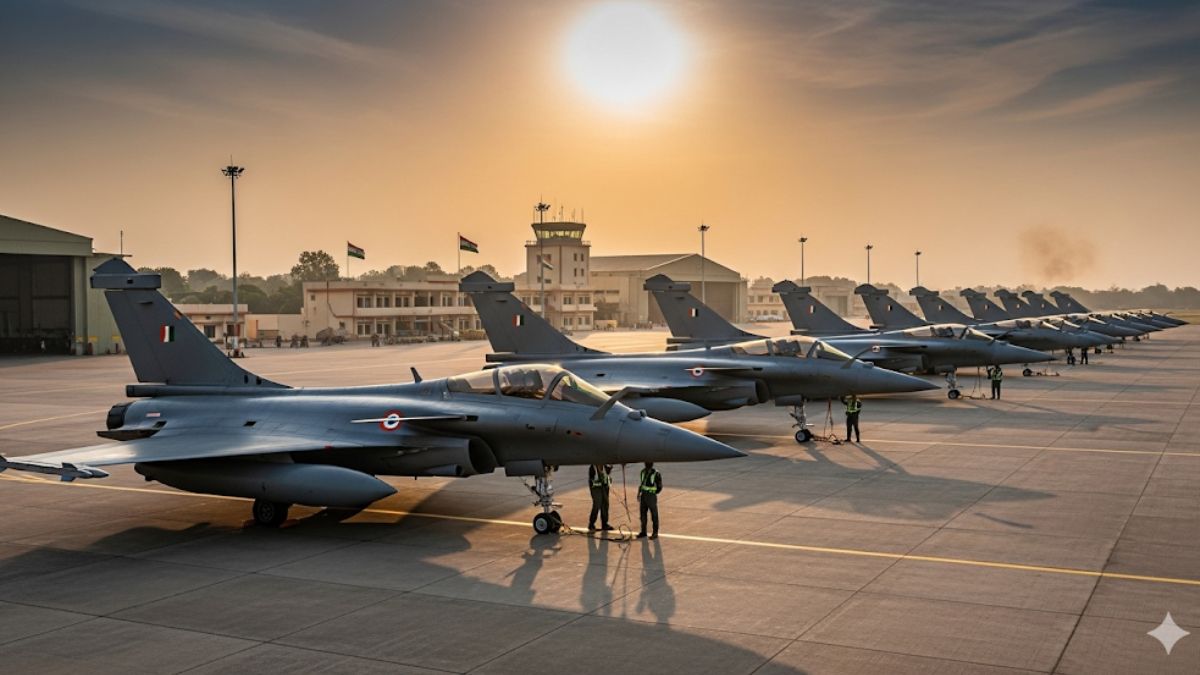
India Rafale jet deal 2025: IAF proposes acquiring 114 fighter jets worth ₹2 lakh crore under the “Made-in-India” plan, boosting defence self-reliance and air force capabilities.
India Eyes ₹2 Lakh Crore “Made-in-India” Rafale Jets Deal
Proposal for 114 Made-in-India Rafale Jets
The Indian Air Force (IAF) has proposed acquiring 114 Rafale fighter jets under a large-scale purchase plan estimated at ₹2 lakh crore, emphasising extensive indigenous production. The proposal aims to substantially enhance India’s air combat capabilities while reducing dependence on foreign manufacturing. If approved, this purchase will be one of the largest defence procurement deals in Indian history.
Strengthening Self-Reliance through Defence Manufacturing
A central element of the proposed deal is the commitment to the Atmanirbhar Bharat (Self-reliant India) vision. More than 60% of components of these jets are expected to be sourced or manufactured in India. The arrangement involves Dassault Aviation (the original manufacturer) collaborating with Indian firms, most notably the Tata Group, for assembly, sub-system manufacturing, and possibly component production.
Support Infrastructure: MRO and Maintenance Capabilities
Alongside manufacturing, the proposal includes setting up a Maintenance, Repair, and Overhaul (MRO) hub in Hyderabad for the Rafale’s M-88 engines. Dassault already maintains servicing units in India for French-origin aircraft; the proposed expansion would boost both capability and response readiness.
Strategic Upscaling of IAF’s Fleet Strength
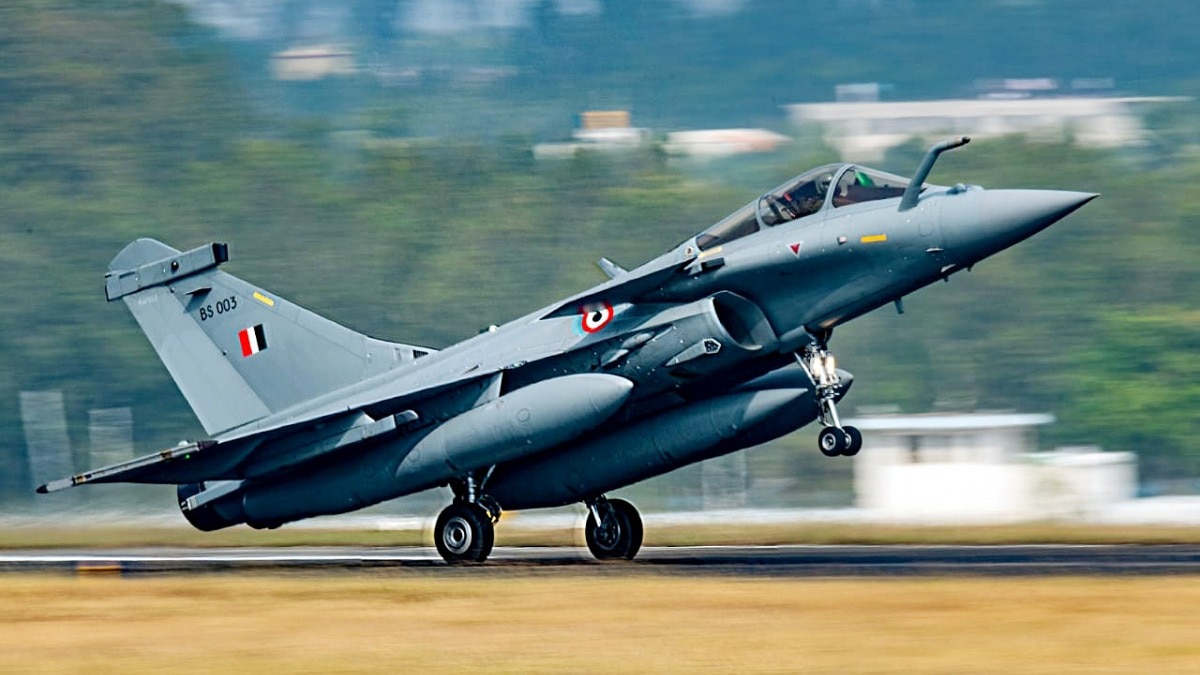
Currently, India operates 36 Rafale jets procured under a 2016 agreement with France; the Navy has placed orders for 26 Rafale Marine jets. With this new proposal, the total Rafale fleet would rise to approximately 176 aircraft. This major jump in force procurement would considerably augment India’s air-defence posture, especially in light of regional security challenges.
Procurement Process: Steps and Approval Hierarchy
The proposal has already moved forward in bureaucratic channels: the IAF has submitted a Statement of Case, which is now under review within the Defence Ministry, including the Defence Finance wing. The process ahead includes scrutiny by the Defence Procurement Board, approval by the Defence Acquisition Council, followed by formal tendering and contract negotiations upon clearances.
Why This News Is Important
Boosting National Security Capability
India’s strategic environment, including tensions along its borders and in maritime zones, demands a well-equipped, modern fleet of multi-role fighter aircraft. The proposed deal would significantly enhance the IAF’s ability to respond swiftly to threats, maintain deterrence, and secure airspace sovereignty.
Turning Point for India’s Defence Industry
With more than 60 % of components to be manufactured domestically, this move could mark a foundational shift in India’s defence industrial base. It bodes well for growth of aerospace engineering, deepening of supply chains, and the creation of high-skilled jobs throughout manufacturing, maintenance, and research & development.
Major Economic and Policy Implications
A ₹2 lakh crore commitment is massive not just militarily but economically. It implies sustained government expenditure, major co-investment from private players, and potential spill-overs in allied sectors (like electronics, materials science). The policy signalling—“Made in India” defence procurement at this scale—reinforces India’s emerging posture as not just a buyer but also a producer of advanced defence systems.
Relevance for Competitive Exams
For exams like UPSC, state PSCs, CDS/NA, CAPF, or banking/railways (where general studies & current affairs matter), this news touches on several syllabus topics: defence and security; foreign policy; government policy on self-reliance; and science & technology in defence. Knowing the scale, process, and strategic importance will help in both objective and essay-type questions.
Historical Context
Previous Rafale Agreements
India first signed a deal with France in 2016 for 36 Rafale jets, to replace aging aircraft and boost its squadrons. That deal was a government-to-government one, with French manufacture at core. Over time, questions about cost, delivery schedule, and indigenous involvement became topics of public and parliamentary debate.
“Make in India” and Defence Procurement Reforms
Since around 2015, India has pushed policy reforms to encourage domestic manufacturing in defence. The “Make” category in Defence Acquisition Procedure (DAP), offsets, and strategic partnerships have been central. The government has also revised procurement processes to reduce delays, promote transparency, and strengthen domestic vendors.
Regional Threats and Modernisation Drives
Escalating threats from neighbouring countries, along with the need to secure India’s extended maritime and aerial domains, have forced modernisation of the IAF. This includes upgrades to fighter fleet, acquisition of advanced radar, missiles, unmanned systems, and focusing on readiness in the Himalayas, Indian Ocean Region (IOR), and along both eastern and western frontiers.
Key Takeaways from “IAF Proposes ₹2 Lakh Crore Rafale Jet Deal”
| S. No. | Key Takeaway |
|---|---|
| 1 | The proposal is to acquire 114 Rafale jets under a “Made-in-India” model. |
| 2 | Approved cost estimate of the deal is ₹2 lakh crore. |
| 3 | Over 60% of jet components are expected to be manufactured or sourced in India, involving firms like Tata Group and Dassault Aviation. |
| 4 | Total fleet strength of Rafale aircraft would increase to around 176 (36 existing + 114 proposed + 26 marine jets). |
| 5 | Critical steps include review by Defence Finance, Defence Procurement Board, and final approval by the Defence Acquisition Council before tendering begins. |
FAQs: Frequently Asked Questions
Q1: What is the proposed number of Rafale jets in the new IAF deal?
A1: The Indian Air Force has proposed acquiring 114 Rafale jets under the new deal.
Q2: What is the estimated cost of the proposed Rafale jet deal?
A2: The estimated cost of the deal is ₹2 lakh crore.
Q3: Which Indian companies will be involved in the “Made-in-India” Rafale production?
A3: Companies like the Tata Group and other local firms are expected to collaborate with Dassault Aviation for assembly and component manufacturing.
Q4: How will the proposed deal enhance India’s air force capabilities?
A4: The deal will increase the IAF’s Rafale fleet strength to 176 aircraft, improving air defense readiness, deterrence, and rapid response capabilities.
Q5: What is the significance of the MRO hub in Hyderabad?
A5: The Maintenance, Repair, and Overhaul (MRO) hub will service Rafale’s M‑88 engines and other components, enhancing operational readiness and self-reliance.
Q6: Why is this news important for competitive exams?
A6: It covers topics in defence modernization, government policy, Make in India, strategic partnerships, and regional security, which are frequently asked in UPSC, CDS, PSC, and other exams.
Q7: When did India first sign a deal for Rafale jets?
A7: India signed its first Rafale jet deal with France in 2016 for 36 jets.
Q8: How does this proposal align with the “Atmanirbhar Bharat” initiative?
A8: Over 60% of the components will be sourced or manufactured in India, promoting domestic defence industry and self-reliance.
Some Important Current Affairs Links




