








India Nepal energy cooperation: India and Nepal have signed key agreements to build 400 kV cross-border transmission lines, boosting electricity trade, hydropower export, and regional grid integration under India’s Neighbourhood First policy.
India and Nepal Bet Big on Energy Links
India and Nepal deepen energy collaboration
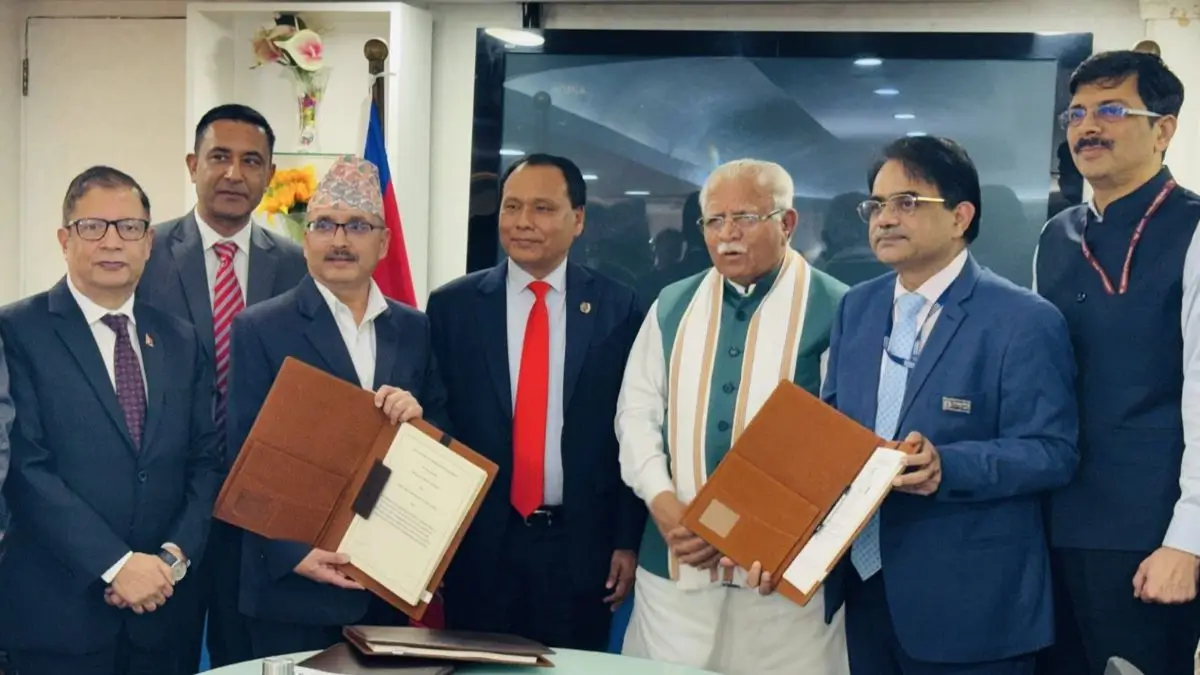
In a landmark move, POWERGRID Corporation of India Ltd (India) and Nepal Electricity Authority (NEA) of Nepal have signed two significant power-sector agreements aimed at developing cross-border energy infrastructure. These deals mark a new phase of bilateral cooperation, focusing on the construction of two high-voltage 400 kV transmission lines and the establishment of joint venture (JV) entities in both countries to implement and manage these lines.
The transmission lines will connect Inaruwa (Nepal) to New Purnea (India) and Lamki/Dododhara (Nepal) to Bareilly (India). The joint ventures will have balanced ownership structures in each country, reinforcing the collaborative nature of the project.
Purpose and objectives of the power-link initiative
The primary goals behind this bilateral initiative are multi-fold. First, to boost electricity trade between India and Nepal—Nepal has a vast hydropower potential while India faces rising electricity demand. Through efficient transmission infrastructure, Nepal can export more power to India, and India can benefit from reliable cross-border supply.
Second, to improve grid resilience and transmission reliability in both countries. The additional interconnection capacity will allow for better load-sharing, seasonal balancing of supply and demand, and increased flexibility across the power networks.
Third, to strengthen bilateral economic integration and further India’s “Neighbourhood First” policy. By backing infrastructure cooperation, India is positioning itself as a development partner to its neighbouring countries—and creating a model of “clean energy diplomacy” in South Asia.
Strategic significance for regional energy architecture
This initiative goes beyond just two transmission lines: it signals a potential shift toward a South Asian energy market. As India and Nepal build links, opportunities open up for other neighbouring countries—such as Bhutan and Bangladesh—to join grid-integration efforts, allowing for regional load balancing, cross-border renewables trading, and greater climate-resilient infrastructure.
For Nepal, the advantages are clear: harnessing its hydropower resources more effectively, earning foreign exchange through exports, and upgrading its grid infrastructure via JV partnership with India. For India, the benefits include access to clean, seasonal hydropower, diversified supply sources, and strengthened energy security in its northern border region.
Implementation and challenges ahead
While the agreements set a clear roadmap, several practical challenges must be addressed for successful implementation. The construction of 400 kV lines across international borders involves issues like land-acquisition, right-of-way clearances, regulatory harmonisation, synchronization of grid codes, tariff framework for cross-border trade, and jointly agreed ownership and operational modalities in the JVs. Furthermore, financing, timely execution, and coordination between multiple agencies in both countries will be critical.
However, with firm political will and clear institutional mandates from both sides, the project presents a high-impact opportunity for strengthening South Asia’s energy architecture and fostering deeper bilateral ties.
Why This News Is Important
Relevance for exam-aspiring professionals
For candidates preparing for government exams (such as teaching posts, police recruitment, banking, railways, defence or civil services), this news is significant because it reflects multiple thematic areas: international agreements, energy infrastructure, regional cooperation, and strategic policy. Understanding such initiatives is essential as they often appear in current-affairs, general studies, economics and geography sections of exams.
Impact on national development & geostrategy
The energy cooperation between India and Nepal aligns with India’s broader strategic goals of enhancing regional connectivity, promoting clean energy, and strengthening neighbourhood ties. It underscores how infrastructure diplomacy contributes to national development, regional stability, and geopolitical influence. Recognising this helps aspirants appreciate the link between policy, infrastructure and strategic economic growth—an area increasingly emphasised in competitive exams.
Implications for energy sector and policy frameworks
This move also sheds light on evolving energy policy frameworks: transnational transmission, hydropower exports, grid interconnection, and joint ventures in the energy domain. For exam-readers, the initiative presents a case study of how countries collaborate to meet energy demands sustainably, manage resources, and integrate regional markets. Grasping such real-world policy execution examples enhances one’s ability to answer questions on energy security, infrastructure, regional cooperation and public-policy frameworks.
Historical Context
India-Nepal energy cooperation: A brief trajectory
India and Nepal have a long history of energy cooperation. Nepal has abundant hydropower potential due to its Himalayan rivers, while India has steadily growing demand for energy. Over the decades, several bilateral agreements and projects have been implemented—for example, the export of electricity from Nepal to India, inter-grid ties, and joint feasibility studies.
Evolution to modern cross-border grid links
More recently, South Asia has seen efforts to integrate electricity grids across borders to support seasonal balancing and clean energy trade. The present agreements represent a maturation of this approach: moving from isolated projects to institutionalised joint-venture models and high-voltage transmission lines. The focus on 400 kV lines and structured JVs signals a deeper institutional embedding of the energy partnership.
Link to India’s “Neighbourhood First” & energy diplomacy
Under India’s “Neighbourhood First” policy, infrastructure cooperation (including energy links) with neighbouring countries has been a core pillar. By enabling grid interconnections with Nepal—and potentially Bhutan and Bangladesh—the initiatives become part of a broader strategy to foster regional connectivity, stability and clean-energy transition in South Asia.
Key Takeaways from India & Nepal Energy Links
| # | Key Takeaway |
|---|---|
| 1 | Two 400 kV cross-border transmission lines will be built linking Inaruwa (Nepal)–New Purnea (India) and Lamki/Dododhara (Nepal)–Bareilly (India). |
| 2 | The implementing agencies are PowerGrid Corporation (India) and Nepal Electricity Authority (Nepal). |
| 3 | Joint venture companies will be established in both India and Nepal to oversee implementation, with balanced ownership. |
| 4 | The objective is to boost electricity trade, enhance grid resilience and support Nepal’s hydropower exports to India. |
| 5 | The initiative aligns with India’s “Neighbourhood First” policy, clean-energy goals and paves the way for a South Asian energy market. |
FAQs: Frequently Asked Questions
1. What recent agreements have India and Nepal signed in the energy sector?
India’s POWERGRID Corporation and Nepal Electricity Authority (NEA) have signed two agreements to develop cross-border 400 kV transmission lines and establish joint ventures in both countries for implementing and operating these projects.
2. Which routes will the new transmission lines cover?
The new high-voltage lines will connect Inaruwa (Nepal) to New Purnea (India) and Lamki/Dododhara (Nepal) to Bareilly (India).
3. What is the objective behind these India-Nepal energy agreements?
The primary objective is to boost electricity trade, strengthen grid reliability, and enable Nepal to export its surplus hydropower to India, enhancing regional energy cooperation.
4. How does this agreement align with India’s foreign policy?
The collaboration supports India’s “Neighbourhood First” policy, which emphasizes infrastructure and economic cooperation with neighbouring countries to promote regional growth and stability.
5. Why is this news important for competitive exam aspirants?
It combines key topics such as international relations, clean energy transition, infrastructure development, and regional cooperation—all frequently asked in exams like UPSC, State PSCs, Banking, SSC, Railways, and Defence services.
6. What role does hydropower play in India-Nepal relations?
Hydropower forms the backbone of Nepal’s renewable-energy potential, and India serves as a major market for these exports, helping Nepal generate foreign revenue while contributing to India’s clean-energy mix.
7. What challenges are expected in implementing these projects?
Challenges include land acquisition, regulatory clearances, financing, synchronisation of grid codes, and maintaining timely coordination between Indian and Nepali agencies.
8. How will these projects contribute to regional energy security?
By expanding cross-border transmission, both nations will achieve load-balancing, seasonal power exchange, and grid stability, paving the way for a unified South Asian energy market.
9. Which organizations are directly involved in these projects?
The two main organizations are POWERGRID Corporation of India Ltd (PGCIL) and Nepal Electricity Authority (NEA).
10. What broader benefits can India expect from these agreements?
India stands to gain enhanced access to clean hydropower, strengthened border-region infrastructure, and greater regional influence through energy diplomacy.
Some Important Current Affairs Links