





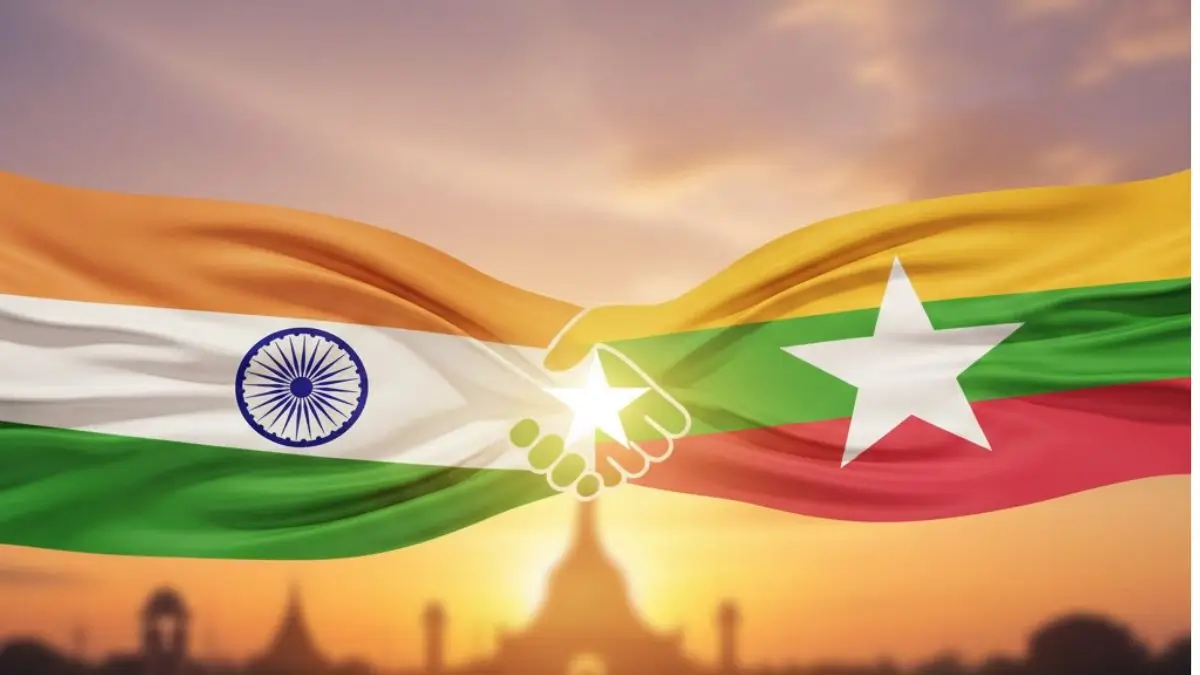
India Myanmar development projects 2025: India delivers three Quick Impact Projects in Mandalay to boost vocational training, girls’ education, and renewable energy under Mekong-Ganga Cooperation, strengthening bilateral ties and regional development.
India Strengthens Ties with Myanmar by Delivering Three Quick Impact Projects
India has recently strengthened its diplomatic and developmental engagement with neighbouring Myanmar by handing over three Quick Impact Projects (QIPs) in the Mandalay Region. These projects, inaugurated in December 2025, reflect India’s ongoing commitment to regional cooperation, socio-economic development, and people-centric initiatives that benefit local communities.
🛠️ Quick Impact Projects to Boost Local Development
Under the framework of bilateral cooperation and Mekong-Ganga Cooperation (MGC), India delivered three impactful projects designed to support education, vocational skills and sustainable energy in Myanmar:
- Modern Weaving and Vocational Development Project: A flexible rapier loom, manufactured in India, was installed at the Saunder Weaving and Vocational Institute in Amarapura. This modern equipment aims to enhance vocational education in weaving and traditional arts, empowering local artisans with advanced technology to scale their skills
- Girls Training School Building: India inaugurated a newly constructed, one-storey building at a girls’ training school in Mandalay. This initiative provides a safe, spacious and conducive learning environment for girls, supporting education and skill development, especially for young female students.
- Clean Energy and Research Project: The third project focuses on a research initiative centred on a tar-free and dry type gasification process using agricultural waste. This project promotes rural electrification, environmental sustainability, and alternative energy research, offering long-term benefits to rural communities across the region.
These initiatives reflect India’s strategic move to enhance human resource development, gender empowerment and renewable energy solutions in Myanmar through targeted interventions that directly uplift local populations
🤝 Strengthening India-Myanmar Partnership
India’s delivery of these Quick Impact Projects underscores its continued diplomatic support and development cooperation with Myanmar. By prioritising people-centred projects, India seeks to reinforce its influence in Southeast Asia, promote peaceful regional relations, and contribute to shared prosperity.
These efforts are aligned with India’s broader foreign policy objectives of enhancing relations with neighbouring countries through economic, educational, and infrastructural support—especially under frameworks like the Mekong-Ganga Cooperation.

🧠 Why This News Is Important
📌 Strategic Foreign Policy and Regional Cooperation
The handover of the Quick Impact Projects (QIPs) marks a significant step in India’s diplomacy and foreign policy toward Southeast Asia. By actively engaging in socio-economic development projects, India strengthens bilateral ties with Myanmar, a key neighbour located in a region of strategic importance. This cooperation reflects India’s Act East Policy, focused on deepening political, economic and cultural relations with East and Southeast Asian nations.
These projects also demonstrate India’s soft power strategy—using development assistance rather than military influence to build goodwill and foster long-term partnerships. Such people-focused initiatives can build trust between communities, contribute to sustainable development, and create mutually beneficial ties that extend beyond government-to-government engagement.
📌 Relevance for Government Exam Aspirants
For students preparing for government exams (like UPSC, state PSCs, banking, railways, defence, and teaching positions), this news is highly relevant in the international relations, foreign policy, and current affairs sections. Aspirants must understand how India uses development diplomacy to enhance influence in its neighbourhood, promote stability, and support socio-economic progress. Recognising such initiatives helps in answering questions related to India’s external economic engagements, bilateral cooperation frameworks like MGC, and regional geopolitical strategies.
Understanding such initiatives also supports broader topics such as India’s role in regional connectivity, economic development, and diplomatic outreach—key themes frequently asked in competitive exams.
📜 Historical Context
🗺️ India-Myanmar Relations: A Longstanding Neighbourly Bond
India and Myanmar share a long history of cultural, economic, and political ties due to their shared border and historical interactions. India’s engagement with Myanmar dates back to ancient trade routes and cultural exchanges, which later expanded into modern diplomatic relations after Myanmar’s independence.
🤝 Strategic Frameworks for Cooperation
Over the years, India and Myanmar have strengthened their cooperation through strategic frameworks like the Border Area Development Programme (BADP), Small Development Projects (SDP), and Quick Impact Projects (QIP). These initiatives aim to improve infrastructure, enhance education, and support healthcare across border regions.
The Mekong-Ganga Cooperation (MGC), under which the latest QIPs were delivered, is a key multidimensional partnership involving several Southeast Asian countries, focused on cultural, economic and socio-development cooperation.
🌏 Connectivity and Development
India’s engagement in Myanmar also includes large infrastructure projects like the Kaladan Multi-Modal Transit Transport Project (KMTTC), which is aimed at improving connectivity between India’s Northeast and Myanmar’s ports, fostering trade and economic development.
Historically, these developmental and connectivity projects have strengthened India’s strategic outreach in Southeast Asia and supported its Act East Policy, which aims to enhance ties with ASEAN and other regional partners.
📌 Key Takeaways from India Strengthens Ties with Myanmar
| S.No. | Key Takeaway |
|---|---|
| 1 | India handed over three Quick Impact Projects (QIPs) to the Mandalay Region to support socio-economic development |
| 2 | Projects include modern weaving equipment to enhance vocational training and traditional arts. |
| 3 | A new building for a Girls Training School was inaugurated to promote girls’ education and welfare |
| 4 | A clean energy project focusing on agricultural waste gasification was launched to support rural electrification. |
| 5 | These initiatives strengthen India-Myanmar ties under the Mekong-Ganga Cooperation and reflect India’s development diplomacy. |
FAQs: Frequently Asked Questions
1. What are the Quick Impact Projects (QIPs) delivered by India in Myanmar?
Quick Impact Projects (QIPs) are targeted developmental initiatives aimed at improving education, vocational skills, infrastructure, and rural livelihoods. India recently delivered three QIPs in Myanmar’s Mandalay region focusing on weaving and vocational training, girls’ education, and clean energy research.
2. Which sector benefits from the modern weaving equipment installed in Myanmar?
The modern weaving equipment benefits the vocational training and traditional arts sector by empowering local artisans and students with advanced technology, improving skill development, and supporting livelihood generation.
3. Why was a new building constructed for a girls’ training school in Mandalay?
The building was constructed to provide a safe, spacious, and conducive learning environment for girls, supporting education, skill development, and empowerment of young female students.
4. What is the focus of the clean energy research project in Myanmar?
The clean energy project focuses on a tar‑free and dry-type gasification process using agricultural waste, promoting rural electrification, renewable energy, and environmental sustainability.
5. How do these QIPs strengthen India‑Myanmar relations?
These projects reflect India’s development diplomacy, reinforcing bilateral ties, promoting socio-economic growth, supporting education and energy initiatives, and aligning with India’s Act East Policy.
6. Under which framework were these projects delivered?
The projects were delivered under the Mekong-Ganga Cooperation (MGC), which focuses on cultural, economic, and social development cooperation between India and Southeast Asian countries.
7. How are these projects relevant for government exam aspirants?
These projects are relevant for topics such as India’s foreign policy, international relations, Act East Policy, regional development, and India’s developmental cooperation in Southeast Asia.
Some Important Current Affairs Links