







India joins Ocean Sky 2025 as the first non-NATO nation, marking a major milestone in Indian Air Force’s global defence diplomacy and international military cooperation. Learn key facts for competitive exams.
India’s Entry into Exercise Ocean Sky 2025 Marks Strategic Leap
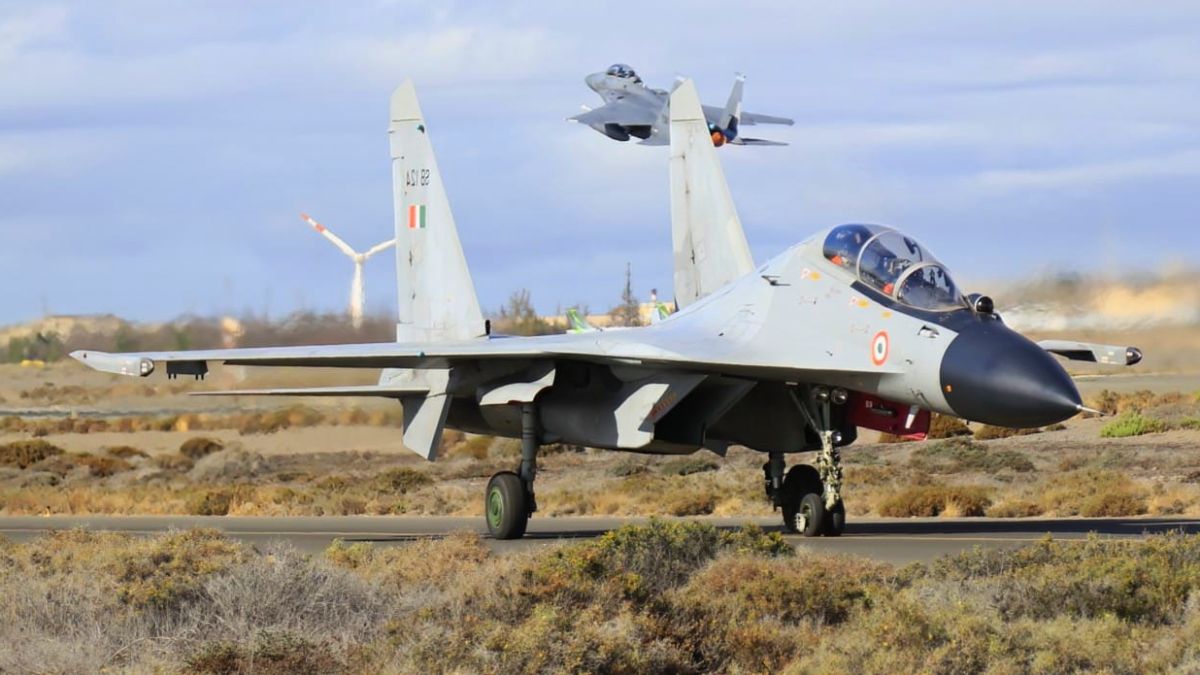
In a landmark development for India’s defence diplomacy and global military cooperation, the Indian Air Force (IAF) has become the first non-NATO country to participate in the multinational air combat exercise named Exercise Ocean Sky 2025, hosted by the Spanish Air Force at Gando Air Base, Canary Islands, Spain from 20–31 October 2025.
The exercise, previously a NATO-centric platform, involves advanced aerial combat tactics, joint mission planning, air-space interoperability and real-time combat scenario training. India’s inclusion signals its rising credentials in the aerospace domain and its increasing role as a partner in Western-style defence engagements.
What the Exercise Entails
Exercise Ocean Sky features large-formation air combat drills, defensive and offensive counter-air (DCA/OCA) missions, tanker aircraft operations, coordination among various fighter-jet fleets, and coalition logistics and support elements. India’s participation places its pilots in high-intensity training alongside forces from Spain, Germany, Greece, Portugal, the United States and others.
For India, this offers exposure to Western combat doctrine, enhances interoperability with other air forces, and extends its operational reach beyond traditional theatres.
Strategic Gains for India
India’s decision to join this drill serves multiple strategic objectives. Firstly, it bolsters the IAF’s readiness in multi-national coalition settings — increasingly relevant in the evolving Indo-Pacific security architecture.
Secondly, it strengthens bilateral defence ties with Spain, aligning with India’s “Make in India” and aerospace modernisation goals: the IAF recently inducted 16 Airbus C-295 tactical transport aircraft (the deal valued at USD 2.5 billion) from Spain, with 40 more to be manufactured in India in partnership with Tata Advanced Systems.
Thirdly, participation in a NATO-hosted drill sends a signal of India’s expanding global defence footprint and reflects its strategic autonomy: India remains outside formal alliances such as NATO, yet engages on its terms.
Implications for Defence & Policy
For students preparing for government exams (teachers, banking, railways, civil service, defence, police), the news highlights critical themes: India’s evolving defence diplomacy, international military cooperation, strategic autonomy, and the importance of aerospace modernisation in national security.
This event is not just about one drill—it marks the widening scope of India’s defence engagements as it aligns with multiple partners across geographies, beyond its traditional neighbourhood. It underscores how military training and diplomacy are merging into broader foreign‐policy and security strategies.
Why this News is Important
Boost to India’s Operational Readiness
India’s participation in Exercise Ocean Sky 2025 gives the IAF access to high-end aerial combat training in multinational coalition settings. This boosts preparedness for complex threat scenarios and adds value to India’s defence capabilities—key for civil-service, defence and railways (logistics) exam aspirants to note.
Defence Diplomacy & Global Standing
Being the first non-NATO nation invited to a traditionally NATO-only exercise raises India’s geopolitical profile. The move reinforces India’s strategic ties with Spain and other Western powers, which matters for banking, teaching or administrative aspirants as it reflects global alignment and partnership trends.
Relevance to Strategic Autonomy
India has historically emphasised strategic autonomy and avoided formal military alliances. Nevertheless, this move shows a nuanced shift: engaging selectively in multinational defence architecture without binding commitments. This nuance is relevant for civil service and defence exams, especially under topics like India’s foreign policy and its strategic partnerships.
Exam-oriented Implications
For aspirants across various government exams, this news connects with syllabus topics such as “India’s security challenges”, “defence cooperation”, “military alliances and exercises”, “Make in India (defence manufacturing)”, and “Indo-Pacific strategy”. Recognising how a seemingly drill translates into broader policy is the kind of analysis expected in tests.
Historical Context
India’s engagements in multinational military exercises have gradually expanded over the past decade. Traditionally, India has taken part in bilateral and multilateral drills, but exercises hosted by major Western alliances were limited. India’s official stance has long emphasised strategic autonomy—an approach enunciated by S. Jaishankar, who stated that India has no intention of joining NATO, saying the “NATO template does not apply to India”.
In recent years, India has deepened defence ties with Western nations and alliances without formal membership: For example, India and Japan have expanded co-production of defence equipment, and India has signed numerous bilateral defence cooperation pacts with Germany, the US and other partners.
The bilateral India-Spain defence relationship is part of this trend. The Airbus C-295 deal (USD 2.5 billion for 56 aircraft; 16 delivered, 40 to be manufactured in India) signals a shift towards “Make in India” and joint production.
Exercise Ocean Sky itself has been a NATO-oriented annual air combat exercise hosted by Spain. India’s inclusion therefore represents a new milestone, showing India transitioning from regional actor to more global defence partner. The event aligns with India’s rising role in the Indo-Pacific and its deepening cooperation with Europe in the defence sector.
Key Takeaways from This News
| Sr. No. | Key Takeaway |
|---|---|
| 1 | India is the first non-NATO country to participate in Exercise Ocean Sky 2025. |
| 2 | The exercise is hosted by the Spanish Air Force at Gando Air Base, Canary Islands, Spain, from 20–31 October 2025. |
| 3 | India’s participation enhances the IAF’s operational readiness through exposure to advanced multinational air combat drills including DCA/OCA, tanker operations, and coalition planning. |
| 4 | The IAF’s involvement is closely linked to India-Spain defence cooperation, including the induction of 16 Airbus C-295 aircraft and the ‘Make in India’ initiative for 40 more aircraft. |
| 5 | This move reflects India’s evolving defence diplomacy: engaging with Western defence structures while maintaining strategic autonomy outside formal military alliances like NATO. |
FAQs – Frequently Asked Questions
Q1. What is Exercise Ocean Sky 2025?
Exercise Ocean Sky 2025 is a multinational air combat exercise hosted by the Spanish Air Force at Gando Air Base, Canary Islands. It involves complex aerial warfare drills among NATO and non-NATO countries to improve interoperability and combat readiness.
Q2. Why is India’s participation in Exercise Ocean Sky 2025 significant?
India became the first non-NATO nation to participate in this NATO-centric exercise, reflecting the growing global recognition of India’s air power and its evolving defence partnerships with European countries.
Q3. What aircraft has India recently procured from Spain?
India signed a USD 2.5 billion deal with Spain to procure 56 Airbus C-295 tactical transport aircraft — 16 of which are delivered and 40 will be manufactured domestically under the ‘Make in India’ initiative.
Q4. What benefits will the Indian Air Force gain from this exercise?
The IAF gains exposure to advanced Western aerial combat tactics, joint operations with NATO air forces, and experience in high-intensity air missions that enhance its global operational capabilities.
Q5. How does this event relate to India’s policy of strategic autonomy?
By participating in this NATO-hosted exercise without being a NATO member, India demonstrates its strategic autonomy — engaging globally while remaining non-aligned with any formal military alliance.
Q6. Which other countries are participating in Exercise Ocean Sky 2025?
Nations like Spain, Germany, Greece, Portugal, and the United States are among the key participants, representing NATO’s European and transatlantic defence partners.
Q7. What is the duration and venue of the exercise?
Exercise Ocean Sky 2025 is scheduled from 20 to 31 October 2025 at Gando Air Base in the Canary Islands, Spain.
Q8. What exam topics does this news connect with?
This news is relevant to topics under India’s defence diplomacy, foreign policy, military exercises, Indo-European relations, and aerospace modernization, making it crucial for civil service, defence, and current affairs sections.
Q9. Has India previously participated in any NATO-led exercise?
No, this is the first time India has joined a NATO-hosted exercise, marking a historical shift in its defence cooperation framework.
Q10. What is the broader diplomatic impact of this participation?
India’s engagement strengthens its bilateral ties with Spain and reinforces its image as a key defence partner capable of balancing East-West security cooperation.
Some Important Current Affairs Links