







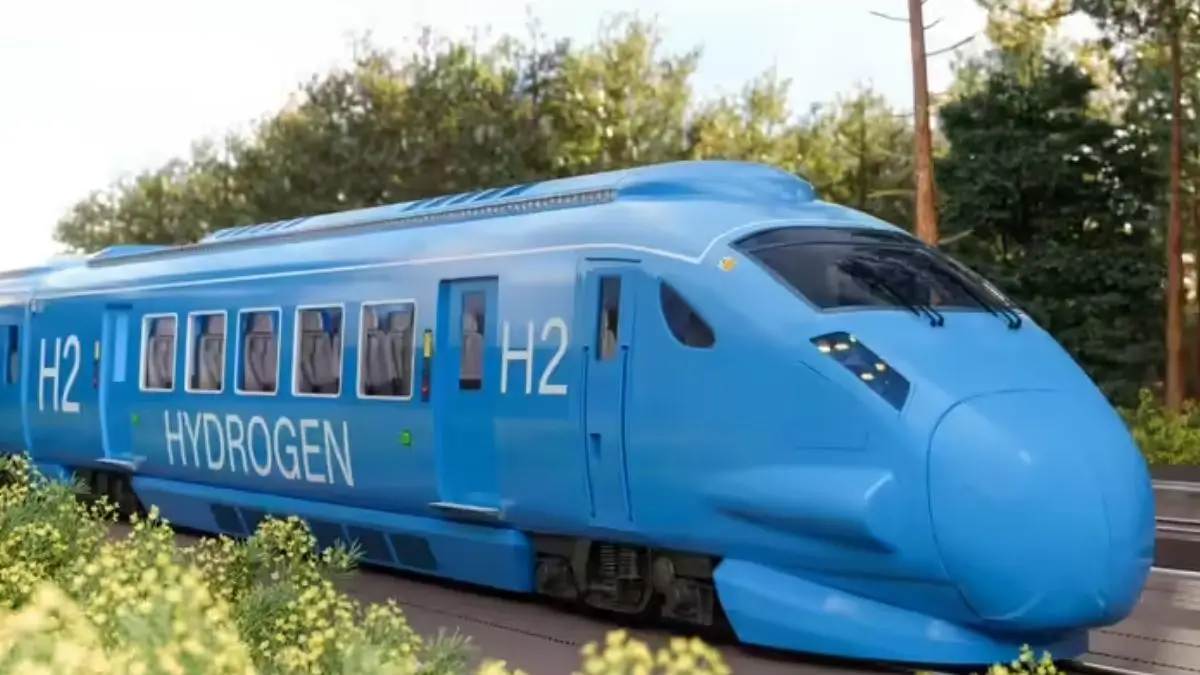
India hydrogen train trial 2026 marks a major step in green rail revolution as Indian Railways introduces zero-emission hydrogen-powered trains under the National Green Hydrogen Mission.
India’s First Hydrogen Train Completes Trial: Green Rail Revolution Begins
🚆 Major Breakthrough in Sustainable Transportation
India has achieved a significant milestone in green mobility with the successful completion of oscillation trials of its first hydrogen-powered train. This development was confirmed by Railway Minister Ashwini Vaishnaw, marking a historic step toward clean energy adoption in the railway sector. The trial was conducted under the supervision of the Research Designs and Standards Organisation, which ensures safety and performance standards.
This achievement places India among a select group of countries such as Germany, Japan, and China that are exploring hydrogen-powered rail systems.
🌱 Route and Deployment Strategy
The hydrogen-powered train is set to operate on the Jind–Sonipat route in Haryana under Northern Railway. This route has been selected as part of a pilot project to test the feasibility of hydrogen fuel in Indian rail operations.
The project also includes the establishment of a hydrogen production plant at Jind, ensuring a steady supply of green hydrogen for operations.
🏭 Indigenous Development and ‘Make in India’ Boost
The train has been fully designed and manufactured by the Integral Coach Factory, highlighting India’s growing technological capabilities. This aligns with the government’s “Make in India” initiative and strengthens the country’s push toward self-reliance in advanced transport technologies.
⚙️ Key Features of the Hydrogen Train
India’s hydrogen train is expected to be one of the most powerful in the world, featuring a 2400 kW power capacity. It uses hydrogen fuel cells to generate electricity, producing only water vapor as a by-product, making it a zero-emission transport system.
The train is also designed for Indian broad-gauge tracks, ensuring compatibility with existing railway infrastructure.
🔬 What is an Oscillation Trial?
An oscillation trial is a critical safety test conducted before launching any new train. It evaluates stability, ride comfort, vibration levels, and safety parameters at different speeds. The successful completion of this trial indicates that the train is ready for further approvals and eventual commercial operations.
🌍 Environmental and Economic Benefits
Hydrogen trains offer a sustainable alternative to diesel engines, especially on non-electrified routes. They help reduce greenhouse gas emissions, decrease dependence on fossil fuels, and contribute to India’s net-zero carbon goals.

📰 Why This News is Important
🌏 Step Towards Net-Zero Emissions
India’s hydrogen train project is crucial in achieving the country’s climate commitments. By replacing diesel engines with hydrogen-based systems, Indian Railways can significantly reduce carbon emissions, making transportation more environmentally sustainable.
🚄 Transformation of Indian Railways
This initiative reflects a paradigm shift in Indian Railways, moving from conventional fuel-based systems to advanced clean technologies. It highlights modernization and technological advancement, which are key topics for competitive exams.
🔋 Boost to Green Hydrogen Mission
The project supports India’s National Green Hydrogen Mission by promoting the use of hydrogen as a clean energy source. It demonstrates practical application, which is often asked in exams related to government schemes and policies.
🌐 Global Competitiveness
By entering the league of countries operating hydrogen trains, India strengthens its global standing in sustainable innovation. This is important for international relations and technology-based questions in exams.
💼 Employment and Innovation Opportunities
Such projects create opportunities in research, engineering, and manufacturing sectors, boosting employment and innovation in India’s economy.
📜 Historical Context: Evolution of Hydrogen Trains
Hydrogen-powered trains are part of a global shift toward clean energy in transportation. The first commercial hydrogen train was introduced in Germany in 2018, marking a new era of sustainable rail travel. Since then, countries like Japan and China have been experimenting with hydrogen fuel-cell technology.
India began its hydrogen train journey as part of its broader green mobility strategy. Initial announcements were made to introduce hydrogen trains on heritage routes, followed by the development of prototypes and testing phases.
The involvement of institutions like RDSO and manufacturing units like ICF reflects a systematic approach toward innovation. Over time, India has progressed from conceptual planning to successful trial completion, showcasing steady advancement in clean energy transportation.
📊 Key Takeaways from This News
| S.No. | Key Takeaway |
|---|---|
| 1 | India successfully completed oscillation trials of its first hydrogen-powered train |
| 2 | The train will operate on the Jind–Sonipat route in Haryana |
| 3 | Developed indigenously by Integral Coach Factory under Make in India |
| 4 | Uses hydrogen fuel cells and emits only water vapor (zero emission) |
| 5 | Supports India’s green energy goals and National Hydrogen Mission |
FAQs: Important Questions for Exams
1. What is India’s first hydrogen train?
India’s first hydrogen train is a rail system powered by hydrogen fuel cells instead of diesel. It generates electricity through chemical reactions and emits only water vapor, making it an eco-friendly transport solution.
2. On which route will the hydrogen train operate?
The train is planned to operate on the Jind–Sonipat route in Haryana as part of a pilot project under Northern Railway.
3. What is the power capacity of India’s hydrogen train?
India’s hydrogen train has a power capacity of 2400 kW, making it one of the most powerful hydrogen-powered trains globally.
4. What is an oscillation trial in railways?
An oscillation trial is a safety test that evaluates the stability, vibration, and ride quality of a train at different speeds before commercial operations.
5. Which organization conducted the trial?
The trial was conducted by the Research Designs and Standards Organisation (RDSO), which ensures railway safety and standards.
6. Which factory developed the hydrogen train?
The train was developed by the Integral Coach Factory (ICF), Chennai, under the Make in India initiative.
7. Why are hydrogen trains important for India?
They help reduce carbon emissions, decrease dependence on fossil fuels, and support India’s Net Zero and Green Hydrogen Mission goals.
8. Which countries already operate hydrogen trains?
Countries like Germany, Japan, and China are already using or testing hydrogen-powered trains.
9. What is the by-product of hydrogen fuel cells?
The only by-product is water vapor, making it a zero-emission technology.
10. Under which mission does this project fall?
It aligns with India’s National Green Hydrogen Mission, promoting clean energy adoption.
Some Important Current Affairs Links