





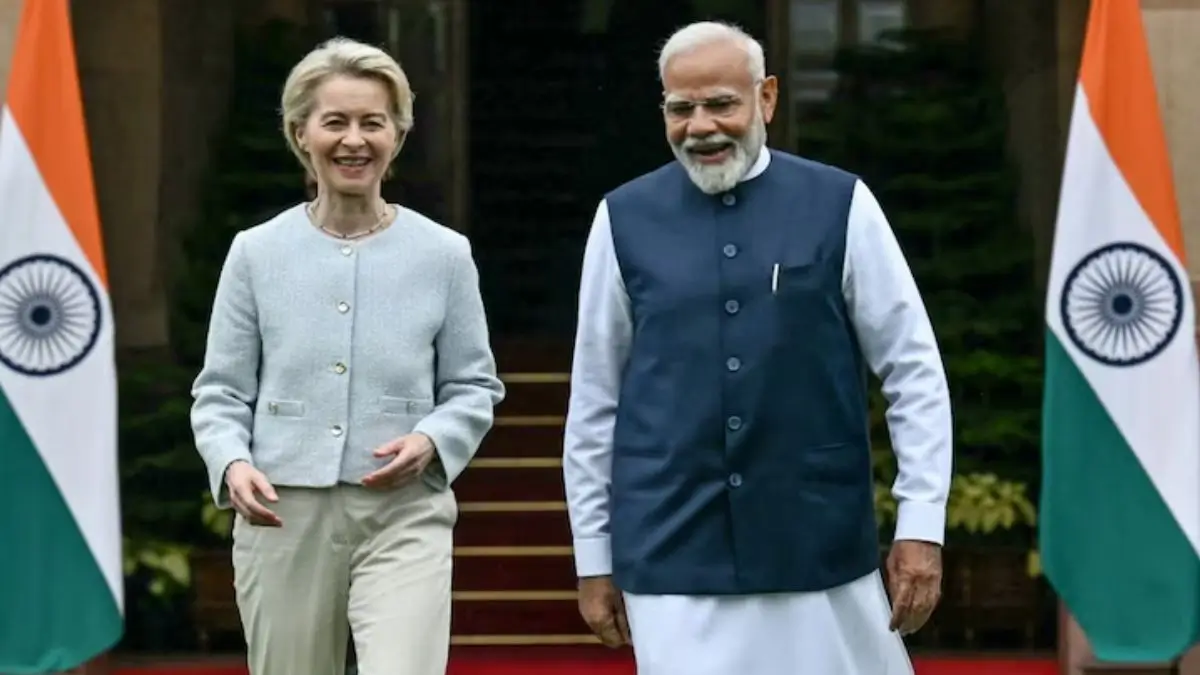
India EU car tariff cut marks a major trade reform as import duties on selected European vehicles drop from 110% to 40%, boosting competition and economic ties.
India Slashes Import Tariffs on European Cars as India-EU Free Trade Deal Nears
Major Shift in India’s Automobile Import Policy
India is on the cusp of implementing a major reduction in import tariffs on cars from the European Union (EU). As negotiations for the long-awaited India-EU Free Trade Agreement (FTA) reach an advanced stage, New Delhi is preparing to sharply lower duties from as high as 110% to around 40% for selected fully assembled cars imported from the EU.
Under the proposed arrangement, the tariff cut will initially apply to fully built cars priced above €15,000 (approx ₹16.3 lakh) under a set import quota, with the expectation of further phased reductions in the coming years. The proposed cuts are designed to gradually open up India’s historically tightly protected automobile market while balancing domestic industrial interests.
Boost for European Automakers
The reduction in import tariffs is expected to significantly benefit major European automakers including BMW, Mercedes-Benz, and Volkswagen. These companies have long lobbied for lower duties to make their vehicles more competitive in India’s fast-growing automobile market, where high tariffs have kept prices of European models considerably elevated.
India has reportedly agreed to apply the reduced tariff to around 200,000 internal combustion engine (ICE) vehicles annually, although the final quota and terms may be subject to change as discussions progress.
Protection for the Electric Vehicle Segment
Interestingly, the tariff reduction proposal excludes battery-electric vehicles (EVs) for the first five years of the agreement. This exemption aims to protect the investments and growth of India’s domestic EV ecosystem, which has gained momentum with companies like Tata Motors and Mahindra & Mahindra expanding EV production and infrastructure.
By excluding EVs initially, the government seeks to enable local manufacturers to mature and compete effectively before exposing them to increased competition from European EV imports.
Strategic Importance in Trade Negotiations
The automobile tariff cut represents a significant breakthrough in India-EU trade negotiations, which have been ongoing for many years. India and the EU have been working toward a comprehensive trade agreement that would liberalize goods and services trade, improve market access, and enhance investment flows between the two economic partners.
The tariff decision could serve as a catalyst for finalizing the broader Free Trade Agreement, strengthening economic ties between India and the EU and marking a milestone in bilateral relations.

Why This News Is Important
Key Policy Shift in India’s Trade Strategy
This development marks a significant shift in India’s international trade and automotive policy. Reducing import tariffs from historically high levels (up to 110%) to 40% signals a major move toward trade liberalization and a focus on deeper integration with global markets.
For students preparing for government exams, this news is key because it illustrates how India negotiates trade deals and balances domestic industry protection with global economic integration — a common theme in economics, polity, and international relations sections.
Impact on Economy, Industry, and Consumers
The tariff cut has multiple implications:
- It could boost competition in the automobile sector, potentially lowering car prices for consumers.
- European automakers may gain deeper access to the Indian market, influencing investment and job creation.
- Domestic automakers and EV manufacturers may face competitive pressure, highlighting the importance of strategic policymaking in protecting emerging sectors like EVs.
Understanding such policy decisions helps students analyze government strategies in trade diplomacy, economic reforms, and industrial growth — topics frequently tested in UPSC, PSC, banking, and other competitive exams.
Historical Context
India-EU Trade Relations Over Two Decades
India and the European Union have been engaged in trade negotiations for almost 20 years, aiming to build a comprehensive Free Trade Agreement that would reduce tariffs, enhance market access, and facilitate trade in goods and services.
Previous Trade Barriers in Auto Imports
Historically, India maintained very high tariffs on imported cars, often exceeding 100%, to protect local manufacturers and encourage domestic production. These protectionist policies helped young Indian automotive companies grow but also kept prices of imported vehicles high for consumers.
Link to Broader Trade Policy Reforms
Tariff reduction is part of India’s broader strategy to strengthen global trade ties, attract foreign investment, and support sectors like textiles, pharmaceuticals, and automobiles in international markets. The EU deal is expected to cover a wide range of goods and services beyond automobiles, including machinery, chemicals, wines, and agricultural products.
Key Takeaways from India-EU Car Tariff Cut
| S. No. | Key Takeaway |
|---|---|
| 1. | India plans to cut import tariffs on EU-made cars from up to 110% to about 40% under a proposed FTA. |
| 2. | The initial tariff cut will apply to fully built cars priced above €15,000 under a limited quota. |
| 3. | Reduced tariffs are expected to benefit European automakers like BMW, Mercedes-Benz, and Volkswagen. |
| 4. | Battery-electric vehicles are excluded from the initial tariff cuts to protect India’s EV industry. |
| 5. | The tariff reduction could be a key step in finalizing the India-EU Free Trade Agreement. |
FAQs: Frequently Asked Questions
1. What is the India‑EU Free Trade Agreement (FTA)?
The India‑EU FTA is a proposed trade deal aimed at reducing tariffs, improving market access, and enhancing trade in goods and services between India and the European Union. It has been under negotiation for nearly two decades.
2. Which vehicles are affected by the proposed tariff cuts?
The tariff cuts primarily apply to fully built cars imported from the EU, priced above €15,000, under a set import quota. Battery‑electric vehicles are initially excluded to protect India’s domestic EV industry.
3. By how much will India reduce import duties on EU cars?
Import tariffs on selected EU cars are expected to drop from up to 110% to approximately 40%, representing a significant reduction.
4. Which European automakers will benefit from this deal?
Major automakers like BMW, Mercedes‑Benz, Volkswagen, and Audi are expected to benefit as the price of their vehicles becomes more competitive in India.
5. Why are electric vehicles (EVs) excluded from the initial tariff cuts?
EVs are excluded for five years to give local manufacturers like Tata Motors and Mahindra & Mahindra time to strengthen production and compete effectively before facing European competition.
6. How will this deal impact India’s economy?
The tariff cut could boost competition in the automobile sector, improve consumer affordability, attract foreign investment, and strengthen India‑EU economic ties.
7. What is the import quota for EU cars under the proposed deal?
India plans to allow around 200,000 imported cars annually under the reduced tariff, though final numbers will depend on the ongoing negotiations.
8. How is this relevant for competitive exams?
Questions on trade policies, India‑EU relations, tariff reforms, and economic diplomacy are frequently asked in UPSC, State PSCs, banking, railways, and other government exams. Understanding this news helps answer current affairs and economy-related questions.
Some Important Current Affairs Links