








India Codex re-election at CAC48 strengthens India’s role in global food safety governance, highlighting contributions to food standards, AI-based systems, and export-focused commodities like cashew and curry leaves.
India Re-elected to Codex Executive Committee: India Strengthens Role in Global Food Safety Governance
India Secures Unanimous Re-election at CAC48
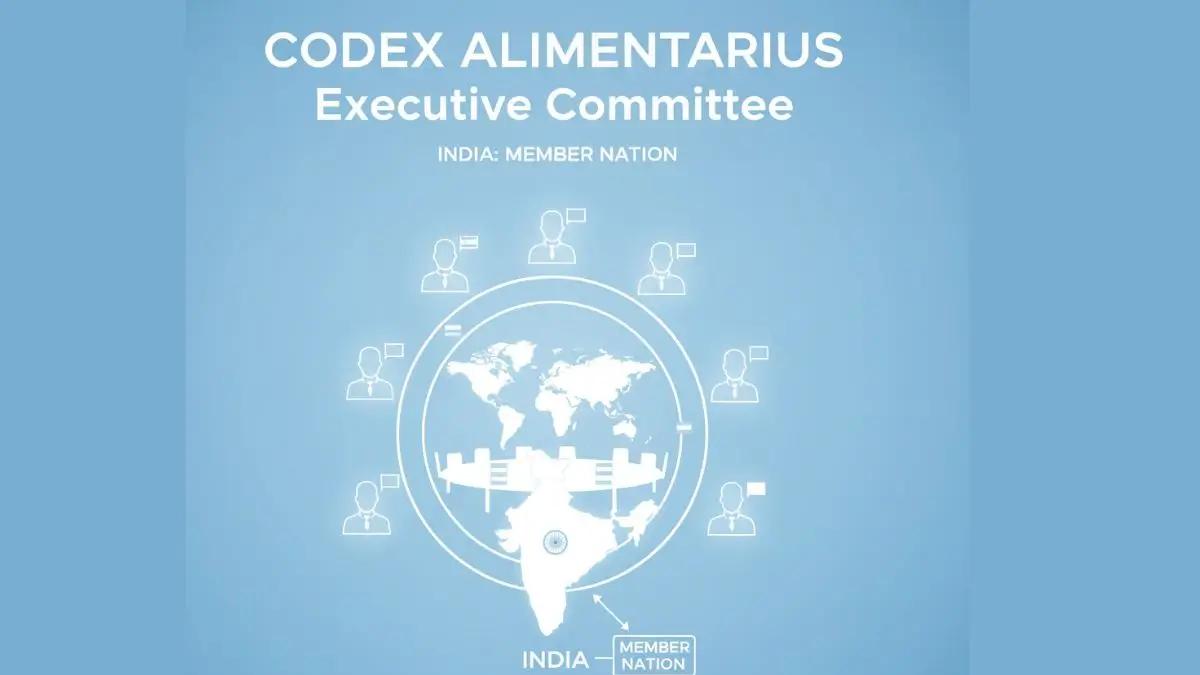
At the 48th session of the Codex Alimentarius Commission (CAC48), held under the aegis of FAO and WHO, India was unanimously re-elected to represent the Asia region on the Codex Executive Committee (CCEXEC).
This re-election underscores India’s growing stature in shaping international food standards, reinforcing its voice in critical food-safety and trade policy decisions
Leadership and Delegation: Who Led the Charge
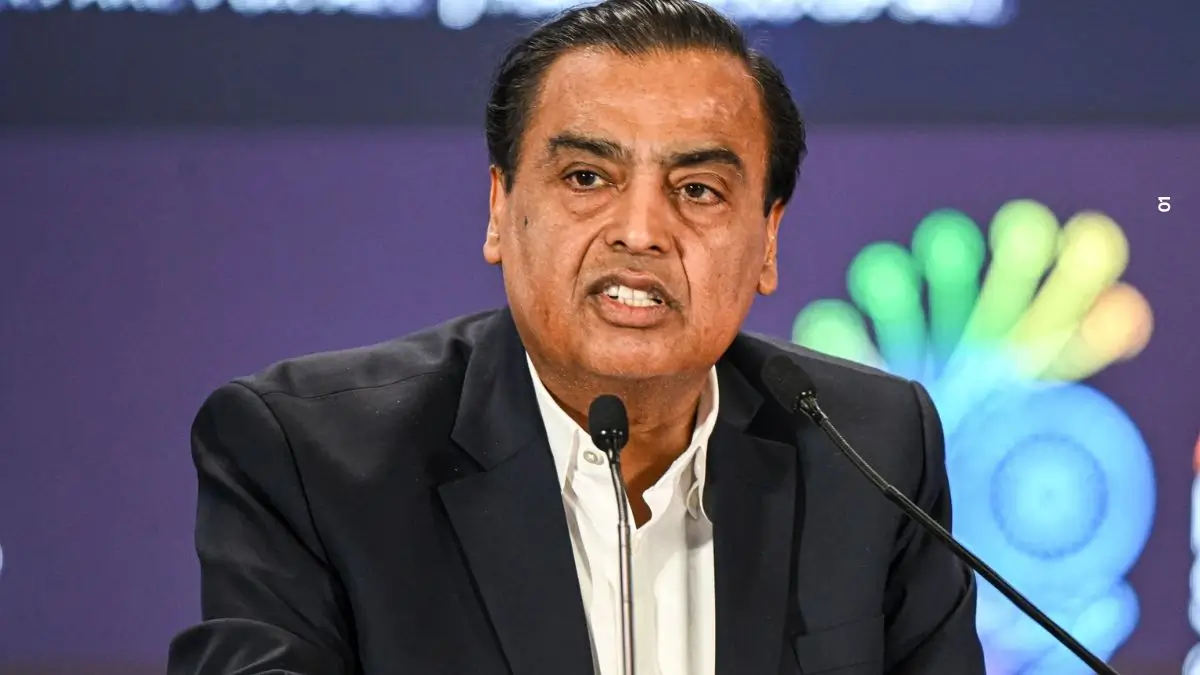
The Indian delegation was led by Rajit Punhani, CEO of the Food Safety and Standards Authority of India (FSSAI).
Alongside him were senior officials from the Ministry of Health & Family Welfare and domain experts — signaling a coordinated, multi-stakeholder approach.
India’s pitch at the committee stressed efficiency, equitable standards, and modern data systems, with a clear push for integrating artificial intelligence (AI) into Codex’s day-to-day functioning.
Focus on Data Systems & Technological Modernisation
One of India’s key contributions during the CCEXEC 89 session was advocating for updated and robust databases. These include important domains like:
- Food additives
- Pesticide residues
- Veterinary drugs
- Contaminants in food
- Analytical methods for testing
Beyond data, India also pushed for AI-based tools — especially for translating Codex documents, which could make vital resources more accessible globally and speed up committee operations.
Strengthening Food Standards: India’s Technical Wins
India’s delegation played an active role in shaping several Codex technical committees, pushing for standards rooted in science and aligned with regional trade realities. Key areas of influence included:
- Fresh Fruits & Vegetables (CCFFV):
- India chaired the committee.
- It helped adopt the Standard for Fresh Dates (at Step 8), which is significant for global and regional date trade.
- It also forwarded the Standard for Fresh Curry Leaves for adoption, which can help herb exporters in Asia.
- Pesticide Residues (CCPR):
- India supported new guidelines for monitoring pesticide reference material stability, which strengthens lab testing reliability.
- It backed updates to the aflatoxin reduction code in peanuts, a major export commodity for India.
- Food Additives & Analysis:
- India promoted alignment of additive rules in the General Standard for Food Additives (GSFA).
- It also advocated for adopting nitrogen-to-protein conversion factors in analytical methods — a move that standardizes how protein content is measured across nations.
Big Win for Cashew Exports: Cashew Kernel Standard Revived
A particularly noteworthy achievement was India’s success in reviving the stalled Codex work on Cashew Kernel Standards.
CAC48 agreed to issue a Circular Letter to member countries to gather feedback — a key step before formally drafting the standard for CAC49.
This push is strategically important: harmonized standards can boost India’s cashew exports, which are a high-value commodity.
Expanding India’s Influence on Regional Commodities
India also supported broader, inclusive food-trade measures, such as:
- Elevating the regional standard for laver (seaweed) products to a global standard.
- Encouraging new work on a standard for pasteurized liquid camel milk, demonstrating India’s commitment to diversity in food-commodity standards.
Multidisciplinary & Multi-Agency Delegation
The breadth of India’s delegation underscored its serious commitment: representatives came from
- Ministry of Commerce & Industry
- Spices Board
- Marine Products Export Development Authority (MPEDA)
- Indian Council of Agricultural Research (ICAR)
- ICMR-National Institute of Nutrition (NIN)
- FICCI
This interdisciplinary grouping helped India present a cohesive, technically strong case across food safety, trade, health, and agriculture.

Why This News Is Important
Significance for Global Food Standards
India’s re-election to the Codex Executive Committee is not just symbolic — it solidifies its influence in setting international food safety and quality benchmarks. By holding a key position, India can ensure that Asian perspectives and needs are adequately represented in global deliberations.
Impacts on Trade & Exports
For sectors like agriculture, spices, fruits, nuts, and processed foods, this leadership role has practical trade implications. The revival of the Cashew Kernel Standard, for example, could streamline export processes and improve market access for Indian cashews.
Similarly, standards for curry leaves and dates, as well as robust pesticide residue guidelines, can benefit India’s agricultural exporters.
Strengthening Scientific Governance
India’s emphasis on data systems (food additives, contaminants, analytical methods) and deployment of AI for documentation reflects a modern, data-driven approach to food governance.
This could lead to more efficient Codex operations and more informed, science-based policy-making.
Regional Representation & Equity
As Asia’s representative, India can champion issues that are especially relevant to the region — not just in trade but also in food safety and technology adoption. It means that Codex standards will more likely consider regional realities, making them more inclusive and implementable.
Strengthening India’s Soft Power
This re-election enhances India’s diplomatic credibility in multilateral institutions like FAO and WHO. By playing a proactive role in global food governance, India strengthens its image as a responsible leader committed to food security, quality, and fair-trade practices.
Historical Context
What Is the Codex Alimentarius Commission?
The Codex Alimentarius Commission (CAC) was established by the Food and Agriculture Organization (FAO) and the World Health Organization (WHO) to coordinate international food standards. Its mission is to protect consumer health and promote fair practices in food trade.
Codex standards are widely used by countries to regulate food safety, and they often serve as benchmarks in international trade disputes.
The Role of the Codex Executive Committee (CCEXEC)
The Executive Committee (CCEXEC) is the key governing body of the Codex system. It helps shape strategic direction, reviews technical proposals, and monitors progress of standards development.
It consists of regional representatives and elected members who guide Codex’s agenda.
India’s Journey in Codex Governance
India has long been active in Codex. In past sessions, it has chaired and contributed to committees focused on cereals, pulses, fruits, and food analysis
In 2024, India’s annual Codex report highlighted its push for standards in recycled food-packaging materials, food-contact PET guidelines, and spice regulation — showing a sustained commitment to food safety and global norms.
In earlier sessions, India’s work on millets was globally recognized — its millet standards were praised at CCEXEC 88.
The Strategic Importance of CAC48
The 48th session of the Codex Alimentarius Commission (CAC48) was crucial for standard-setting, especially for commodities vital to India (like dates, cashews, curry leaves) and for reinforcing data infrastructure. India’s active role in CAC48 reaffirmed its commitment to global food governance and its growing technical leadership.
Key Takeaways from This News
| No. | Key Takeaway |
|---|---|
| 1 | India has been unanimously re-elected to the Codex Executive Committee (CCEXEC) for the Asia region at CAC48 |
| 2 | The re-election extends India’s term on CCEXEC until the end of CAC50 (2027). |
| 3 | India emphasized updating databases for food additives, pesticide residues, veterinary drugs, contaminants, and methods of analysis. |
| 4 | It advocated the use of AI, particularly for document translation, to improve efficiency of Codex operations. |
| 5 | A major technical achievement: India revived work on Cashew Kernel Standards — a significant boost for its cashew export trade. |
FAQs: Frequently Asked Questions
1. What is the Codex Alimentarius Commission (CAC)?
The CAC is an international food standards body established by FAO and WHO to develop harmonized food safety and quality standards that protect consumer health and promote fair food trade.
2. What is the role of the Codex Executive Committee (CCEXEC)?
CCEXEC assists in strategic planning, reviewing technical proposals, monitoring standard-setting progress, and ensuring coordination among Codex committees.
3. Why was India re-elected to the Codex Executive Committee?
India was unanimously re-elected due to its active contributions in food safety, data system modernization, scientific governance, and leadership in committees such as CCFFV and CCPR.
4. Until when will India serve on CCEXEC?
After re-election at CAC48, India will serve until the end of CAC50 (2027).
5. Who led the Indian delegation at CAC48?
The delegation was led by Rajit Punhani, CEO of FSSAI.
6. What new standards did India help advance during CAC48?
India supported standards for fresh dates, curry leaves, pesticide residue monitoring, aflatoxin control, and revival of cashew kernel standards.
7. What technological improvements did India propose?
India emphasized updated databases for food contaminants and advocated the use of artificial intelligence for document translation and workflow enhancement.
8. How does India’s role in Codex benefit Indian exporters?
Harmonized international standards help Indian agricultural and processed-food exporters access global markets with fewer trade barriers.
9. Which Indian sectors are likely to benefit?
Cashew, spices, fruits, vegetables, dairy, and agricultural exports stand to benefit from improved global standards.
10. Why is the revival of Cashew Kernel Standards significant?
It can lead to uniform quality criteria globally, improving India’s cashew export competitiveness.
Some Important Current Affairs Links