







India Australia joint military drill strengthens Indo-Pacific security. Exercise Talisman Sabre 2025 marks India’s debut with 19 nations participating in advanced defence operations.
India–Australia Defence Ties Grow Stronger with Joint Military Exercise
Introduction
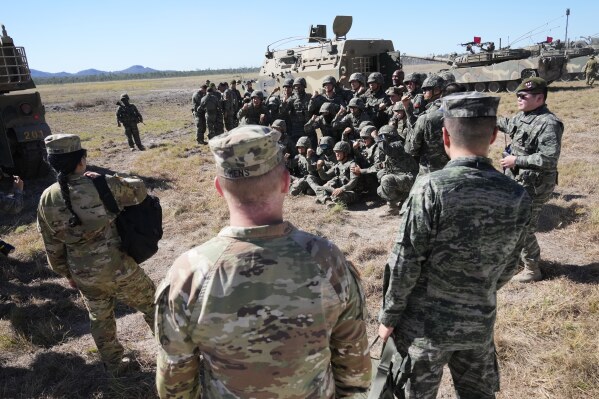
India has taken a significant step by participating in Australia’s largest-ever defence drill, Exercise Talisman Sabre, marking a watershed moment in bilateral defence cooperation. The exercise began on July 13, 2025, in Australia, where personnel from multiple countries, including India, are working closely with their Australian counterparts India’s debut in this multilateral exercise demonstrates deepening strategic ties between the two nations, reflecting growing trust and shared security interests.
Exercise Overview
Exercise Talisman Sabre is a biennial military drill initially between the U.S. and Australia. First held in 2005, this edition includes a diverse array of 40,000 personnel from 19 nations, among them India, Japan, South Korea, France and others The operations span land, sea, and air domains, incorporating live-fire exercises, drone operations, missile launches, amphibious landings, and more
India’s Role & Capabilities Demonstrated
India’s participation underscores its commitment to collective security in the Indo-Pacific. Indian defence personnel are integrating with international contingents, contributing to complex joint drills and interoperability-focused exercises. Although specific Indian assets are not detailed in the source, the overall involvement enhances India’s military diplomacy and operational synergy with allies.
Strategic Significance
The drill sends a clear deterrent message amid escalating Chinese military ambitions in the Indo-Pacific. The exercise notably saw the first-ever live firing of HIMARS rocket systems by Australia, alongside missile systems like the U.S. Typhon With China likely monitoring via spy ships, participants emphasize readiness and alliance cohesion
Broader Indo-Pacific Security Context
This iteration includes activities in Papua New Guinea, marking the exercise’s first expansion beyond Australia t aligns with the wider trend of Indo-Pacific nations uniting for collective defence, exemplified by partnerships like Quad, Malabar, and now strengthened India–Australia military cooperation
Why This News Is Important
Boost to India’s Military Diplomacy
India’s entry into the largest-ever Talisman Sabre sends a strong message of its evolving global role. It signals India’s readiness to collaborate in large, complex defence operations—critical for exams (CDS, CAPF, police, and civil services) where understanding military strategy and diplomacy is essential.
Deterrence Against Regional Threats
The exercise strengthens a coalition front against rising Chinese naval and military assertiveness in the Indo-Pacific. Security alliances like these are pivotal context for questions in international relations, security studies, and strategic planning.
Enhancement of Interoperability
Engaging in live-fire, joint missile, drone, and amphibious operations enhances tactical skills and enables smoother coordination among Indian, Australian, and allied forces. This practical interoperability reinforces the long-term benefits of such exercises.
Strategic Expansion
Conducting operations in Papua New Guinea extends India’s strategic reach and underpins the concept of a “free and open Indo-Pacific”—a key phrase in UPSC and defence exams, reflecting greater strategic footprint and influence.
Implications for Global Alliances
With Australia moving closer to India and the U.S., India’s foreign and defence policy credentials are elevated. This plays into larger frameworks like Quad and Malabar, critical for exam topics around multilateral security frameworks.
Historical Context: Strengthening Defence Ties
Early Defence Collaborations
India and Australia have a long history of defence engagement, going back to the world wars when Indian soldiers served alongside Australian troops at Gallipoli Post-independence, Australia provided aid during the 1962 Sino-Indian War.
Joint Exercises: From AUSINDEX to Malabar
The AUSINDEX naval drills (biennial since 2015) and India’s inclusion in Exercise Malabar in 2007 (alongside the U.S. and Japan, with Australia later joining Quad-related drills) set the groundwork
Evolution of Talisman Sabre
Primarily a U.S.–Australia venture since 2005, Talisman Sabre has expanded to include other allies. The 2025 exercise is the largest to date—40,000 personnel from 19 nations—highlighting its strategic value
Escalating Indo-Pacific Tensions
The exercise comes amid rising tensions—China’s maritime activities near Taiwan and the South China Sea. Allied drills serve both as readiness exercises and deterrent signals
Key Takeaways from India–Australia Defence Ties Strengthening
| S. No. | Key Takeaway |
|---|---|
| 1 | India participated in Exercise Talisman Sabre for the first time, beginning July 13, 2025. |
| 2 | This edition included 40,000 personnel from 19 countries across land, sea, and air operations. |
| 3 | The exercise featured HIMARS rocket system live-firing and Typhon missile deployment. |
| 4 | It marks strategic expansion into Papua New Guinea, enhancing regional reach. |
| 5 | The drill underscores a unified stance among democracies against China’s Indo-Pacific assertiveness. |
FAQs: Frequently Asked Questions
1. What is Exercise Talisman Sabre?
Exercise Talisman Sabre is a biennial joint military exercise originally conducted between the United States and Australia. It involves complex, multi-domain operations including live-fire drills, naval operations, air combat, and amphibious landings.
2. Why is India’s participation in Exercise Talisman Sabre 2025 significant?
India’s participation in the 2025 edition marks its debut in the exercise and symbolizes growing defence ties with Australia. It also demonstrates India’s expanding role in Indo-Pacific security cooperation.
3. How many nations participated in Exercise Talisman Sabre 2025?
A total of 19 nations, including India, the United States, Japan, South Korea, France, and others participated, involving over 40,000 military personnel.
4. What strategic technologies were showcased during the exercise?
Key technologies included the HIMARS (High Mobility Artillery Rocket System) used by Australia for the first time and the U.S.-developed Typhon missile system.
5. How does this exercise benefit India’s defence preparedness?
It boosts India’s interoperability with allied nations, enhances its operational readiness, and strengthens military diplomacy, especially in the context of rising tensions in the Indo-Pacific.
Some Important Current Affairs Links