







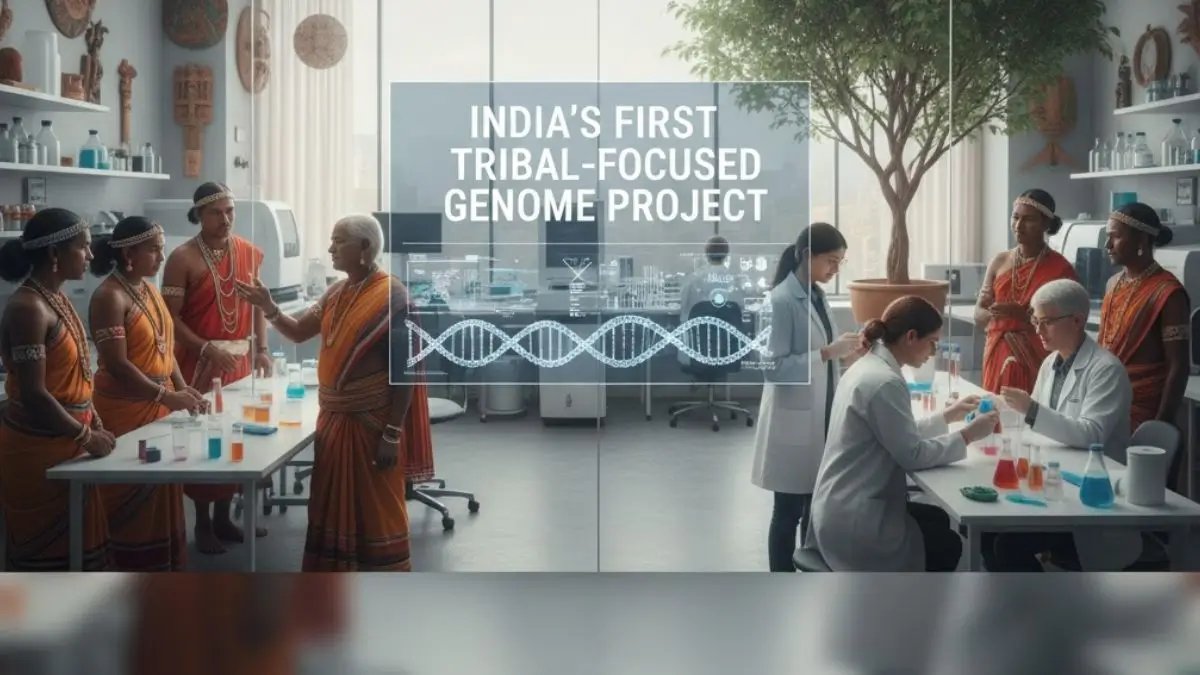
Tribal genome project Gujarat: India’s first tribal-focused genome initiative launched by GBRC under the Genome India Project, targeting genetic disorders and public health in tribal communities.
India’s First Tribal‑Focused Genome Project Launched in Gujarat
Unveiling the Initiative by Gujarat’s Biotechnology Research Centre
The state of Gujarat has become the first in India to launch a dedicated genome‑sequencing initiative aimed specifically at tribal communities, ushering in a new era of precision medicine and public‑health genomics. The project is spearheaded by the Gujarat Biotechnology Research Centre (GBRC) and forms part of the broader national Genome India Project.
In this initiative, over 4,000 biological samples will be collected from tribal individuals across 17 districts of Gujarat, and full genome‑sequencing will be performed for about 2,000 individuals.
The aim: to identify genetic mutations and patterns responsible for inherited disorders prevalent among tribal populations – such as Sickle Cell Anaemia, Thalassemia, and G6PD deficiency – and thereby support early diagnosis, targeted treatments and genetic counselling.
Why Tribal Genomics?
Tribal communities in Gujarat, especially in the eastern belt of the state, have marked incidences of hereditary disorders. A major contributing factor is the prevalence of endogamous marriages (marriage within the community) which reduces genetic diversity and increases the risk of inherited conditions.
Applications of genome sequencing here include: identifying gene‑mutations causing disease, developing DNA‑test panels for early affordable diagnosis, providing counselling before conception or during assisted reproduction, and enabling research on nutrition, immunity and disease susceptibility.
Key Features & Technology Backbone
The GBRC is equipped with advanced sequencing platforms including long‑read sequencers (5,000‑10,000 DNA base pairs) originally used during the COVID‑19 pandemic. These have been repurposed for wider genomic studies.
The project has reduced the per‑sample cost of sequencing from around ₹85,000 to about ₹60,000 through local infrastructure investments. Additionally, the design includes ‘parent‑child trio’ sampling (parents plus child) to trace hereditary transmission patterns. The goal is to eventually design DNA‑based diagnostic kits costing around ₹1,000–1,500, compared with the ₹1 lakh+ cost of full genome sequencing.
Implementation and Scope
Covering 17 districts and focusing on tribal communities, this is the first genome‑mapping initiative in India purely focused on tribal health. As part of the Genome India Project umbrella, the dataset created will serve as a genetic reference database for tribal populations, enabling better diagnosis, treatment and preventive interventions in the long run.

Why This News Is Important
Relevance for Public Health and Social Equity
The launch of this tribal‑genome project is highly significant for public health in India, particularly for historically underserved tribal communities. By targeting populations which have been genetically under‑represented in biomedical research, this initiative moves towards bridging health‑equity gaps and aligning with precision‑medicine goals.
For exam aspirants in fields like teaching, defence, civil service (e.g., Union Public Service Commission/ IAS) and public sector generalist roles, this story underscores how science policy intersects with social inclusion and health governance.
Policy and Governance Implication
From a governance perspective, this move demonstrates how states (in this case Gujarat) and research institutions (GBRC) engage in translational science for population health. The cost‑reduction in genome sequencing, the focus on tribal health, and integration within a national initiative make this a case‑study in policy innovation that could be referred to in sectors such as health, tribal welfare, biotechnology or social justice.
Competitive Exam Relevance
For banking, railways, police or teacher‑recruitment exams, understanding such current‑affairs that link science & technology, government policy and social welfare is critical. Questions may focus on the features of the project (which state, which institution, which population), the diseases targeted, or the broader scheme (Genome India Project). Thus it enhances one’s general awareness and readiness to answer multidisciplinary questions.
Historical Context
Tribal Health & Genetic Disorders in India
Historically, tribal populations in India have faced multiple health challenges, including malnutrition, infectious diseases, lack of healthcare infrastructure, and a high burden of genetic disorders due to endogamy. Research has shown that some tribal groups have a disproportionately high incidence of conditions like sickle cell anaemia and thalassemia.
Genomics and the Genome India Project
India’s foray into large‑scale genomics has gathered pace over the past decade. The Genome India Project aims to map the genetic diversity of India’s populations in order to support precision medicine, disease‑risk prediction and better healthcare outcomes. The Gujarat tribal genome initiative is nested within this larger national genomics ecosystem.
Biotechnology Capacity in Gujarat
Gujarat has been emerging as a biotechnology hub, with institutions such as GBRC investing in sequencing infrastructure. This launch marks a tangible application of such capacity to tribal welfare and population genomics.
Key Takeaways from India’s First Tribal‑Focused Genome Project
| S. No. | Key Takeaway |
|---|---|
| 1 | Gujarat is the first Indian state to launch a genome‑sequencing project focused exclusively on tribal communities. |
| 2 | The initiative is led by the Gujarat Biotechnology Research Centre (GBRC) and is part of the national Genome India Project. |
| 3 | Around 4,000 biological samples will be collected, and full genome sequencing of 2,000 tribal individuals across 17 districts will be undertaken. |
| 4 | The project aims to target inherited disorders prevalent in tribal populations such as sickle cell anaemia, thalassemia and G6PD deficiency. |
| 5 | Advanced sequencing technologies are being deployed; the per‑sample cost has been reduced from ₹85,000 to ~₹60,000, and DNA‑based diagnostic kits (₹1,000‑1,500) are envisaged for the future. |
FAQs: Frequently Asked Questions
1. What is India’s first tribal-focused genome project?
It is a genome-sequencing initiative in Gujarat targeting tribal communities to identify genetic disorders like sickle cell anemia, thalassemia, and G6PD deficiency.
2. Which institution is leading this tribal genome project?
The Gujarat Biotechnology Research Centre (GBRC) is spearheading the project under the umbrella of the national Genome India Project.
3. How many tribal individuals’ genomes will be sequenced?
Around 2,000 individuals will undergo full genome sequencing, with biological samples collected from over 4,000 individuals across 17 districts.
4. Why is this project important for tribal communities?
It helps identify inherited genetic disorders, supports early diagnosis, enables targeted treatment, and promotes public health and genetic counseling.
5. What technology is being used in this project?
Advanced long-read sequencing platforms are used, repurposed from COVID-19 research, along with parent-child trio sampling for hereditary pattern analysis.
6. How has the cost of genome sequencing been reduced?
Local infrastructure investment has lowered the per-sample sequencing cost from ₹85,000 to around ₹60,000, with future diagnostic kits costing ₹1,000–1,500.
7. How is this project linked to the Genome India Project?
The tribal genome project contributes population-specific genomic data to the national database, supporting precision medicine and disease risk prediction.
8. Which hereditary disorders are primarily being studied?
The project focuses on sickle cell anemia, thalassemia, and G6PD deficiency, which are common among tribal populations due to endogamy.
Some Important Current Affairs Links